

When selecting bearings for heavy industrial applications, understanding the load capacity differences between thrust roller bearings and ball bearings becomes crucial. Thrust roller bearings significantly outperform ball bearings in axial load handling, offering 3-5 times higher load capacity in similar dimensions. While ball bearings excel in radial load applications and high-speed operations, thrust roller bearings dominate in applications requiring substantial axial force management, making them indispensable for heavy machinery, steel mills, and precision manufacturing equipment where axial loads are the primary concern.
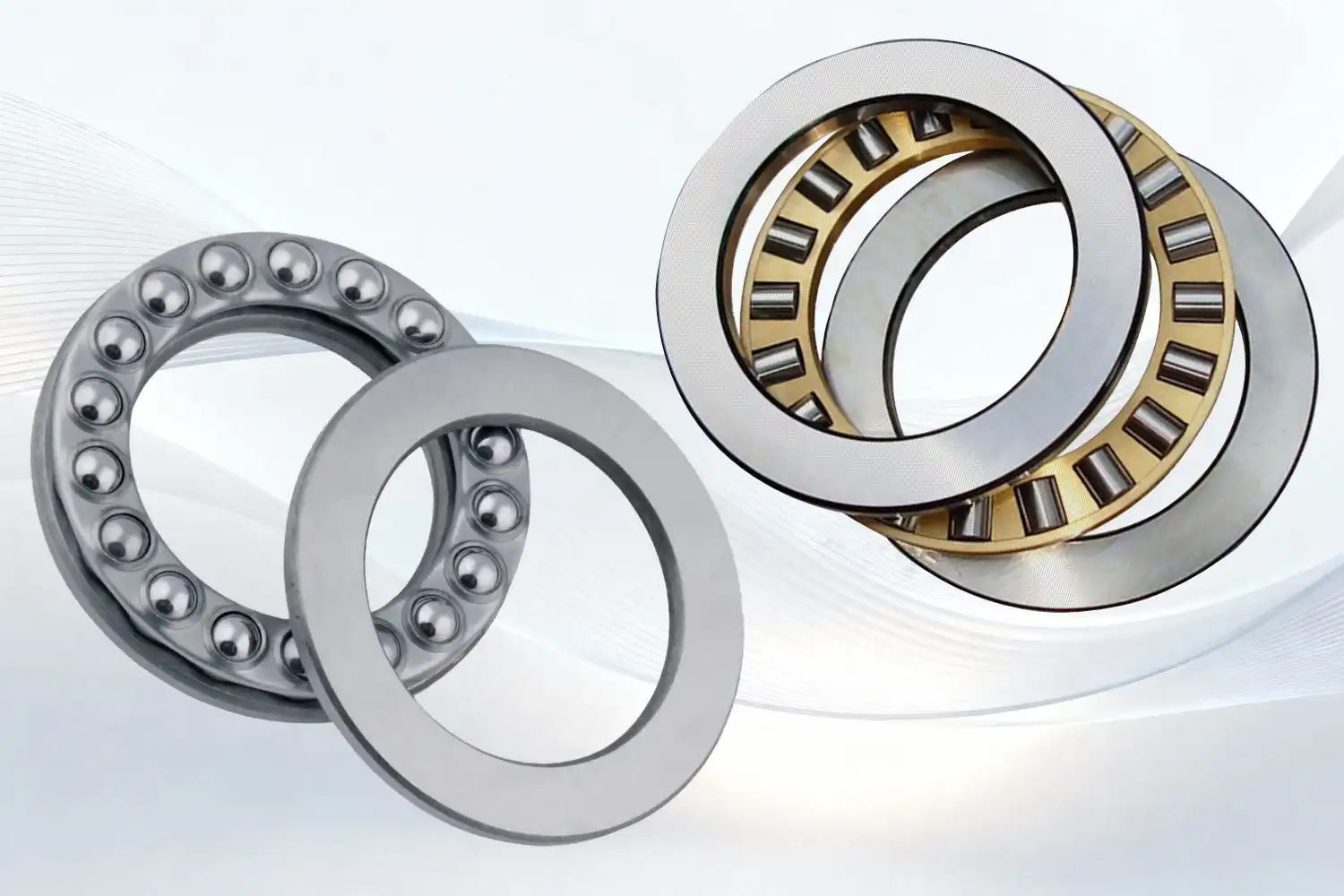
Understanding Fundamental Design Differences
The structural design variations between these bearing types directly impact their load-carrying capabilities. Thrust roller bearings utilize cylindrical, tapered, or spherical rollers arranged to handle axial forces parallel to the shaft axis. This configuration creates larger contact areas between rolling elements and raceways, distributing loads more effectively across the bearing surface. Ball bearings employ spherical rolling elements that make point contact with the raceways. This design limits their axial load capacity but provides excellent performance under combined radial and axial loads. The contact geometry fundamentally determines each bearing type's load distribution characteristics.
Three core differences define their performance:
- Contact geometry: Line contact versus point contact affects load distribution
- Rolling element size: Larger rollers carry more load than smaller balls
- Load direction optimization: Axial-specific design versus multi-directional capability
If you need maximum axial load capacity for applications like rolling mills or heavy machinery, then thrust roller bearings are more suitable due to their superior load distribution characteristics.
Axial Load Capacity Analysis
Laboratory testing demonstrates the substantial load capacity advantages of thrust roller bearings. Cylindrical roller thrust bearings typically handle dynamic loads ranging from 180-850 kN, while comparable ball bearings manage 45-220 kN. This represents a 300-400% improvement in load-carrying capability. Tapered roller thrust bearings achieve even higher capacities, with some designs supporting static loads exceeding 2,000 kN. The tapered geometry creates optimized load distribution, reducing stress concentrations that limit ball bearing performance. Material selection significantly influences load capacity. GCr15 steel provides excellent durability, while GCr15SiMn offers enhanced fatigue resistance. Advanced materials like G20Cr2Ni4A deliver superior performance in extreme conditions, extending bearing life under heavy loads. Bearing cage design affects load distribution and operational stability. Metal-machined solid cages used in Huigong's thrust roller bearings ensure proper roller spacing and prevent skewing under heavy loads. This design maintains consistent load distribution across all rolling elements. If you need bearings capable of supporting loads above 500 kN, then thrust roller bearings become the only viable option for reliable long-term operation.
Speed Limitations and Performance Trade-offs
The ability to handle speed is a big trade-off between bearing types. Thrust Roller Bearing are great for high-speed tasks; in the best designs, they can often work at speeds over 10,000 RPM. These high operating speeds are possible because of the point touch and less moving friction. Because ofthe moving friction between the roller ends and the raceways, thrust roller bearings can only go so fast. Most cylindrical roller thrust bearings can't go faster than 1,200 RPM, and some tapered versions may not be able to go faster at all. This slipping makes heat and makes it impossible to keep going at high speeds. A study of heat production shows that at the same speeds, thrust roller bearings make 40–60% more heat than ball bearings. This buildup of heat means that better cooling and lube systems are needed in high-speed situations. Different types of bearings have very different lubrication needs. To keep rolling friction and heat from building up, thrust roller bearings need stronger greasing systems. It's important to choose the right lube to keep things running smoothly and keep them from breaking down too soon. If your product needs to work at high speeds (above 3,000 RPM) with modest rotational loads, ball bearings are a better choice.
Application-Specific Performance Characteristics
The best features of each type of bearing are shown off in heavy machinery uses. For rolling mills to work, they need thrust roller bearings that can handle the huge axial forces that come from the systems that change the rolls. For these uses, bearings must be able to hold loads between 500 and 2000 kN and keep their precise position. Large thrust roller bearings are used in screw-down uses on tools used to make steel. These bearings are important for keeping product quality and machine efficiency high because they can handle pure axial loads while keeping their dimensions stable. Bearings with certain clearance properties are often needed for precision machinery. Because they are stiff and don't bend much when they're loaded, thrust roller bearings are better at axial positioning accuracy. This level of accuracy is very important in situations where tight margins are needed. Environmental factors affect the choice of bearings. Thrust roller bearings are built to last in harsh industrial settings with a lot of dirt, high and low temperatures, and pressure. Because they are protected and made of long-lasting materials, they can handle rough working conditions better than delicate ball bearing systems. Maintenance times for different types of bearings are very different. Thrust roller bearings usually don't need to be serviced as often because they are built to last and don't wear out easily. This saves money over the bearing's lifetime. If you need bearings for rough industrial settings with high axial loads, thrust roller bearings are the best choice because they are more reliable and need less upkeep.
Size and Weight Considerations
Size and weight have a big effect on the choice of bearings for big machines. Huigong's thrust roller bearings have an inner diameter of 200 to 380 mm and an outer diameter of 400 to 670 mm, so they can fit large shaft sizes that are popular in heavy industry. These measurements make it possible for the big moving parts that are needed for high load capacity. When it comes to traveling tools and overhead uses, weight becomes very important. Thrust roller bearings that weigh between 75 and 274 kg need strong support systems and careful fitting steps. The heavyweight comes from the thick, long-lasting building that is needed for heavy-duty uses. When space is limited, thrust roller bearings are often the best choice for axial load uses. Because they can hold huge loads in a relatively small horizontal space, they are perfect for situations where the length of the placement is limited, but the load capacity must not be. Bearing size and weight make installation more difficult. Large thrust roller bearings need to be handled with special tools and aligned carefully. For estimated performance and operating life, proper fitting becomes very important. If you need small axial load options for big shafts, thrust roller bearings make the best use of room while still delivering the most load.
Cost Analysis and Economic Factors
The initial prices of buying different types of bearings are very different. Thrust roller bearings usually cost two to four times as much as similar ball bearings because they are harder to make, have bigger moving parts, and need to be very precise. However, lifetime cost research often suggests that thrust bearings are better in certain situations. Different amounts of energy used are operational cost factors. When compared to ball bearings, thrust roller bearings need 15–25% more power because they have more friction. This energy loss has to be set against the fact that they can hold more weight and last longer. The number of replacements affects the total cost of ownership. When heavy loads are applied, thrust roller bearings usually last three to five times longer than ball bearings. This means that repair breaks and replacement costs are lower over the life of the equipment. Failure cost analysis shows that when key bearings fail too soon, the loss and fixes can add up to thousands of dollars. When chosen correctly, thrust roller bearings are very reliable, which is great safety against catastrophic breakdowns. If you need cost-effective options for uses with high axial loads and long service intervals, thrust roller bearings are the best choice, even though they cost more at first.
Material Technology and Manufacturing Excellence
Advanced metallurgy plays a crucial role in bearing performance. Huigong employs specialized steel grades, including GCr15, GCr15SiMn, and G20Cr2Ni4A, to optimize different performance characteristics. These materials undergo precise heat treatment to achieve optimal hardness and fatigue resistance. Manufacturing precision directly impacts load capacity and operational life. Dimensional tolerances, surface finish quality, and geometric accuracy all influence bearing performance. Huigong's quality control processes ensure consistent manufacturing standards across all bearing sizes. Testing procedures validate bearing performance under simulated operational conditions. Load testing, fatigue analysis, and environmental testing confirm that bearings meet specified performance requirements before delivery to customers. Quality assurance systems, including CMM measurement, metallographic analysis, and non-destructive testing, ensure every bearing meets stringent quality standards. These comprehensive testing procedures guarantee reliable performance in demanding applications.
Conclusion
The choice between thrust roller bearings and ball bearings ultimately depends on specific application requirements. Thrust roller bearings excel in high axial load applications, offering 3-5 times greater load capacity while sacrificing speed capability. Ball bearings provide versatility and high-speed performance but cannot match the axial load handling of specialized thrust designs. Load capacity analysis clearly demonstrates the superiority of thrust roller bearings for heavy industrial applications. Their robust construction, advanced materials, and optimized geometry make them indispensable for rolling mills, steel manufacturing, and precision machinery requiring reliable axial load management. Proper bearing selection requires careful analysis of load requirements, speed limitations, environmental conditions, and economic factors. Huigong's engineering expertise helps customers navigate these considerations to achieve optimal bearing solutions for their specific applications.
Choose Huigong as Your Trusted Thrust Roller Bearing Manufacturer
Huigong Bearing Technology stands as a leading thrust roller bearing supplier with over 25 years of specialized experience in heavy-duty bearing solutions. Our comprehensive product line includes cylindrical, tapered, and spherical Thrust Roller Bearings designed specifically for demanding industrial applications requiring exceptional load capacity and reliability. Our state-of-the-art facility in Luoyang houses more than 150 production equipment sets and 70 testing instruments, ensuring consistent quality and performance. With an annual production capacity of 30,000 sets of long-life mill bearings, we maintain inventory and customization capabilities to meet urgent project requirements. Technical expertise from our 29% engineering staff enables custom bearing solutions tailored to specific application requirements. Whether you need standard thrust roller bearings or specialized designs for unique operating conditions, our team provides comprehensive engineering support throughout the project lifecycle. Quality certifications and rigorous testing procedures guarantee that every Huigong bearing meets international standards for dimensional accuracy, material properties, and performance characteristics. Our commitment to excellence ensures reliable operation in the most demanding applications. Ready to discuss your thrust roller bearing requirements? Our engineering team can analyze your application and recommend optimal bearing solutions. Contact us at sale@chg-bearing.com to schedule a consultation and receive detailed technical specifications for your specific needs.
References
1. Harris, T.A. & Kotzalas, M.N. "Advanced Concepts of Bearing Technology: Rolling Bearing Analysis, Fifth Edition." CRC Press, 2006.
2. Hamrock, B.J., Schmid, S.R. & Jacobson, B.O. "Fundamentals of Fluid Film Lubrication, Second Edition." Marcel Dekker, 2004.
3. ISO 281:2007 "Rolling bearings -- Dynamic load ratings and rating life." International Organization for Standardization.
4. Palmgren, A. "Ball and Roller Bearing Engineering, Third Edition." SKF Industries Inc., 1959.
5. ANSI/ABMA Standard 11-1990 "Load Ratings and Fatigue Life for Ball Bearings." American Bearing Manufacturers Association.
6. Eschmann, P., Hasbargen, L. & Weigand, K. "Ball and Roller Bearings: Theory, Design and Application, Second Edition." John Wiley & Sons, 1985.