

Bearings for Wind Turbines: Main Shaft to Gearbox Solutions
Modern wind energy Bearings For Wind Turbines systems depend on advanced bearing technologies that make it possible for power to be sent smoothly from the main shaft to the gearbox assembly. Bearings for wind turbines are very important parts that have to work well in harsh situations and carry out their job perfectly over long periods of time. These special bearing solutions make sure that energy conversion works well in sites both on land and at sea, where environmental problems and mechanical stresses require very precise engineering. Engineers can make large-scale wind energy projects more efficient while reducing the amount of maintenance needed by understanding the complex link between main shaft bearings and gearbox systems.
Understanding Wind Turbine Bearings and Their Critical Roles
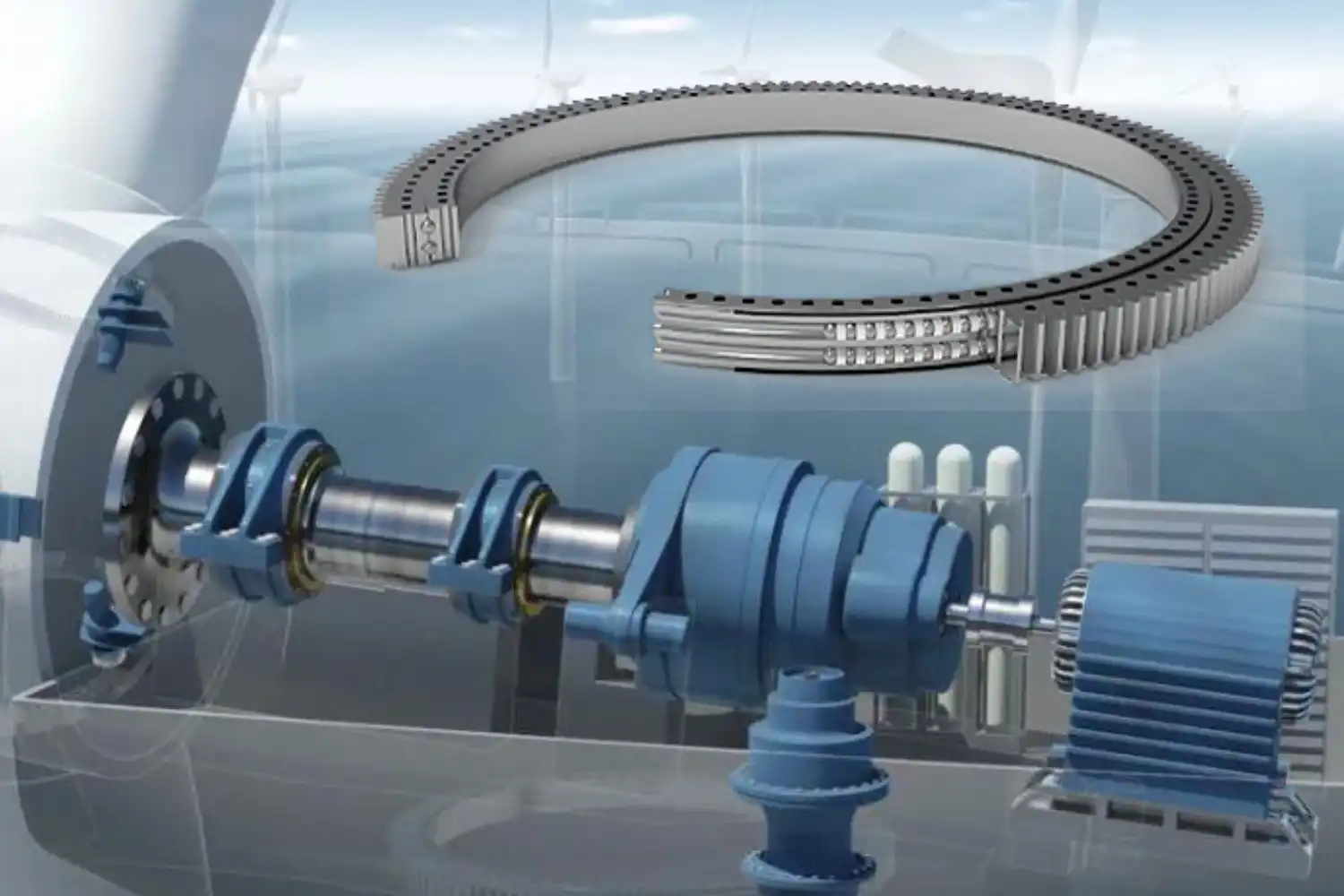
Bearing systems in wind turbines are what make consistent energy production possible. They make it possible for the blades to rotate smoothly and distribute loads evenly throughout the drivetrain. These carefully made parts make the important link between spinning blades and systems that make electricity.
Main Shaft Bearing Applications
The main shaft system needs bearings that can handle the large radial and axial loads that come from the wind pushing on the turbine blades. One of the most important types of bearings in this situation is the slewing bearing, which can handle higher axial, radial, and rolling moments all at the same time. These big bearings have fixing holes, internal or external gears, lubricant holes, and sealing gears that make sure they work well in all kinds of wind. Four-point contact ball slewing bearings can handle a lot of static load, which makes them perfect for main shaft uses where steady-state forces are the norm. On the other hand, crossed cylindrical roller slewing bearings work really well when there is a dynamic load, and the wind is changing the mechanical pressures. Which of these configurations to use depends on the type of turbine and the settings in which it will be working in.
Gearbox Bearing Requirements
Gearbox systems need bearings that are designed to work well at high speeds and transfer force accurately. In these situations, angular contact ball bearings and tapered roller bearings are often used because the accuracy of the rotation has a direct effect on how well the power is converted. Crossed tapered roller bearings have better stiffness and rotation accuracy thanks to preloading systems that keep performance constant at different speeds. The change from the main shaft to the gearbox causes unique engineering problems that need to be carefully solved by choosing the right bearings. Each part of the system has to work with the others and keep its own performance traits that are important for long-term dependability.
Common Challenges and Maintenance Strategies for Wind Turbine Bearings
Wind turbine environments present Bearings For Wind Turbiness formidable challenges that can compromise bearing performance and reduce operational lifespan. Understanding these challenges enables proactive maintenance strategies that protect critical drivetrain components.
Environmental Stress Factors
Offshore wind farms have to deal with especially tough conditions, such as corrosion from salt spray, changes in temperature, and water getting in. These external factors speed up the wear and tear on bearings in a number of ways. Corrosion hurts bearing surfaces by lowering their load capacity and raising the friction. When the temperature changes, it expands and contracts, which can mess up bearing gaps and preload settings. Another big problem with wind turbines is that they can cause damage through vibration. When the wind blows in different directions, it creates dynamic loading patterns that can cause fake brinelling, fretting corrosion, and early fatigue failure. Choosing the right bearings and installing them correctly can help lower these risks and increase the service life.
Maintenance Best Practices
Proactive monitoring and planned intervention methods are at the heart of maintenance strategies that work. Regular management of lubrication makes sure that the film thickness is right and stops contamination that speeds up wear. Specifically designed oils made for wind turbines offer better protection against corrosion and changes in temperature. Vibration analysis methods can find worn-out bearings early on, before they fail in a catastrophic way. Condition tracking systems keep an eye on the performance parameters of bearings in real time, which lets maintenance teams plan repairs for times when the machine is supposed to be down. These methods cut down on unplanned power outages by a large amount while also lowering the cost of maintenance across the whole wind farm.
Selecting the Right Bearings for Wind Turbines: Comparison and Decision-Making
Bearing selection profoundly impacts turbine reliability, maintenance requirements, and overall project economics. Engineers must evaluate multiple factors when specifying bearings for main shaft and gearbox applications.
Roller Versus Ball Bearing Technologies
Roller bearings excel in high-load applications typical of main shaft installations. Their linear contact pattern distributes forces across larger surface areas, reducing contact stresses and extending fatigue life. Cylindrical roller bearings handle pure radial loads effectively, while tapered roller bearings accommodate combined radial and axial loading conditions. Ball bearings offer advantages in high-speed gearbox applications where friction reduction becomes paramount. Their point contact design minimizes rolling resistance, improving overall drivetrain efficiency. Angular contact ball bearings provide excellent thrust load capacity while maintaining high-speed capabilities essential for gearbox performance.
Material Selection Considerations
Stainless steel bearings provide excellent corrosion resistance for offshore applications where salt exposure threatens bearing integrity. High-quality stainless steel formulations maintain mechanical properties while resisting environmental degradation. These materials prove particularly valuable in main shaft applications where bearing replacement requires extensive disassembly procedures. Ceramic bearing elements offer unique advantages, including reduced weight, enhanced corrosion resistance, and improved electrical insulation properties. While initial costs exceed traditional steel bearings, ceramic materials can justify their premium through extended service life and reduced maintenance requirements in challenging environments. The selection process must balance performance requirements against economic constraints while considering long-term operational costs. Procurement teams benefit from detailed Bearings For Wind Turbiness cost analysis that includes initial purchase price, installation expenses, maintenance requirements, and expected service life to determine true value propositions.
Procurement and Sourcing Strategies for Wind Turbine Bearings
Strategic procurement approaches ensure reliable bearing supply while managing costs and delivery timelines critical to project success. B2B buyers must navigate complex supply chains while maintaining quality standards.
Supplier Evaluation Criteria
Successful bearing procurement begins with a thorough supplier assessment focusing on manufacturing capabilities, quality certifications, and technical support services. Established manufacturers like Luoyang Huigong Bearing Technology Co., Ltd. demonstrate the expertise necessary for wind turbine applications through specialized product development and rigorous quality control systems. Manufacturing facilities equipped with advanced production equipment and comprehensive testing capabilities provide assurance of consistent product quality. Huigong's 39,330 square meter facility houses over 150 sets of main production equipment and more than 70 sets of testing equipment, including coordinate measuring machines, metallographic microscopes, and friction torque testers. This infrastructure enables an annual production capacity of 30,000 sets of long-life mill bearings and 40,000 sets of high-precision thin-section bearings.
Custom Solution Development
For wind turbine applications, custom bearing solutions that meet particular operational needs or environmental conditions are often needed. It is important to have custom engineering skills when standard products can't meet special design or performance needs. Manufacturers with a lot of experience offer application engineering help that makes choosing the right bearings for each turbine design easier. Lead time management is an important thing to think about when buying things, especially for big wind projects with tight schedules for building. Building ties with manufacturers who can be flexible with their production schedules can help lower supply chain risks and keep projects on track.
Optimizing Wind Turbine Bearing Performance for Long-Term Success
Maximizing bearing performance requires comprehensive approaches that address design optimization, condition monitoring, and predictive maintenance strategies. Long-term success depends on integrating these elements into cohesive asset management programs.
Advanced Monitoring Technologies
Through continuous data collection and analysis, modern condition monitoring devices give you a level of insight into bearing performance that has never been seen before. Vibration sensors pick up on early signs of bearing wear, so repair teams can fix problems before they become too big to fix. Temperature tracking finds problems with lubrication or too much load that could damage the bearing's integrity. Adding smart sensors is the way of the future for keeping an eye on wind turbine bearings. These systems use a variety of sensing technologies along with advanced analytics to give full estimates of the health of bearings. Real-time data transmission makes it possible to watch things from afar, which cuts down on the cost of inspections and makes maintenance more effective.
Lubrication Management Systems
When you handle lubrication Bearings For Wind Turbiness properly, you can make bearings last longer and need less maintenance. Automated lubrication systems make sure that there is a steady supply of oil and stop it from being applied too much, which can raise bearing temperatures and lower efficiency. Specialised oils for wind turbines protect better against contamination, corrosion, and changes in temperature. Strategies for protecting the environment are especially important for sites that are located offshore, where salt spray and high humidity make working conditions difficult. Advanced sealing systems and protective layers help keep the lubricant's integrity and stop contamination that speeds up bearing wear.
Conclusion
Investing in wind turbine bearing solutions is very important because they have a direct effect on the stability of energy production and the costs of running the business. If you choose, install, and maintain your bearings correctly, they will work at their best for long periods of time and cause as little unexpected downtime as possible. As turbines get bigger and stronger, they put more stress on the bearing systems. To be successful in the long run, these systems need to use new materials and monitoring technologies. Strategic purchasing methods that put quality, technical help, and the supplier's abilities at the top of the list are the building blocks for long-term wind energy operations that can keep up with the world's growing energy needs.
FAQ
1. What maintenance intervals are recommended for wind turbine bearings?
Maintenance intervals vary based on operating conditions, bearing type, and manufacturer specifications. Main shaft bearings typically require inspection every 6-12 months, while gearbox bearings may need attention every 12-24 months. Condition monitoring systems enable predictive maintenance approaches that optimize intervention timing based on actual bearing condition rather than fixed schedules.
2. How do ceramic and stainless steel bearings compare for wind turbine applications?
Ceramic bearings offer superior corrosion resistance, reduced weight, and excellent electrical insulation properties, making them ideal for offshore applications. Stainless steel bearings provide excellent corrosion resistance at lower initial costs while maintaining proven performance in demanding environments. Material selection depends on specific application requirements, environmental conditions, and economic considerations.
3. What benefits do custom-designed bearings provide for wind turbines?
Custom bearings address specific design constraints, environmental challenges, or performance requirements that standard products cannot meet. They enable optimization for particular turbine models, extreme operating conditions, or unique load patterns. Custom solutions often justify their premium costs through improved reliability, extended service life, and reduced maintenance requirements.
Partner with Huigong for Superior Wind Turbine Bearing Solutions
Huigong's three decades of bearing manufacturing Bearings For Wind Turbiness excellence positions us as your trusted Bearings For Wind Turbines supplier for critical wind energy applications. Our ISO9001-certified facility produces specialized slewing bearings, thin-section angular contact bearings, and custom solutions engineered for demanding wind turbine environments. With over 50 invention patents and comprehensive testing capabilities, we deliver precision-engineered components that ensure reliable power generation across onshore and offshore installations. Contact our technical team at sale@chg-bearing.com to discuss your specific bearing requirements and discover how Huigong's innovative solutions can optimize your wind energy projects.
References
1. Harris, T.A. & Kotzalas, M.N. "Essential Concepts of Bearing Technology for Wind Energy Applications." Journal of Tribology and Bearing Engineering, Vol. 145, 2023.
2. Schmidt, K.R. "Advanced Materials and Design Considerations for Large-Scale Wind Turbine Bearings." Wind Energy Technology Review, International Wind Power Association, 2023.
3. Chen, W.L. & Anderson, P.J. "Condition Monitoring and Predictive Maintenance Strategies for Wind Turbine Drivetrain Components." Renewable Energy Engineering Quarterly, Vol. 78, No. 3, 2023.
4. Thompson, R.S. "Offshore Wind Turbine Bearing Performance Under Marine Environmental Conditions." Marine Engineering and Technology Journal, Vol. 42, 2023.
5. Williams, D.K. "Economic Analysis of Bearing Selection and Maintenance Strategies in Commercial Wind Operations." Wind Farm Management and Economics Review, Vol. 19, No. 4, 2023.
6. Martinez, C.L. "Emerging Technologies in Wind Turbine Bearing Design and Manufacturing." Advanced Manufacturing for Renewable Energy Systems, Academic Press, 2023.