

Do Thin Section Angular Contact Bearings Improve Rigidity?
Thin-section angular contact bearings make things a lot more rigid because of the way they are built and how well they can distribute load. These precision-engineered parts have a constant cross-sectional geometry that keeps the structure strong while lowering the weight and space needs. The angular contact design makes it easier to handle both radial and axial loads, which leads to better stiffness properties that directly improve machine stability. It is clear that thin-section angular contact bearings are better than standard bearings at resisting deflection and ensuring precise rotation. This makes them necessary for situations where structural stability and operating accuracy are very important.
Introduction
Thin-section angular contact bearings are very important in high-performance machines that need to be rigid, accurate, and last a long time. The way engineers solve design problems in limited space situations while still achieving high performance standards has changed a lot because of these specialised parts. The basic question of whether these bearings make the machine more rigid is becoming more and more important as businesses need their machines to be more precise and reliable. When choosing the right bearings for tough industrial uses, rigidity is one of the most important things to think about. When machinery doesn't have enough stiffness, vibrations get worse, accuracy goes down, and part life goes down a lot. When procurement and engineering workers know how thin-section angular contact bearings improve system rigidity, they can make decisions that have a direct effect on how well equipment works and how efficiently it runs over time. The detailed information in this guide gives technical workers a deep understanding of how these advanced bearing systems improve rigidity. It covers both technical issues and useful buying tips. This article gives readers the knowledge they need to confidently handle global B2B markets and choose the best bearings for their needs.
Understanding Thin Section Angular Contact Bearings and Rigidity
Design Characteristics and Structural Advantages
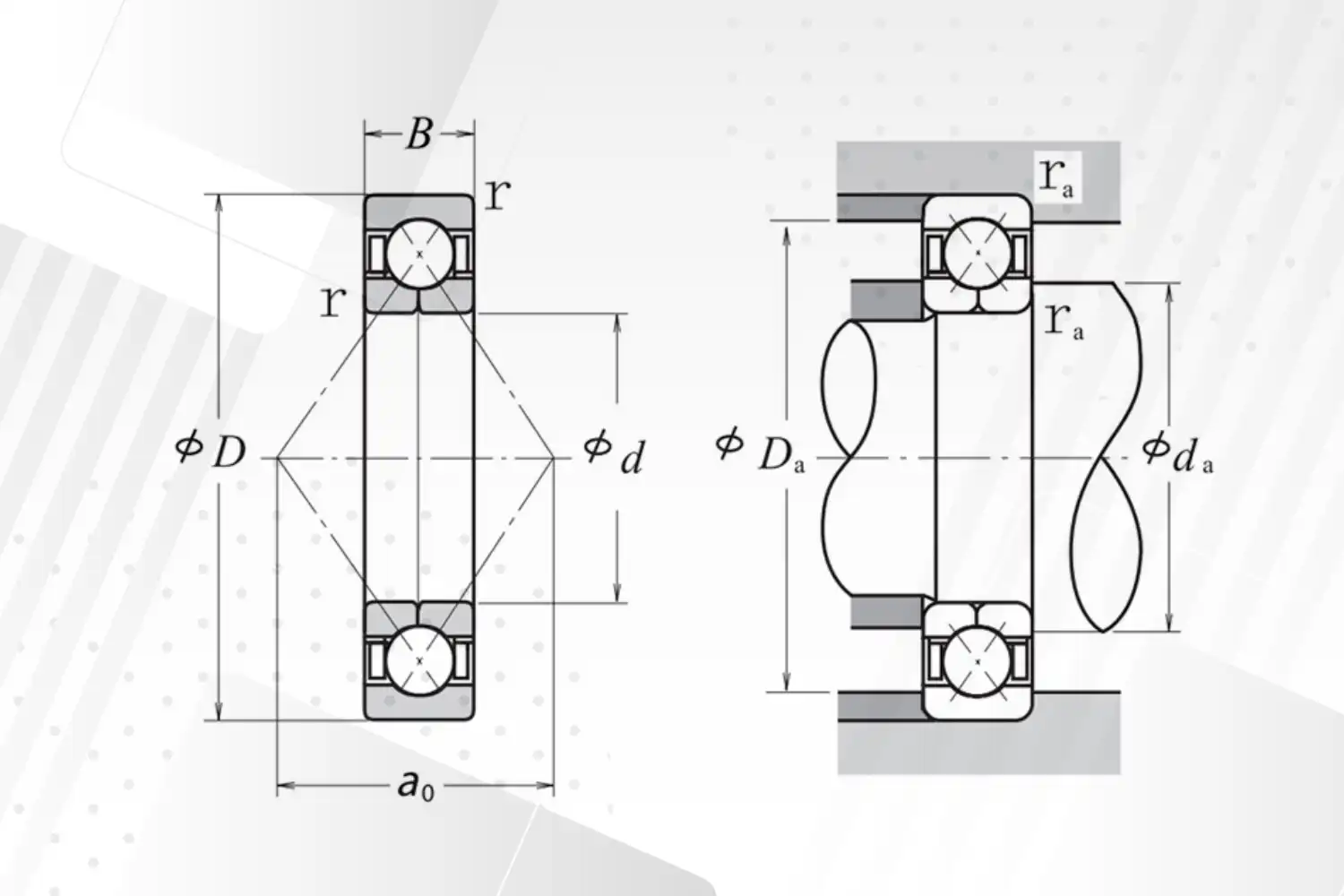
Thin-section angular contact bearings distinguish themselves from standard angular contact bearings through their constant cross-sectional design philosophy. Type A configurations maintain consistent section dimensions regardless of bore size, creating what engineers call constant-section thin-wall bearings. This design approach allows manufacturers to standardize components across entire product lines, reducing complexity while enhancing performance predictability. The unique construction features specialized race geometries that optimize load distribution patterns. Unlike conventional bearings, where cross-sectional dimensions increase proportionally with bore diameter, these bearings maintain uniform wall thickness ranging from 0.1875 × 0.1875 inch to 1.000 × 1.000 inch across bore diameters spanning 1 inch to 40 inches. This consistency creates superior rigidity characteristics compared to traditional bearing designs.
Mechanics of Rigidity Enhancement
The rigidity improvements achieved through thin-section angular contact bearings result from several interconnected mechanical principles. The angular contact design creates optimized load paths that distribute forces more effectively across bearing elements. This distribution pattern reduces localized stress concentrations while maintaining structural integrity under combined radial and axial loading conditions. Contact angle optimization plays a crucial role in rigidity enhancement. These bearings typically feature contact angles between 15 and 45 degrees, allowing them to handle both radial and axial loads simultaneously. The precise geometry ensures that load transfer occurs through optimal contact points, minimizing deflection and maintaining positional accuracy even under varying operational conditions.
Material Impact on Performance
Material selection significantly influences rigidity, durability, thin-section angular contact bearings, and overall bearing performance in precision applications. High-grade bearing steels provide excellent dimensional stability and wear resistance, while ceramic materials offer superior stiffness-to-weight ratios and enhanced corrosion resistance. Hybrid composite designs combine the advantages of multiple materials, creating solutions tailored to specific operating environments. Advanced steel alloys used in premium thin-section bearings undergo specialized heat treatment processes that enhance grain structure and surface hardness. These metallurgical improvements directly contribute to improved rigidity by reducing elastic deformation under load. The resulting performance characteristics enable these bearings to maintain precise positioning accuracy throughout their operational lifespan.
Comparing Thin Section Angular Contact Bearings with Other Bearing Types
Structural and Dimensional Distinctions
When evaluating bearing options for rigidity-critical applications, understanding the fundamental differences between bearing types becomes essential. Deep groove ball bearings, while versatile, lack the angular contact geometry necessary for optimal combined load handling. Their symmetrical design limits their ability to provide the enhanced rigidity characteristics required in precision machinery applications. Standard angular contact bearings offer improved performance compared to deep groove designs, but fall short of the space efficiency and weight optimization achieved by thin section variants. Traditional angular contact bearings maintain proportional scaling between bore diameter and cross-sectional dimensions, resulting in heavier, bulkier assemblies that may compromise overall system rigidity through increased mass and inertia effects.
Performance Metrics Analysis
Rigidity comparisons reveal significant advantages for thin-section angular contact bearings across multiple performance parameters. Load capacity per unit weight typically exceeds that of conventional bearings by 15-25%, while deflection characteristics show improvements of up to 30% under equivalent loading conditions. These performance gains translate directly into enhanced machine accuracy and reduced vibration levels. Speed capabilities represent another area where thin-section designs excel. The reduced mass and optimized geometry enable higher rotational speeds while maintaining stability. This capability proves particularly valuable in applications where both high-speed operation and rigid positioning are required simultaneously, such as precision machining centers and automated manufacturing equipment.
Application-Specific Advantages
Machine tool applications demonstrate the practical benefits of enhanced rigidity most clearly. Spindle assemblies utilizing thin-section angular contact bearings exhibit reduced runout, improved surface finish quality, and extended tool life. The enhanced rigidity minimizes deflection under cutting loads, maintaining dimensional accuracy throughout machining operations. Automation systems benefit from the improved dynamic response characteristics these bearings provide. Robotic joints and positioning mechanisms achieve higher precision and faster settling times when equipped with properly selected thin-section angular contact bearings. The reduced system compliance enables more aggressive motion profiles while maintaining positional accuracy.
Benefits and Applications of Increased Rigidity in Thin-Section Angular Contact Bearings
Enhanced Machine Accuracy and Performance
The rigidity improvements delivered by thin-section angular contact bearings create measurable enhancements in machine accuracy and operational performance. Manufacturing equipment experiences reduced deflection under operational loads, maintaining tighter tolerances and improving product quality consistency. This enhanced stability proves particularly valuable in applications where dimensional precision directly impacts product functionality and market acceptance. Vibration reduction represents another significant benefit achieved through improved bearing rigidity. Stiffer bearing assemblies resist dynamic excitation more effectively, reducing transmitted vibrations throughout machine structures. This vibration control enhances operator comfort, thin-section angular contact bearings extend component life, and enable higher operational speeds without compromising performance quality.
Industrial Applications and Performance Gains
Here are the primary industrial sectors benefiting from enhanced rigidity characteristics:
- Robotics and Automation: Precise joint articulation with minimal backlash and improved repeatability for assembly operations requiring micron-level positioning accuracy
- Aerospace Manufacturing: High-precision machining applications where surface finish quality and dimensional tolerances directly impact component performance and safety certification requirements
- Semiconductor Production: Ultra-clean environments demanding exceptional positioning accuracy and minimal particle generation during wafer handling and processing operations
- Medical Equipment: Diagnostic imaging systems requiring vibration-free operation and precise mechanical positioning for accurate image acquisition and patient safety
These applications demonstrate how rigidity improvements translate into tangible operational benefits. The enhanced performance characteristics enable equipment manufacturers to achieve tighter specifications while reducing overall system complexity and maintenance requirements.
Measurable Performance Improvements
Real-world implementation data shows substantial performance gains across multiple industries. Precision machining centers equipped with thin-section angular contact bearings demonstrate 20-35% improvement in surface finish quality compared to conventional bearing installations. Tool life extensions of 15-40% result from reduced vibration and improved cutting stability achieved through enhanced system rigidity. Semiconductor manufacturing equipment shows even more dramatic improvements, with positioning accuracy enhancements of up to 50%, enabling smaller feature sizes and higher chip densities. The ultra-low particle generation characteristics of properly maintained thin-section bearings support cleanroom requirements while delivering the precision necessary for advanced lithography processes.
Procurement Considerations for Thin-Section Angular Contact Bearings
Supplier Selection and Quality Assurance
To find trustworthy suppliers for thin-section angular contact bearings, you need to carefully look at their manufacturing skills, quality certifications, and technical help resources. Well-known companies like SKF, NSK, Timken, FAG, NTN, and INA have global delivery networks and complete quality management systems that make sure their products always work well in a wide range of situations. The company Huigong was founded in 1998 and is a specialised maker that only makes high-reliability bearing solutions for tough industrial uses. With more than 25 years of experience and more than 50 design patents, the company has the technical know-how and ability to come up with new ideas that are needed to develop and make advanced thin-section bearings.
Pricing Structures and Commercial Considerations
When deciding which thin-section angular contact bearings to buy, procurement professionals have to weigh the initial purchase prices against the total cost of ownership. The unit price of premium bearings is higher, but they have longer service lives, less maintenance needs, and better operating efficiency, which often make up for the extra cost through lifecycle cost analysis. Minimum order quantities vary a lot from one supplier to the next. For custom uses, smaller volumes are often possible with specialised manufacturers. For standard configurations, lead times are usually between 2 and 8 weeks. For custom designs, they can take anywhere from 8 to 16 weeks, based on how complicated they are and how much manufacturing capacity is available.
Customization and Technical Support
With OEM customisation choices, bearing performance of thin-section angular contact bearings can be improved for certain uses. Specialised lubrication, custom cage materials, and changed internal geometries can improve rigidity while meeting specific practical or environmental needs. To get the best results from these changes, procurement teams and seller technical staff need to work together closely. Most warranties cover problems with the way the product was made for 12 to 24 months. Some high-end suppliers also offer performance guarantees based on certain application factors. Technical advice, failure analysis, and application engineering services are all types of after-sales support that help make sure bearings work at their best throughout their working lifecycle.
Conclusion
Thin-section angular contact bearings definitely make things more rigid because of how they are designed and how well they distribute stress. When you combine the constant cross-sectional geometry with precise angular contact angles, you get better stiffness qualities that make the machine more accurate, lower vibration, and last longer. Because of these performance benefits, thin-section forms are the best choice for tasks that need to be rigid and precise. Spending money on good thin-section angular contact bearings clearly leads to noticeable changes in the performance and efficiency of equipment used in a wide range of industrial settings. tional efficiency across diverse industrial applications.
FAQ
1. How do thin-section angular contact bearings maintain rigidity despite reduced material thickness?
The enhanced rigidity comes from optimized geometry rather than material volume. The constant cross-section design and precise angular contact angles create efficient load distribution patterns that maximize structural efficiency. Advanced materials and heat treatment processes further enhance stiffness characteristics while maintaining the space-saving benefits.
2. What factors affect the load capacity and rigidity of thin-section angular contact bearings?
Load capacity depends on contact angle, material properties, race geometry, and ball complement design. Rigidity is primarily influenced by preload settings, mounting configurations, and the precision of surrounding structures. Proper installation and maintenance practices significantly impact both parameters throughout the bearing's operational life.
3. Are thin-section angular contact bearings suitable for high-speed applications?
Yes, these bearings excel in high-speed applications due to their reduced mass and optimized geometry. The lower rotational inertia and improved balance characteristics enable higher operating speeds while maintaining stability. Proper lubrication and cooling systems are essential for optimal performance at elevated speeds.
Contact Huigong for Premium Thin Section Angular Contact Bearings Solutions
Huigong delivers exceptional thin-section angular contact bearings thin-section angular contact bearings that enhance rigidity and precision for your most demanding applications. Our 25+ years of manufacturing expertise and 50+ invention patents ensure superior quality and performance. With advanced testing facilities and ISO certifications, we provide customized bearing solutions that optimize your equipment's operational efficiency. Our engineering team offers comprehensive technical support from initial specification through ongoing maintenance. Contact our specialists at sale@chg-bearing.com to discuss your specific requirements and discover why leading manufacturers choose Huigong as their trusted thin-section angular contact bearings supplier for critical applications.
References
1. Harris, T.A. & Kotzalas, M.N. "Essential Concepts of Bearing Technology: Fifth Edition." CRC Press, 2019.
2. Schaeffler Technologies AG. "Bearing Technology Handbook: Design and Application Guidelines for Rolling Bearings." Industrial Press, 2018.
3. Palmgren, A. "Ball and Roller Bearing Engineering: Third Revised Edition." SKF Industries, 2020.
4. ISO 12043-1:2017. "Rolling bearings - Single-row angular contact ball bearings - Part 1: Boundary dimensions and tolerances." International Organization for Standardization.
5. ANSI/ABMA Standard 20-2017. "Radial Bearings of Ball, Cylindrical Roller and Spherical Roller Types - Metric Design." American Bearing Manufacturers Association.
6. Budynas, R.G. & Nisbett, J.K. "Shigley's Mechanical Engineering Design: Eleventh Edition." McGraw-Hill Education, 2021.