

To choose the correct Metric Thin Section Bearings for robots and aircraft uses, you need to know about important performance factors, available room, and operating needs. These special precision bearings can hold a lot of weight while having very small cross-sectional shapes. This is why they are essential for satellite mechanisms, robotic joints, and aircraft control systems. As part of the selection process, the size requirements, accuracy classes, material requirements, and weather conditions are all looked at to make sure the best performance in mission-critical situations where failure is not a choice.
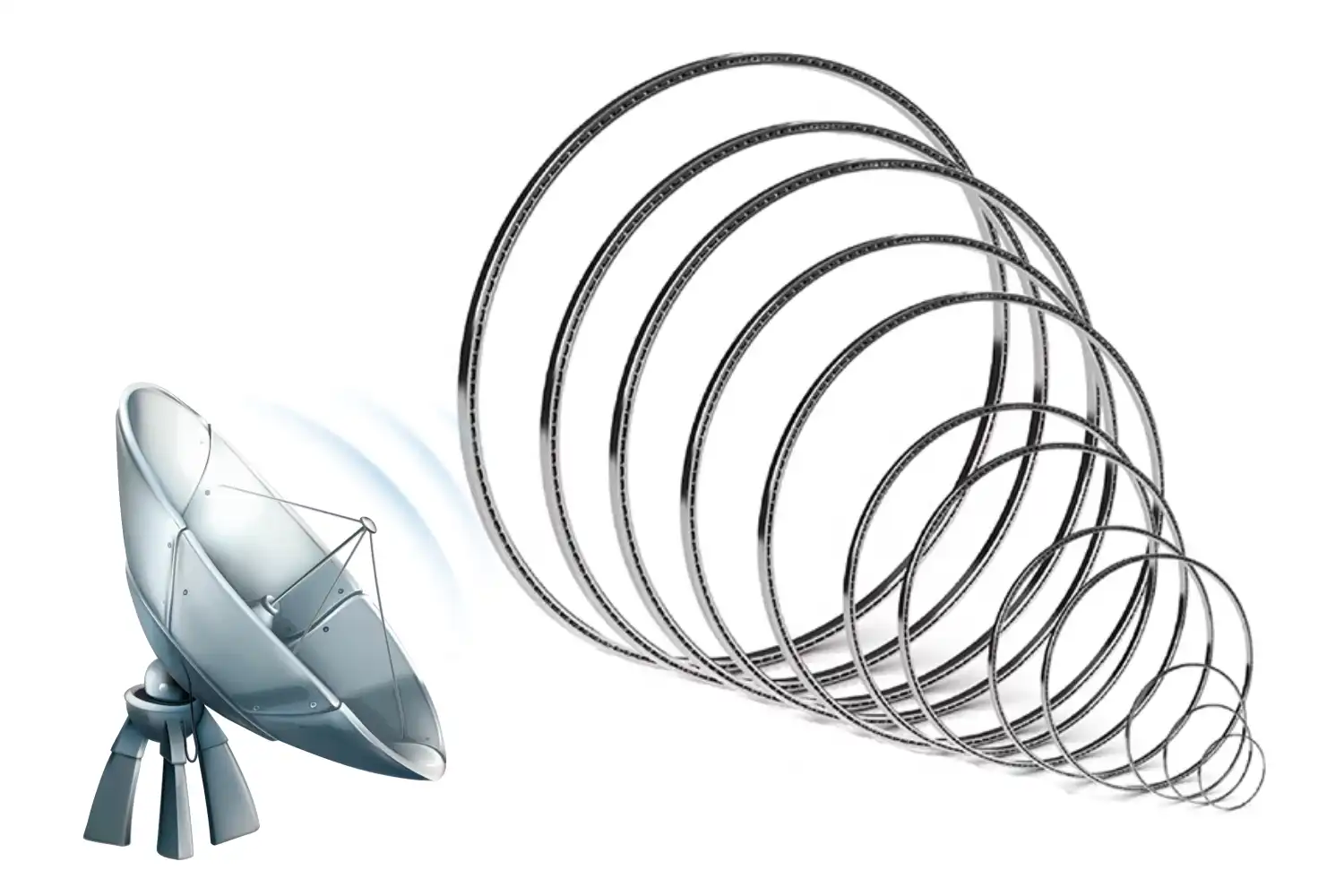
Understanding Thin Section Bearing Fundamentals
Precision bearings with thin walls are changing the way space-constrained uses are used in many fields. Unlike regular bearings, these parts keep the structure strong while taking up very little radial room. Most of the time, the cross-sectional area is smaller than the bearing hole width. This saves a lot of weight. Radial contact bearings (Type C) handle only radial loads, angular contact bearings (Type A) handle both radial and angular loads, and four-point contact bearings (Type X) handle axial pressure in both directions. These three types make up the majority of the market. In robots and aircraft systems, each type is used for different tasks. The choice of material is very important for how well a bearing works. High-carbon chromium steel (GCr15) is very hard and doesn't wear down easily. Stainless steel (9Cr18) is better at resisting rust in tough settings. The material of the bearing cage and the way it is oiled also affect how it works.
Metric Series Classification and Dimensional Standards
The cross-sectional thickness and load values of Metric Thin Section Bearings are based on standard series classes. The 8mm line can fit inner sizes ranging from 25mm to 360mm and has the thinnest shape for very small spaces. This series is great at making small robotic joints and devices for placing satellites. The 13mm series can hold more weight while still taking up about the same amount of room. The inner diameter numbers are the same as the 8mm series, but the extra thickness lets the horizontal and axial load values go up. For better dependability, aerospace motion systems often use this arrangement. The 20mm line can hold the most weight in its thin part group. But even though they are thicker, these bearings are still a lot lighter than other options. This design is strong, which makes it useful for large robotic manipulators and aircraft actuators. When accuracy is needed, dimension error is very important. To keep things from breaking down too soon or not working as well, standard metric bearing measurements must match up with housing and shaft specs.
Accuracy Classes and Performance Requirements
The accuracy of the bearings has a direct effect on the accuracy of the system and how smoothly it works. The levels of accuracy go from P0 (normal) to P6 (ultra-precision), with P0 being the least accurate and P6 being the most accurate. For measurement accuracy, geometric precision, and surface finish, each class sets its own limits.P0 accuracy is good for general industry uses where middling accuracy is enough. The P6 and P5 classes are good for most robot tasks that need more accurate positioning. For high-speed processes and important tracking tools, P4 precision is needed.P2 accuracy is the highest level of bearing precision and is needed for satellite devices and high-precision robotic systems. A lot of quality control steps and special production methods are used to make these bearings. Investing in P2 accuracy pays off in situations where dependability is very important. With higher accuracy classes, temperature stability, tolerance to shaking, and even load spread, all get a lot better. During the choosing process, the need for accuracy must be weighed against the need to save money.
Load Analysis and Bearing Selection Criteria
A load study is the first step in choosing the Metric Thin Section Bearings. Axial loads are parallel to the spinning axis, while radial loads act perpendicular to it. When loads are combined, they need to be carefully looked at in terms of their size, direction, and frequency. Dynamic load rates show how much weight a bearing can hold when it is moving. When the movement stops or slows down very much, static load ratings are used. Depending on how important the function is and the weather outside, safety factors are usually between 2 and 5. Different types of bearings and cleaning systems have very different speed limits. High-speed bearings use special cage designs and lube systems to keep things stable and control the amount of heat they produce. These limits are often used in aerospace applications. Extreme temperatures, levels of pollution, and shock loads are some of the environmental factors that affect the choice of bearing. Space uses have to deal with problems that aren't found on Earth, like vacuums, radiation, and sudden temperature changes.
Material Selection and Environmental Considerations
Stainless steel bearings work great in harsh settings like those found in aircraft and naval robots. The chromium presence makes the material very resistant to rusting while still being hard enough for bearing surfaces. In harsh situations, hybrid ceramic bearings work better than other types. Seal selection keeps grease in and keeps internal parts from getting dirty. Contact seals offer the most safety, but they also increase friction and heat production more. Non-contact valves lower friction and provide a modest amount of safety. It is important for lubrication systems to work in a variety of temperatures and for a long time before they need to be serviced. Grease makes upkeep easier, but it limits how fast something can go. Higher speeds are possible with oil lubrication, but complicated delivery methods are needed. Steel, metal, and polymer mixtures are all cage elements that have their own benefits. Steel cages are the strongest, brass cages are good at transferring heat, and polymer cages are lighter and quieter.
Installation Procedures and Best Practices
Proper installation procedures prevent premature bearing failure and ensure optimal performance. Clean installation environments eliminate contamination sources that could compromise bearing life. Precision measuring tools verify dimensional accuracy throughout the process. Mounting techniques vary depending on bearing type and application requirements. Press fits secure the bearing firmly while maintaining proper alignment. Thermal expansion methods reduce installation forces but require precise temperature control. Alignment verification prevents edge loading and uneven stress distribution. Dial indicators and laser alignment tools ensure geometric accuracy within specified tolerances. Misalignment significantly reduces bearing life in high-precision applications. Torque specifications must be followed precisely during assembly. Over-tightening creates excessive preload, while insufficient torque allows unwanted movement. Calibrated torque wrenches ensure consistent installation quality.
Maintenance Strategies for Extended Service Life
Preventive maintenance programs for Metric Thin Section Bearings service life and system reliability. Regular inspection schedules identify potential issues before catastrophic failure occurs. Vibration monitoring reveals developing problems in rotating machinery. Lubrication management maintains proper film thickness and prevents contamination buildup. Relubrication intervals depend on operating conditions, bearing type, and lubricant characteristics. Automated lubrication systems ensure consistent maintenance in critical applications. Temperature monitoring indicates bearing health and lubrication effectiveness. Elevated temperatures suggest increased friction, inadequate lubrication, or contamination issues. Thermal imaging enables non-invasive condition assessment. Replacement criteria consider bearing condition, operational requirements, and maintenance costs. Proactive replacement prevents unexpected downtime in critical systems while optimizing maintenance expenses.
Custom Solutions for Specialized Applications
Standard bearing configurations cannot address every application requirement. Custom engineering solutions accommodate unique dimensional constraints, load requirements, and environmental conditions. Specialized materials and surface treatments enhance performance in extreme environments. Non-standard dimensions enable optimal system integration while maintaining bearing performance. Custom cage designs accommodate specific lubrication requirements or weight constraints. Modified seal configurations balance protection against friction considerations. Prototype development and testing validate custom designs before full production. Finite element analysis predicts stress distribution and fatigue life under actual operating conditions. Performance testing confirms analytical predictions and identifies optimization opportunities. Quality assurance programs ensure custom bearings meet stringent aerospace and robotics standards. Traceability documentation provides a complete manufacturing history for critical applications requiring certification compliance.
Partner with Huigong for Premium Metric Thin Section Bearing Solutions
Huigong stands as a trusted metric thin-section bearings manufacturer with over 25 years of engineering excellence in precision bearing technology. Our extensive experience serving the aerospace, robotics, and industrial automation sectors enables us to understand your unique application challenges and deliver optimized solutions. Our manufacturing capabilities encompass all metric series configurations from 8mm through 20mm cross-sections, with accuracy classes ranging from P0 to P2 precision levels. Advanced quality control systems, including CMM inspection, metallographic analysis, and comprehensive testing protocols, ensure every bearing meets exacting specifications. Custom engineering services address specialized requirements that standard catalog bearings cannot fulfill. Our technical team collaborates closely with your engineers to develop innovative solutions for unique applications. Whether you need modified dimensions, specialized materials, or enhanced environmental protection, we deliver results that exceed expectations. Ready to enhance your robotics or aerospace system performance with precision-engineered bearings? Our application engineers are standing by to discuss your specific requirements and recommend optimal bearing solutions. Contact us at sale@chg-bearing.com to begin your project consultation today.
Conclusion
Selecting appropriate metric thin-section bearings for robotics and aerospace applications requires a comprehensive understanding of load requirements, dimensional constraints, and operational environments. The combination of proper bearing selection, installation procedures, and maintenance strategies ensures optimal system performance and extended service life. Success depends on partnering with experienced manufacturers who understand the unique challenges of precision applications and deliver engineered solutions that meet stringent performance requirements.
References
1. Harris, T.A. & Kotzalas, M.N. "Advanced Concepts of Bearing Technology: Rolling Bearing Analysis, Fifth Edition." CRC Press, 2019.
2. Eschmann, P., Hasbargen, L. & Weigand, K. "Ball and Roller Bearings: Theory, Design and Application." John Wiley & Sons, 2018.
3. Hamrock, B.J., Schmid, S.R. & Jacobson, B.O. "Fundamentals of Fluid Film Lubrication in Bearing Applications." Marcel Dekker, 2020.
4. Society of Automotive Engineers. "Aerospace Bearing Design and Application Guidelines." SAE International Standards, 2021.
5. International Organization for Standardization. "Rolling Bearings - Metric Thin Section Ball Bearings." ISO 12043:2022.
6. Bhushan, B. "Principles and Applications of Tribology in Aerospace Systems." Springer International Publishing, 2019.