

How well Type A Thin Section Bearing systems are oiled affects how long they last and how reliably they work in tough industrial settings. Because of their precise engineering and physical limitations, these constant-section bearings need to be oiled in a certain way. Knowing the best lubricant to use, how to apply it, and how often to do maintenance checks can help keep big machines running smoothly and keep bearings from breaking down too soon.
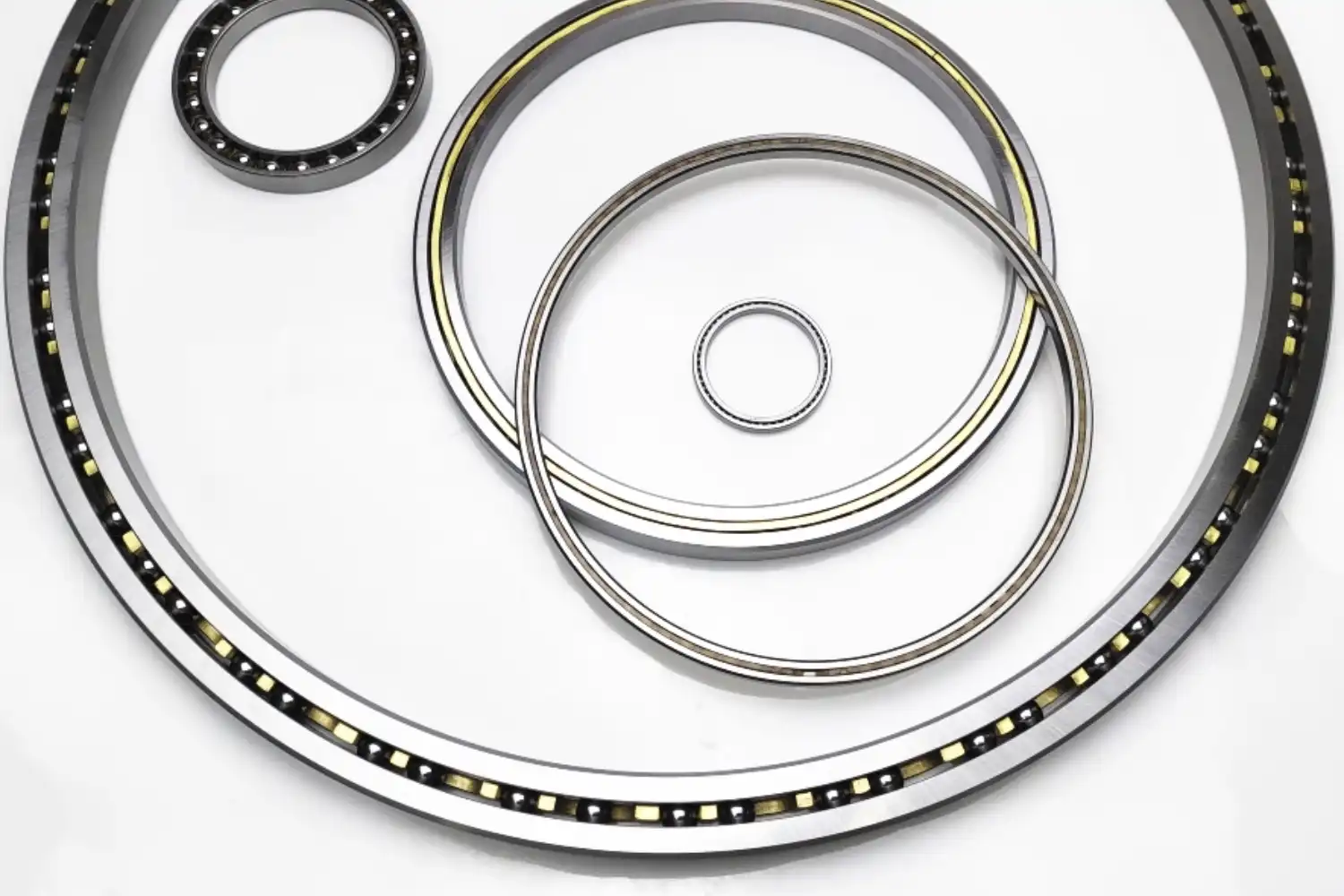
Understanding Type A Thin Section Bearing Lubrication Requirements
Angular contact ball bearings with a constant-section shape have special maintenance problems that engineers need to solve in a planned way. The small cross-sectional area limits the amount of oil that can be used and requires extra protection against dirt and wear. When these special bearings are used in small areas, normal ways of lubricating them don't work well. The design of the constant cross-section keeps the measurements the same even when the hole size changes. This makes the greasing paths more consistent, which makes upkeep more predictable. Changes in temperature in heavy industrial settings have a big effect on the stickiness of lubricants. For accurate machinery, oils are needed that can keep their qualities fixed over a wide temperature range, usually from -40°C to 150°C.The features of the load have a huge effect on the choice of grease. When radial and axial loads are combined in Type A designs, they create complicated stress patterns that need lubricants with high film strength and anti-wear additives.
Critical Lubricant Selection Parameters
Choosing the right viscosity grade is the first step in making a good greasing plan. ISO VG 32 to VG 150 lubricants can be used in most thin section uses. The right one to use depends on the speed and load of the process. The makeup of the base oil has a big effect on how long it works. In tough situations, synthetic polyalphaolefin (PAO) lubricants work better than mineral oil options when it comes to heat stability. Ester-based synthetics work better with rubber covers that are popular in sealed bearing configurations. Additive kits need to solve certain problems in the workplace. Extreme pressure chemicals keep micro-welding from happening when the load is high. Antioxidants keep lubricants from breaking down in places with high temperatures. Corrosion inhibitors Type A Thin Section Bearing surfaces are safe in wet or chemically harsh environments. Testing for compatibility makes sure that the grease works well with the bearing materials. When it comes to additives, stainless steel races need different mixes than normal bearing steel races. It is important to choose the right lube for cage materials, especially specialized plastics, so they don't break down chemically.
Grease vs. Oil Lubrication for Thin Section Bearings
Grease lubrication offers superior retention characteristics in compact bearing geometries. Lithium complex thickeners provide excellent mechanical stability under vibration and shock loading conditions typical in industrial machinery. Oil lubrication systems deliver superior heat dissipation capabilities essential for high-speed applications. Circulating oil systems remove heat and contaminants effectively, extending bearing operational life significantly. Hybrid lubrication approaches combine initial grease protection with oil circulation benefits. Pre-packed grease provides startup protection while circulating oil assumes primary lubrication duties during operation. Environmental sealing influences lubrication method selection. Open bearings accommodate circulating oil systems effectively. Sealed configurations rely primarily on initial grease charges with planned replacement intervals.
Proper Lubrication Application Techniques
The initial lubrication quantity of a Type A Thin Section Bearing requires precise calculation based on the bearing's internal geometry. Excessive lubricant generates harmful churning losses while insufficient quantities create boundary lubrication conditions, leading to premature wear. Filling calculations typically use 30-50% of available internal space for grease applications. Oil bath levels maintain coverage of the lowest rolling element without excessive drag losses. Splash lubrication systems require careful level control to ensure adequate distribution without over-lubrication. Application methods vary with bearing accessibility and operational requirements. Bearing pack lubrication involves complete filling before installation. Central lubrication systems deliver measured quantities through dedicated feed lines. Manual lubrication requires scheduled maintenance intervals with proper quantity control. Contamination prevention during lubrication application protects bearing integrity. Clean application tools prevent particle contamination. Filtered lubricants eliminate manufacturing debris and storage contaminants. Sealed storage containers maintain lubricant cleanliness until application.
Monitoring and Maintenance Strategies
Condition monitoring systems detect lubrication degradation before bearing damage occurs. Vibration analysis identifies developing lubrication deficiencies through characteristic frequency patterns. Temperature monitoring reveals inadequate lubrication through elevated operating temperatures. Lubricant analysis programs track degradation markers, including viscosity changes, acid number increases, and wear metal concentrations. Regular sampling schedules enable proactive maintenance planning and prevent catastrophic failures. Relubrication intervals depend on operational severity and environmental conditions. Standard industrial applications typically require relubrication every 3,000-8,000 operating hours. Harsh environments or high-temperature operation reduce intervals significantly. Purging procedures ensure the complete removal of degraded lubricants. Compatibility between new and existing lubricants prevents chemical reactions that compromise performance. Mixing incompatible lubricants creates performance degradation and potential bearing failure.
Common Lubrication Failures and Prevention
Inadequate lubrication manifests through characteristic wear patterns and operational symptoms in Type A Thin Section Bearings. Noise increases indicate boundary lubrication conditions developing. Temperature elevation suggests insufficient heat dissipation capacity. Over-lubrication creates equally problematic conditions through excessive drag and heat generation in Type A Thin Section Bearings. Churning losses increase operating temperatures while excess grease migrates into surrounding machinery components. Contamination introduces abrasive particles that accelerate wear processes in Type A Thin Section Bearings. Water contamination promotes corrosion while reducing lubricant effectiveness. Proper sealing systems prevent contaminant ingress during operation. Chemical incompatibility between lubricants and bearing materials creates degradation products that compromise performance in Type A Thin Section Bearings. Elastomeric seals swell or harden when exposed to incompatible lubricants. Metal surfaces corrode when exposed to acidic degradation products.
Advanced Lubrication Technologies
Automated lubrication systems deliver precise quantities at optimal intervals without manual intervention. Programmable controllers adjust delivery based on operational parameters, including speed, load, and temperature conditions. Solid lubrication technologies provide alternatives for extreme environments where conventional lubricants fail. Molybdenum disulfide coatings offer dry lubrication capability. Polytetrafluoroethylene (PTFE) additives reduce friction coefficients significantly. Nano-lubricant technologies incorporate engineered particles that enhance performance characteristics. Nano-diamonds provide superior wear protection. Graphene additives improve thermal conductivity while reducing friction .Biodegradable lubricants address environmental concerns without compromising performance. Vegetable-based formulations offer excellent lubricity with reduced environmental impact. Synthetic biodegradable options provide extended service life compared to conventional alternatives.
Conclusion
Effective lubrication management extends the Type A thin section bearing operational life while ensuring reliable performance in demanding industrial applications. Proper lubricant selection, application techniques, and maintenance protocols prevent premature failures and reduce operational costs. Understanding the unique requirements of constant-section bearings enables engineers to develop comprehensive lubrication strategies that maximize equipment reliability. Professional technical support from experienced bearing manufacturers provides additional assurance for critical application success.
Choose Huigong as Your Trusted Type A Thin Section Bearing Supplier
Huigong Bearing Technology delivers comprehensive lubrication support alongside premium thin section bearing solutions for critical industrial applications. Our engineering team provides detailed lubrication specifications customized for specific operational requirements and environmental conditions. Advanced manufacturing capabilities ensure precise internal geometries that optimize lubrication distribution patterns. Quality control systems verify dimensional accuracy, critical for proper lubricant film formation. Testing protocols validate performance under simulated operational conditions. Technical consultation services assist with lubricant selection and maintenance program development. Application engineers analyze operational parameters to recommend optimal lubrication strategies. Training programs educate maintenance personnel on proper lubrication procedures and failure prevention. Global supply chain capabilities ensure consistent product availability and technical support. Regional service centers provide rapid response for urgent requirements. Inventory management programs maintain critical spare bearing availability. Contact us at sale@chg-bearing.com for detailed lubrication recommendations and technical specifications tailored to your specific application requirements.
References
1. Harris, T.A. & Kotzalas, M.N. (2019). "Advanced Concepts of Bearing Technology: Rolling Bearing Analysis." 6th Edition. CRC Press.
2. Khonsari, M.M. & Booser, E.R. (2017). "Applied Tribology: Bearing Design and Lubrication." 3rd Edition. John Wiley & Sons.
3. Hamrock, B.J., Schmid, S.R. & Jacobson, B.O. (2020). "Fundamentals of Fluid Film Lubrication." 2nd Edition. Marcel Dekker.
4. ISO 15312:2018. "Rolling Bearings - Thermal Speed Rating - Calculation and Coefficients." International Organization for Standardization.
5. NLGI Spokesman Technical Manual. (2021). "Grease Lubrication of Rolling Element Bearings." National Lubricating Grease Institute.
6. SKF Group Technical Handbook. (2020). "Bearing Maintenance and Lubrication Guidelines for Industrial Applications." SKF Technical Publications.