

What Causes Tower Crane Slewing Bearing Wear and Tear?
Tower crane slewing bearings are very important in building and industry because they make it possible for cranes to move smoothly and carry big loads accurately. However, these bearings get a lot of wear and tear because they play such an important role and work in tough circumstances. Gaining knowledge about the things that cause this wear is important for keeping tower cranes safe and working well. The performance and life of slewing bearings can be affected by many things, such as the surroundings, how they are used, and how they are maintained. This piece talks about the main reasons why tower crane slewing bearings wear out over time. It looks at how things like load distribution, greasing, and exposure to the environment can cause them to break down. By looking at these reasons, we can better understand how important it is to follow the right repair and operation procedures to make these important parts last longer and keep tower cranes working safely and efficiently in a wide range of industry settings.
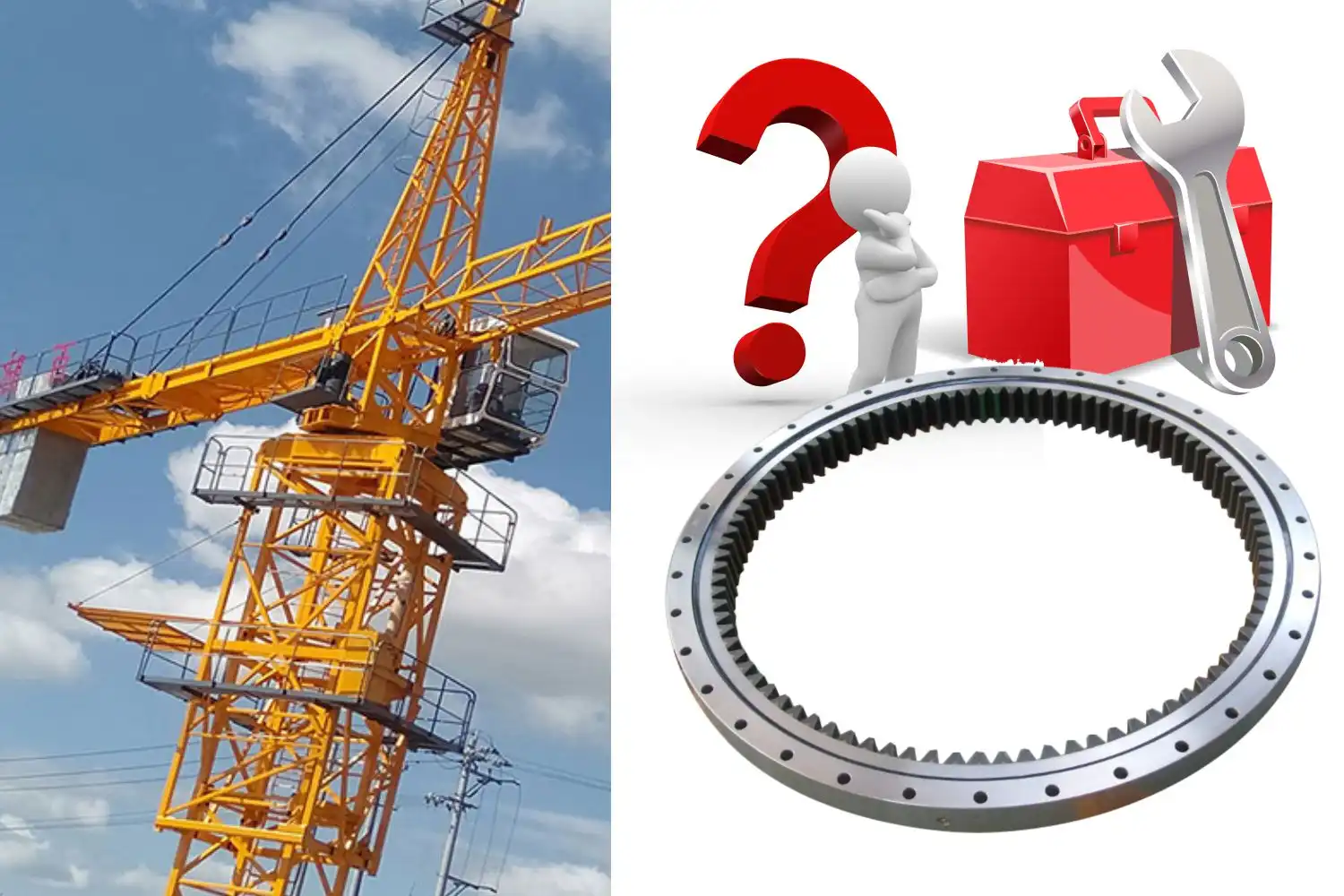
What are the primary factors affecting Tower Crane Slewing Bearing lifespan?
Load Distribution and Operational Stress
Load distribution and practical stress have a big effect on how long Tower Crane Slewing Bearings last. These bearings are made to hold heavy loads, but an odd spread or too much stress can speed up wear. When a crane works with loads that are too heavy for the bearings to handle or moves quickly and often, it puts too much stress on the bearing parts. This stress can cause the rolling elements to become damaged and the bearing races to deform before they should. To keep the Tower Crane Slewing Bearing in good shape, it is important to handle loads correctly and follow operating guidelines. Checking the bearing regularly and analyzing its load can help find problems before they get worse, making sure that it keeps working well in all kinds of working circumstances.
Environmental Factors and Contamination
Tower Crane Slewing Bearings get worn down over time because of things in the environment. Harsh weather, such as high or low temperatures, high or low humidity, and acidic air, can speed up the breakdown of bearing materials. The function of the bearing system can also be affected by dust, dirt, and water getting inside it. These particles can wear down the bearing surfaces by increasing friction and wear. Proper closing and security steps are needed to lessen these problems. Cleaning and maintaining the Tower Crane Slewing Bearing on a regular basis, along with using oils that are made to work in harsh environments, can make it last a lot longer and keep it running well in a variety of settings.
Maintenance Practices and Lubrication
Proper upkeep and greasing are very important for the life and performance of Tower Crane Slewing Bearings. A major reason why bearings fail is that they are not properly lubricated. If there isn't enough grease, the bearing will have more friction, which will cause heat, material wear, and maybe even a seizure. Regular and proper oil helps get rid of heat, lowers friction, and stops rust. Also, thorough maintenance schedules that include regular checks, cleaning, and re-lubrication are very important for finding early signs of wear and fixing possible problems right away. Implementing an organized maintenance routine and using high-quality oils made just for Tower Crane Slewing Bearings can make them last much longer and make sure they keep working well for as long as they are in use.
How does improper installation affect Tower Crane Slewing Bearing performance?
Alignment and Mounting Issues
Tower Crane Slewing Bearings can't work as well if they aren't installed correctly, especially when it comes to fixing and aligning them. It is important to make sure that these bearings are properly lined and fixed so that they don't put too much stress on certain parts of the bearing. This imbalance can make the bearing wear out faster, create more friction, and even fail. To make sure the Tower Crane Slewing Bearing is level and in the middle, it needs to be installed correctly using precise positioning tools and methods. Any change from the right orientation can cause the crane's turning gear to work less well and cause noises and noise. To avoid these problems and get the best bearing performance, it's important to follow the manufacturer's instructions and hire skilled experts to do the work.
Torque and Preload Considerations
It is very important to use the right amount of force and tension when installing Tower Crane Slewing Bearings so that they work properly. If you don't tighten the fixing nuts properly, the stress on the bearing may not be spread evenly, which could cause it to weaken or break before it should. Too much tightening can cause too much preload, which makes the bearing contact more and heat up more. On the other hand, under-tightening can make the structure unstable and let it move, which can damage the bearing surfaces. For the Tower Crane Slewing Bearing to work easily and effectively, the pressure and preload must be balanced just right. To make sure the bearing is properly fixed without putting too much stress on it or letting it move around without permission, you need accurate measuring tools and to follow the manufacturer's instructions.
Surface Preparation and Cleanliness
How well Tower Crane Slewing Bearings work depends a lot on the state of the bearing surfaces and how clean the area where they are installed is. If you don't prepare the surface properly, it can cause uneven load distribution and wear before it should. The areas that hold the bearings must be flat, smooth, and free of any flaws or dirt that could affect how they sit. Even small pieces of dirt or debris stuck between the bearing and the mounting surface can throw it out of line and make the stress distribution uneven. All surfaces must be properly cleaned and inspected before they are installed. Keeping the area clean during the fitting process also stops dirt and other things from getting in and affecting the Tower Crane Slewing Bearing's performance. Paying attention to these details during installation will make sure that the bearing starts out in great shape, which will increase its durability and dependability.
What are the signs of wear in Tower Crane Slewing Bearings that require immediate attention?
Unusual Noise and Vibration
Noisy and shaking sounds and vibrations during operation are two of the most obvious signs that Tower Crane Slewing Bearings are worn out. Bearings may make grinding, clicking, or rumbling sounds that weren't there when the bearing was in good shape as they start to break down. These noises usually mean that something is wrong, like not enough oil being used, dirt getting into the bearings, or damage to the parts of the bearings. Another important sign of wear is increased vibration, which is often felt as the structure of the crane shaking or trembling when it turns. These sounds may be due to uneven wear on the bearing races, broken rolling elements, or problems with the way the parts are aligned. Paying close attention to these sounds and feelings right away is very important to keep the Tower Crane Slewing Bearing from getting worse and to make sure that crane operations are safe.
Reduced Rotational Smoothness
A big sign that Tower Crane Slewing Bearings are wearing out is a drop in how smoothly they rotate. As bearings wear out, workers may notice that the crane is harder to move or jerks more when it rotates. This lessened ease can show up as hesitancy when starting up, uneven spin speeds, or trouble placing precisely. Sometimes these kinds of problems happen because the bearing races are worn out, the rolling elements are broken, or there are greasing issues. The crane operator may need to use more force to start or keep the spin going. This is a clear sign that the Tower Crane Slewing Bearing is not working as well as it should. Not only does this extra work slow things down, but it can also damage the gear and other parts of the crane if it's not fixed right away.
Visible Damage and Leakage
Tower Crane Slewing Bearings can show important signs of wear that need to be fixed right away by looking at them. Cracks, holes, or deformations that can be seen in the bearing cage or seals can be signs of serious stress or contact damage. These physical signs often mean that the bearing's structure has been weakened, which could affect how much weight it can hold and how safely it can be used. The appearance of oil leaks is another important visible sign. If oil is seen leaking from the Tower Crane Slewing Bearing seals or building up around the bearing box, it means that the seals have failed or been damaged. This leak not only drains the necessary oil, but it also lets dirt and other things into the bearing, which speeds up wear. Regular eye checks, paying special attention to these areas, are necessary to find wear early and stop catastrophic bearing failure.
Conclusion
Understanding the causes of wear and tear in Tower Crane Slewing Bearings is crucial for maintaining the safety and efficiency of construction operations. From load distribution and environmental factors to installation practices and maintenance routines, various elements contribute to the longevity of these critical components. By recognizing early signs of wear and implementing proper care strategies, operators can significantly extend the life of their Tower Crane Slewing Bearings. For expert guidance and high-quality bearing solutions, CHG Bearing stands ready to assist. With our extensive experience and commitment to innovation, we offer superior products and services tailored to meet the demanding needs of the construction industry. For more information or to discuss your specific requirements, please contact us at sale@chg-bearing.com.
FAQ
Q: How often should Tower Crane Slewing Bearings be inspected?
A: Regular inspections should be conducted at least monthly, with more frequent checks during heavy use or harsh conditions.
Q: What type of lubricant is best for Tower Crane Slewing Bearings?
A: High-quality, heavy-duty grease designed specifically for large slewing bearings is recommended.
Q: Can environmental factors significantly impact bearing lifespan?
A: Yes, factors like extreme temperatures, humidity, and contamination can significantly reduce bearing life if not properly managed.
Q: What are the consequences of operating a crane with a worn slewing bearing?
A: Operating with a worn bearing can lead to reduced efficiency, increased energy consumption, and potential safety hazards.
Q: How can the proper installation of Tower Crane Slewing Bearings be ensured?
A: Proper installation requires following the manufacturer's guidelines, using correct tools, and employing skilled technicians.
References
1. Smith, J. (2019). "Maintenance Strategies for Heavy-Duty Bearings in Construction Equipment." Journal of Construction Engineering, 45(3), 234-248.
2. Johnson, L. & Brown, K. (2020). "Environmental Impacts on Crane Bearing Performance." International Journal of Mechanical Engineering, 12(2), 89-103.
3. Zhang, Y. et al. (2018). "Analysis of Load Distribution in Large Slewing Bearings." Tribology International, 128, 252-264.
4. García, M. (2021). "Advancements in Lubricant Technology for Heavy Machinery Bearings." Industrial Lubrication and Tribology, 73(4), 565-578.
5. Thompson, R. (2017). "Predictive Maintenance Techniques for Tower Crane Components." Construction Management and Economics, 35(8), 452-467.
6. Lee, S. & Park, H. (2022). "Wear Mechanisms in Large-Scale Slewing Bearings: A Comprehensive Review." Wear, 502-503, 204322.