

Bearings for Wind Turbines: Performance and Reliability
Wind turbines work all the time, even when the wind speed, temperature, and load are changing. This puts a lot of stress on all the moving parts inside the nacelle and tower. Bearings for wind turbines are at the heart of this problem. They allow the blade pitch to be changed, the nacelle to move side to side, the main shaft to rotate, and the generator to run, all while staying strong over decades of use. Because it's expensive and hard to get to when a turbine is down, especially when it's abroad, the performance and dependability of these bearings have a direct impact on the project's energy output and profitability. How well do these bearings hold up in rough conditions? This guide tells you what they do and how to choose the right ones for long-term support. Exposure to salt spray, extreme temperature swings, and constant vibration demands superior sealing, specialized lubrication, and corrosion-resistant materials. Proper bearing selection ensures minimal downtime, reduces maintenance costs, and maximizes the turbine's lifetime energy production, which is critical for offshore installations where service access is limited.
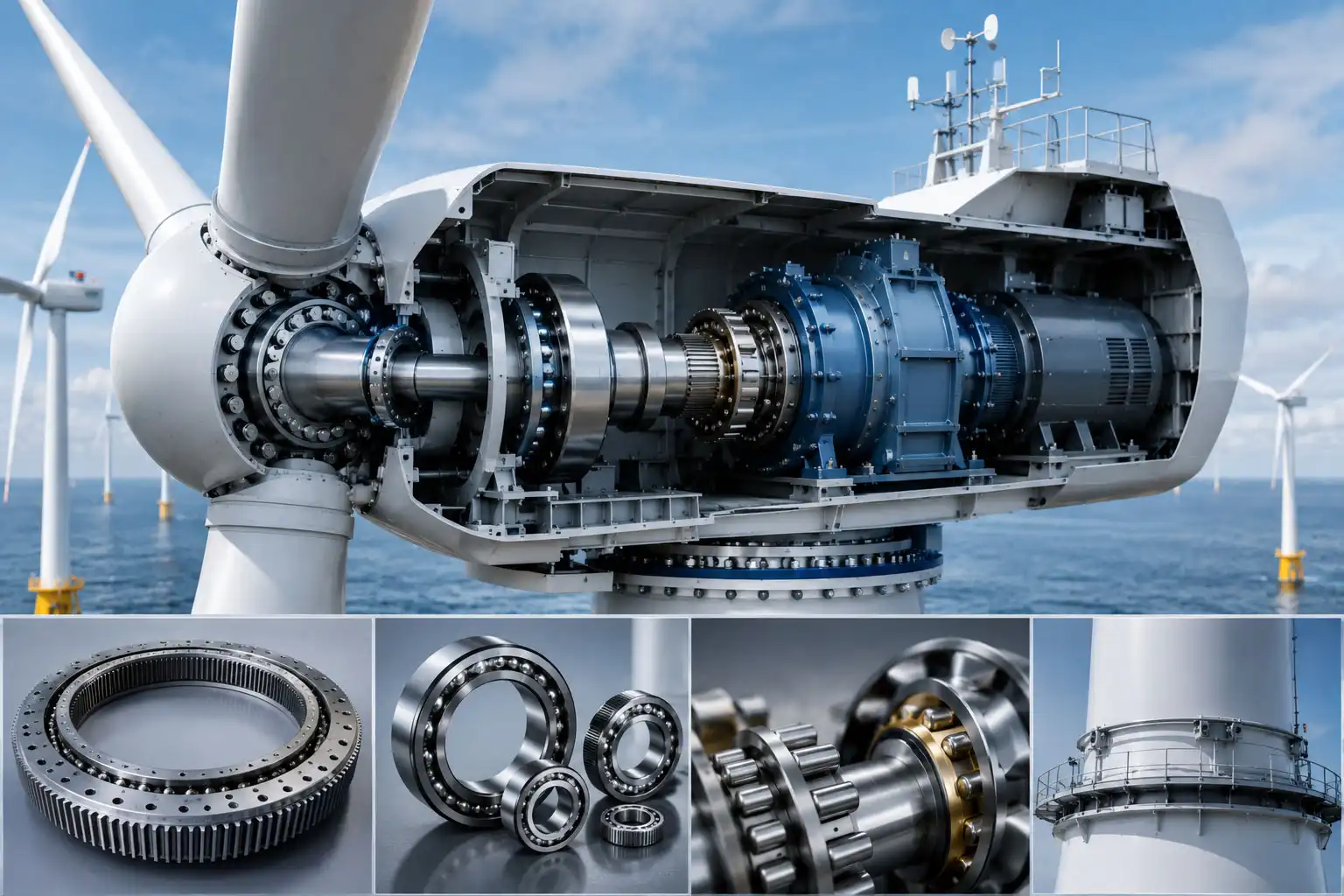
What Are Bearings for Wind Turbines and Why Are They Critical for Performance?
Definition and Core Function
Bearings for wind turbines are special rolling-element parts that hold the blades, the frame, and the main engine in place and help them turn. In contrast to regular industrial bearings, they need to have high axial, radial, and moment load capacities all in one unit because wind loads are always changing direction and volume. Because of this, Bearings for Wind Turbines have bigger raceways, better contact angles, and stronger cages than regular machinery bearings. This lets the rotor collect energy efficiently while the structure stays stable. Additionally, these bearings incorporate advanced surface hardening treatments and specialized steel grades to resist fatigue and micro-pitting under fluctuating loads. Their robust design also accommodates slight shaft misalignments and thermal expansion, ensuring smooth rotation even in gusty conditions. These engineering enhancements collectively extend service intervals and improve overall turbine reliability over a 20-year operational life.
Why Performance Depends on Bearing Quality
How easily the rotor and hub move in response to wind speed and direction is closely linked to how well the turbine works. When wind turbine bearings don't work right, they cause friction losses, vibrations, and misalignments that make it harder to collect energy and speed up the wear on gears and engines. High-quality bearings keep low-friction torque and tight tolerances even after millions of spinning cycles. This keeps the turbine flexible and helps managers meet their annual energy production goals for as long as the asset lasts. Consistent rotational accuracy reduces unnecessary stress on downstream components such as gearboxes and generators, preventing premature failures. Advanced surface finishes and optimized raceway geometries further minimize heat generation, ensuring stable operation under fluctuating loads. Ultimately, reliable bearing performance translates directly into higher capacity factors and lower cost of energy over the turbine's service life.
Key Types of Bearings for Wind Turbines and Their Functional Roles
Pitch and Yaw Bearings
Pitch bearings let each blade spin around its own axis, changing the angle to get the most lift and keep the turbine safe in high winds. Yaw bearings, on the other hand, turn the whole frame so that the rotor always faces the wind. Both are usually big slewing-type Wind Turbine Bearings that have fixing holes, gear teeth, and sealing systems built right in. Four-point contact ball shapes are popular here because they can hold a lot of static load in a small, single-row frame. These bearings also incorporate specially designed seals that prevent lubricant leakage and block moisture ingress, which is critical for offshore environments. The integral gearing allows direct engagement with drive pinions, enabling precise pitch and yaw adjustments. Their compact design reduces overall hub height and nacelle weight, contributing to lower tower construction costs and easier transportation.
Main Shaft and Generator Bearings
The huge rotational load from the rotor hub is transferred to the engine by the main shaft bearing. This is usually made of double-row tapered or cylindrical rollers, which offer high stability and accurate spinning even when there is a lot of thrust. Generator bearings work at much higher speeds and with smaller loads, putting precision and low friction first. It is important to choose the right bearings for wind turbines at each stage of the drivetrain, as a single place with the wrong load capacity can shorten the system's life. For instance, underestimating axial loads on the main shaft can cause premature roller fatigue, while over-specifying generator bearings may introduce unnecessary friction losses. Each position demands a distinct balance of load rating, speed capability, and thermal stability. Proper matching ensures that every component operates within its design limits, maximizing overall drivetrain reliability and minimizing unplanned maintenance interventions.
How Do Bearings for Wind Turbines Improve Reliability in Harsh Environments?
Sealing and Corrosion Resistance
Bearings in wind turbines, especially those that are installed offshore, are exposed to salt spray, dampness, temperature changes, and flying particles that speed up the breakdown of lubricants and rust. Reliable Bearings for Wind Turbines have multiple lip seals, coats that don't rust, and specially made greases that keep their protective films even when it's freezing or wet outside. These steps lower the number of unplanned repair trips, which is especially helpful since fixing faraway wind turbines is expensive and can only be done during certain times of the year. Advanced seal designs incorporate labyrinth paths and spring-loaded lips to actively exclude contaminants while retaining lubricant under pressure fluctuations. Corrosion-resistant coatings such as zinc-rich primers or thermal-sprayed aluminum provide sacrificial protection for exposed surfaces. These combined features extend lubrication intervals, reduce friction-related wear, and give operators confidence that the bearings will survive harsh marine environments throughout their expected service life.
Load Distribution Under Variable Wind Conditions
In contrast to industrial gear that runs at a steady speed, wind mills have axial, radial, and moment loads that are always changing because of gusts, turbulence, and changes in direction throughout the day. Well-designed wind turbine bearings spread these changing loads equally across the rolling elements. This stops stress from building up in one area, which would otherwise cause the raceways to wear out too quickly. When crossed tapered roller designs use preloading methods, they make the bearing even stiffer and more accurate in its spin, which helps it work reliably in real-world situations. The preload also eliminates internal clearance, reducing micro-movement and fretting corrosion under variable loads. This enhanced stiffness improves load distribution and minimizes deflection during peak wind events, ensuring consistent rotor alignment. Such designs maintain their dimensional stability over years of operation, delivering dependable performance even in the most challenging wind regimes.
Selecting High-Quality Bearings for Wind Turbines for Long-Term Stability
Matching Bearing Type to Turbine Component
When choosing solid Bearings for Wind Turbines, it's important to make sure that the design fits the job. This is because different drivetrain locations need different bearing structures. The following table shows some popular designs and where they work best most of the time.
| Bearing Structure | Strength | Typical Turbine Location |
|---|---|---|
| Four-point contact ball | High static load capacity | Pitch and yaw systems |
| Crossed cylindrical roller | High dynamic load capacity | Yaw and main shaft |
| Crossed tapered roller | High stiffness, rotation accuracy | Main shaft, hub interface |
| Three-row cylindrical roller | Very high combined load capacity | Large yaw and pitch assemblies |
Evaluating Manufacturer Expertise and Customization
In addition to the main materials, long-term security relies a lot on the technical support, material choice, and testing skills of the maker. Operators can avoid premature breakdowns by finding a provider that can make Bearings for Wind Turbines based on specific turbine types, temperature conditions, and load patterns. Looking at a company's certifications, patents, and testing tools like coordinate measuring machines and friction torque testers can help you figure out how reliable their products will be in the long run. A manufacturer's ability to perform non-destructive testing, metallurgical analysis, and accelerated life simulation further indicates their commitment to quality. Comprehensive documentation of heat treatment processes and material traceability ensures batch-to-batch consistency. Providers that offer field installation support and remote monitoring services add another layer of assurance, helping operators maximize uptime and reduce total cost of ownership.
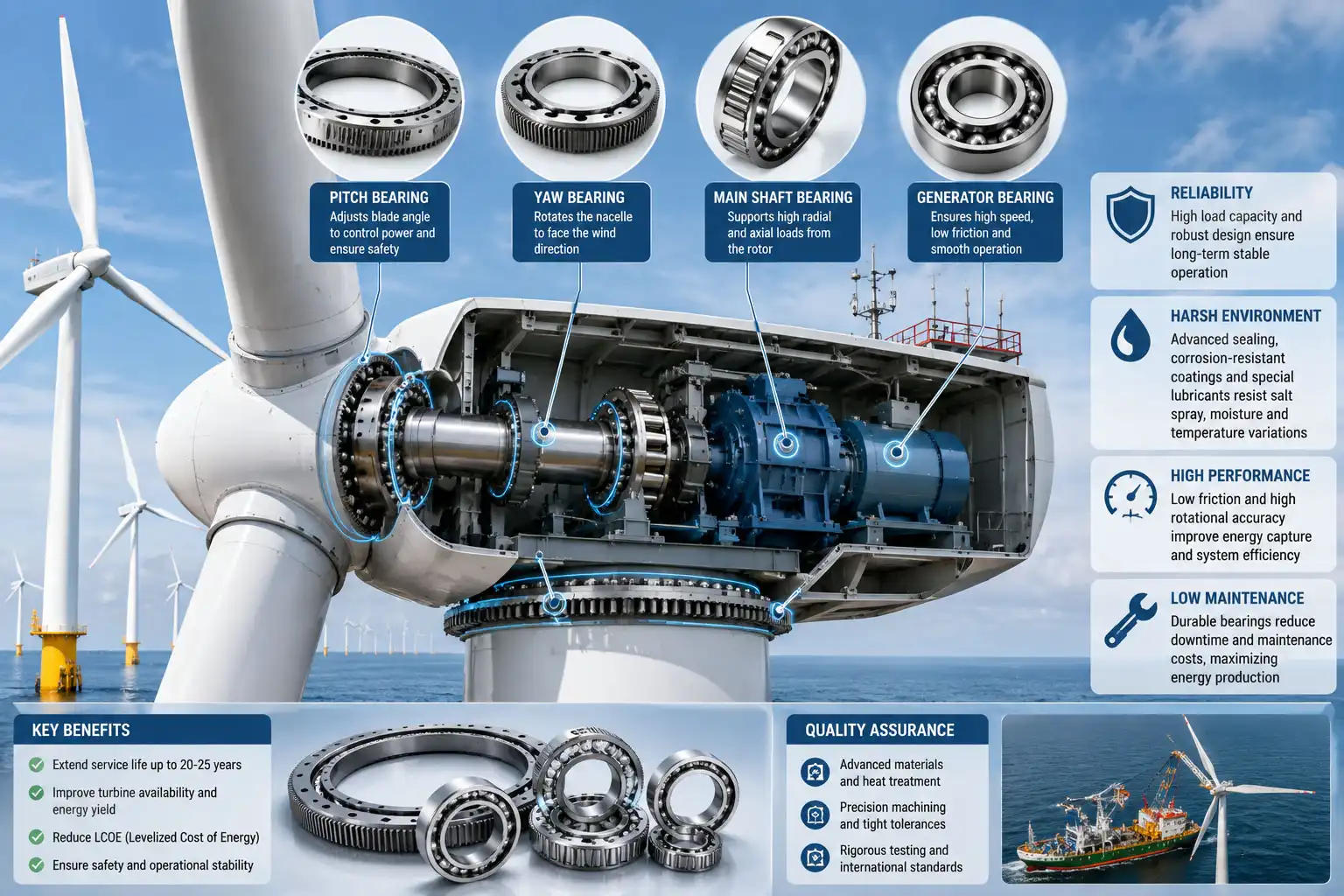
Conclusion
Bearings for Wind Turbines directly affect how well a turbine collects energy and how regularly it works, even in decades of bad weather and changing loads. CHG Bearing, which was founded in 1998 and is based in Luoyang, China, has more than 150 sets of production tools, decades of experience making things, and ISO-certified quality systems that can handle this tough job. CHG Bearing helps wind energy users around the world get reliable turbine performance. They have over 50 idea patents and a strong track record of unique solutions. Their engineering team collaborates closely with turbine manufacturers to customize raceway profiles, seal designs, and lubrication systems for specific wind farm conditions. Advanced simulation software allows them to predict bearing life under various load scenarios before production begins. With a global service network and fast response times, CHG ensures that operators receive both product excellence and ongoing technical support throughout the turbine's operational lifetime.
FAQ
What loads do Bearings for Wind Turbines need to withstand?
Combined axial, radial, and moment loads that constantly change with wind speed and direction.
Why are pitch and yaw bearings important?
Pitch bearings adjust blade angle for optimal lift; yaw bearings rotate the nacelle to face the wind.
How do these bearings hold up offshore?
Multi-lip seals, corrosion-resistant coatings, and specialized greases resist salt spray, humidity, and temperature extremes.
Can wind turbine bearings be customized for specific models?
Yes, manufacturers such as CHG Bearing tailor load capacity, sealing, and materials to specific models and climates.
What equipment indicates reliable bearing manufacturing?
Coordinate measuring machines, friction torque testers, and metallographic microscopes all signal strong quality control.
Partner with CHG Bearing for Your Wind Turbine Bearings
If your wind energy project demands dependable, long-lasting rotating components, CHG Bearing's engineering team is ready to support your specifications with Bearings for Wind Turbines. From pitch and yaw systems to main shaft assemblies, our 30 years of manufacturing experience and ISO-certified production stand behind every bearing we supply. We offer comprehensive technical consultation, from initial load calculations to final installation guidance, ensuring each component perfectly matches your turbine's operating profile. Our rigorous testing protocols include dimensional inspection, hardness verification, and fatigue life validation using state-of-the-art equipment. With responsive customer service and flexible delivery schedules, we help you meet project deadlines while maintaining the highest quality standards. Contact CHG Bearing today to learn how our reliable solutions can optimize your wind turbine performance and reduce lifecycle costs. Contact us today at sale@chg-bearing.com to discuss your turbine requirements and receive a tailored recommendation built for reliability.
References
1. International Electrotechnical Commission, IEC 61400-1: Wind Turbines — Design Requirements.
2. American Gear Manufacturers Association, AGMA 938-A: Slewing Bearing Application and Selection Guidelines.
3. Harris, T. A., Kotzalas, M. N., Rolling Bearing Analysis, CRC Press.
4. Brändlein, J., Eschmann, P., Hasbargen, L., Weigand, K., Ball and Roller Bearings: Theory, Design and Application, John Wiley & Sons.
5. SKF Group, Wind Turbine Bearings Engineering Handbook, SKF Publications.
6. International Organization for Standardization, ISO 76: Rolling Bearings — Static Load Ratings.