

Ru Cross Roller Bearings for Turntables and Rotary Tables
Ru Cross Roller Bearings are a completely new way to fix turntables and spinning tables in heavy-duty industrial settings. These precision-engineered bearings have a high load capacity, high rigidity, and unmatched rotational accuracy, all of which are important in harsh industrial environments. With their unique crossed roller design, these bearings can handle a wide range of pressure conditions while still being small. This makes them a must-have for companies that need reliable parts for steel manufacturing, precision machinery, and industrial equipment.
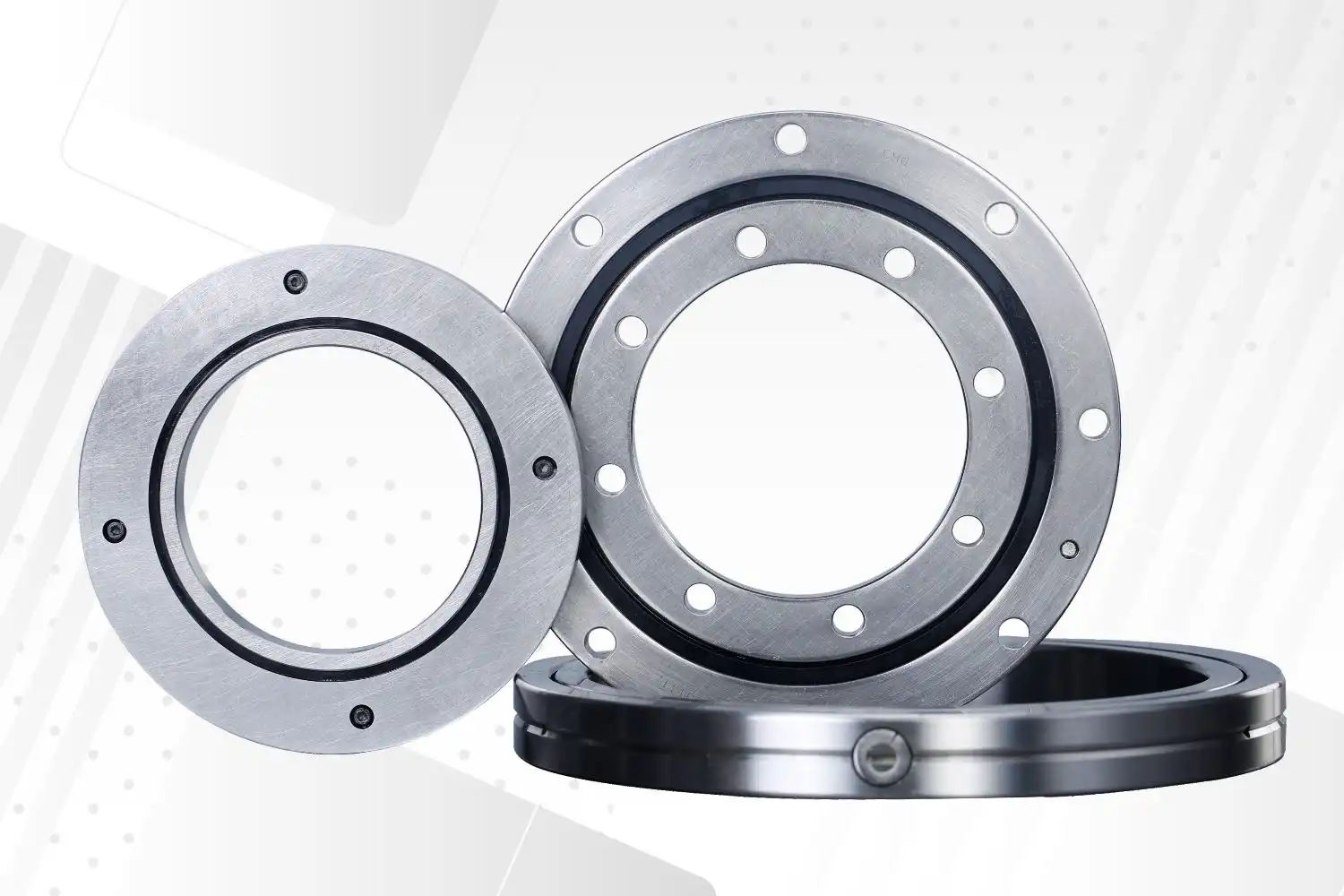
Understanding Ru Cross Roller Bearings
The fundamental design of crossed roller bearings sets them apart from conventional bearing solutions in industrial applications. These sophisticated components feature cylindrical rollers arranged orthogonally within integrated inner and outer ring structures, creating a configuration that maximizes load distribution while maintaining exceptional rotational precision.
Advanced Design Architecture
The building of an integrated inner and outer ring is a big step forward in bearing technology. This design gets rid of the need for separate ring parts, which makes assembly easier and increases the total reliability of the system. Because the rollers are not stacked on top of each other, these bearings can handle radial loads, axial loads, and tilting moments all at the same time. This makes them very useful for turntable uses where complex force vectors are common. There are manufacturing standards that show how precise these parts can be. These bearings come in a range of sizes, from 20 to 350 mm inside diameter to 70 to 540 mm outside diameter and 12 to 45 mm wide, so they can be used in a wide range of situations. There are six different levels of precision: P6, P0, P5, P4, and P2. The P4 and P2 levels offer the highest level of accuracy for mission-critical tasks.
Material Engineering Excellence
The choice of material is very important for how well and how long a bearing lasts. The high-quality Gcr15 and Gcr15SiMn steels are very strong and last a long time. To get the best hardness and physical stability, these materials go through a lot of difficult heat treatment steps. Brass and nylon are both common cage materials, and each has its own benefits for different operating situations. Brass cages are stronger and better for high-load situations, while fabric cages are better at resisting chemicals and making less noise.
Comparing Ru Cross Roller Bearings with Other Bearing Options
When evaluating bearing solutions for turntables and rotary tables, crossed roller bearings consistently outperform traditional alternatives in critical performance metrics. Understanding these comparative advantages helps procurement professionals make informed decisions that align with operational requirements, Ru Cross Roller Bearings, and long-term reliability goals.
Load Capacity and Precision Advantages
When both ball bearings and single-row roller bearings are loaded together, they can't handle all of the weight. Crossed roller bearings work great when they need to support radial forces, axial pressure, and moment loads all at the same time. The crossed design better spreads forces across the roller contact surfaces, which lets higher load ratings fit into smaller spaces. Another big benefit is that rigidity traits make it better. Crossed roller bearings are preloaded, which means they don't have any internal gaps. This makes the system stiffer. This rigidity is very important for precise placement tasks that need to keep accuracy standards high by minimising deflection.
Cost-Effectiveness Analysis
Crossed roller bearings may cost more to buy at first than other types of bearings, but when you look at the total cost of ownership, these more modern options are often better. Lower operating costs over the bearing's lifecycle are caused by longer service life, less maintenance, and better system performance. The features that save space also allow for smaller equipment designs, which could lower the overall cost of the system. Quality approvals and performance standards make sure that machines work reliably in tough conditions. These bearings meet strict industrial standards that are on par with the best foreign brands. This gives you peace of mind in important applications where downtime costs a lot.
Procurement and Supply Chain Insights for Ru Cross Roller Bearings
Successful procurement strategies for precision bearings require careful consideration of supplier capabilities, quality assurance processes, and supply chain reliability. Establishing relationships with qualified manufacturers ensures consistent product availability and technical support throughout the equipment lifecycle.
Supplier Qualification and Quality Assurance
Authorised distributors and direct manufacturer relationships are important for making sure the quality of key bearing applications, including Ru Cross Roller Bearings. Verification of manufacturing certifications, such as ISO9001 Quality Management and ISO14001 Environmental Management standards, makes sure that suppliers keep their quality methods consistent. These certifications show that you care about both making great products and being good to the world. The technical skills of providers have a big effect on how well a procurement goes. When it comes to product creation and custom solution development, you can trust manufacturers with a lot of research and development resources, which can be seen in their patent portfolios and engineering know-how. Being able to offer professional support, such as application engineering and troubleshooting help, makes relationships with suppliers much more valuable.
Flexible Purchasing and Customization Options
These days, businesses need flexible supply chain systems that can adapt to changing demand patterns and specific needs. OEMs and wholesalers can save money by buying in bulk, and it's important to keep enough inventory on hand to keep production going. Clear pricing systems help with accurate budgeting and cost planning. As equipment designs become more specialised, the ability to customise them becomes more and more important. When it comes to equipment performance and market differentiation, suppliers who offer modified bearing configurations, special materials, or custom dimensional standards give their customers a competitive edge.
Installation, Maintenance, and Troubleshooting of Ru Cross Roller Bearings
Proper installation procedures Ru Cross Roller Bearings and maintenance practices directly impact bearing performance and service life. Understanding these requirements enables maintenance teams to maximize equipment reliability while minimizing operational disruptions.
Installation Best Practices
Crossed roller bearings are easier to install than other types of bearings because they are built into the machine. Because the bearing structure has mounting holes, you don't need to buy different housing parts or presser flanges. This design makes fitting easier while still making sure that the bearings are lined up correctly and have enough preload. When these bearings are installed, the accuracy of the bearings must be taken into account. Clean places for building keep things from getting dirty, which could hurt performance. The right torque specs for mounting bolts make sure that there is enough clamping force without distorting the bearing. Taking temperature into account during installation helps keep the measurements accurate during the whole process of building.
Maintenance Protocols and Troubleshooting
Routine maintenance plans improve the performance of Ru Cross Roller Bearings over the course of their working life. Visual inspections done on a regular basis can find possible problems before they become expensive failures. Choosing the right lubricant based on the load and working conditions is a key part of managing lubrication and extending the life of bearings. Vibration, noise, and changes in temperature are all common operating problems. Systematic methods for troubleshooting help find the root causes and fix problems. Being aware of when professional help is needed stops more damage and ensures the process is safe.
Future Trends and Innovations in Cross Roller Bearing Technology
Technological advancement continues to drive improvements in bearing design, materials, and manufacturing processes. These innovations align with evolving industry requirements for increased automation, enhanced precision, and environmental sustainability.
Material and Design Innovations
Advanced materials research focuses on improving bearing performance while reducing environmental impact. Innovative steel formulations provide enhanced fatigue resistance and extended service life. Surface treatment technologies improve wear resistance and reduce friction, contributing to energy efficiency improvements. Design optimization through computational modeling enables more precise roller profiles and raceway geometries. These refinements improve load distribution and reduce stress concentrations, ultimately extending bearing life and reliability.
Industry-Specific Applications
Demand for higher precision and reliability standards is driven by the need for more automation in production. The small size and high rigidity of crossed roller bearings make them especially useful for robotics applications. Bearing technology needs to change to keep up with the demand for better performance as industrial processes get more complex. Sustainability issues are becoming more and more important in the design and production of bearings. Lifecycle management practices, such as making things recyclable and using less material, are in line with companies' environmental duties while still meeting Ru Cross Roller Bearings performance standards.

Conclusion
Ru Cross Roller Bearings are the best choice for turntables and spinning tables that need to be very precise, able to hold a lot of weight, and reliable. Their new form makes them much better than traditional bearings, especially in industrial settings that are very demanding. With a wide range of sizes, accurate grades, and material choices, these bearings can meet the needs of a wide range of applications while still providing excellent performance. The best use of these modern bearing solutions is to make sure they are bought, installed, and maintained correctly. This improves the reliability of equipment and its efficiency.
FAQ
1. What makes Ru Cross Roller Bearings suitable for turntable applications?
The crossed roller design enables simultaneous support of radial loads, axial loads, and tilting moments within a compact envelope. The integrated inner/outer ring structure provides exceptional rigidity, while the preloaded configuration eliminates internal clearances, ensuring precise rotational motion essential for turntable applications.
2. How do I select the appropriate precision grade for my application?
Precision grade selection depends on application requirements. P6 and P0 grades suit general industrial applications, while P5, P4, and P2 grades provide increasing levels of accuracy for demanding applications. Critical positioning systems typically require P4 or P2 precision levels to achieve specified performance standards.
3. What maintenance intervals are recommended for optimal bearing performance?
Maintenance schedules vary based on operating conditions, but visual inspections should occur monthly with detailed assessments quarterly. Lubrication intervals depend on load, speed, and environmental conditions, typically ranging from 6 to 24 months. Regular monitoring of temperature, vibration, and noise levels helps identify maintenance needs before issues develop.
Partner with Huigong for Superior Ru Cross Roller Bearing Solutions
Huigong brings over 25 years of engineering excellence to precision bearing manufacturing, specializing in high-reliability solutions for demanding industrial applications. Our Ru Cross Roller Bearings deliver unmatched performance for turntables and rotary tables, backed by comprehensive technical support and custom engineering capabilities. With ISO9001 and ISO14001 certifications, we ensure consistent quality and environmental responsibility. Contact our expert team at sale@chg-bearing.com to discuss your specific requirements and discover why leading manufacturers trust Huigong as their preferred Ru Cross Roller Bearings supplier for critical applications.
References
1. Hamrock, B.J., Schmid, S.R., and Jacobson, B.O. "Fundamentals of Fluid Film Lubrication in Rolling Element Bearings." Marcel Dekker, 2004.
2. Harris, T.A. and Kotzalas, M.N. "Essential Concepts of Bearing Technology: Rolling Bearing Analysis." CRC Press, 2006.
3. Nelias, D. "Ball and Roller Bearings: Theory, Design and Application in Industrial Equipment." John Wiley & Sons, 2011.
4. Eschmann, P., Hasbargen, L., and Weigand, K. "Ball and Roller Bearings: Theory, Design, and Application in Precision Machinery." Research Studies Press, 1999.
5. Tallian, T.E. "Failure Atlas for Hertz Contact Machine Elements." ASME Press, 1992.
6. Yokoyama, T. and Nakamura, T. "Cross Roller Bearing Design Principles for Precision Machinery Applications." Journal of Mechanical Engineering Science, 2018.