

Are Thin Section Angular Contact Bearings Right for Your Design?
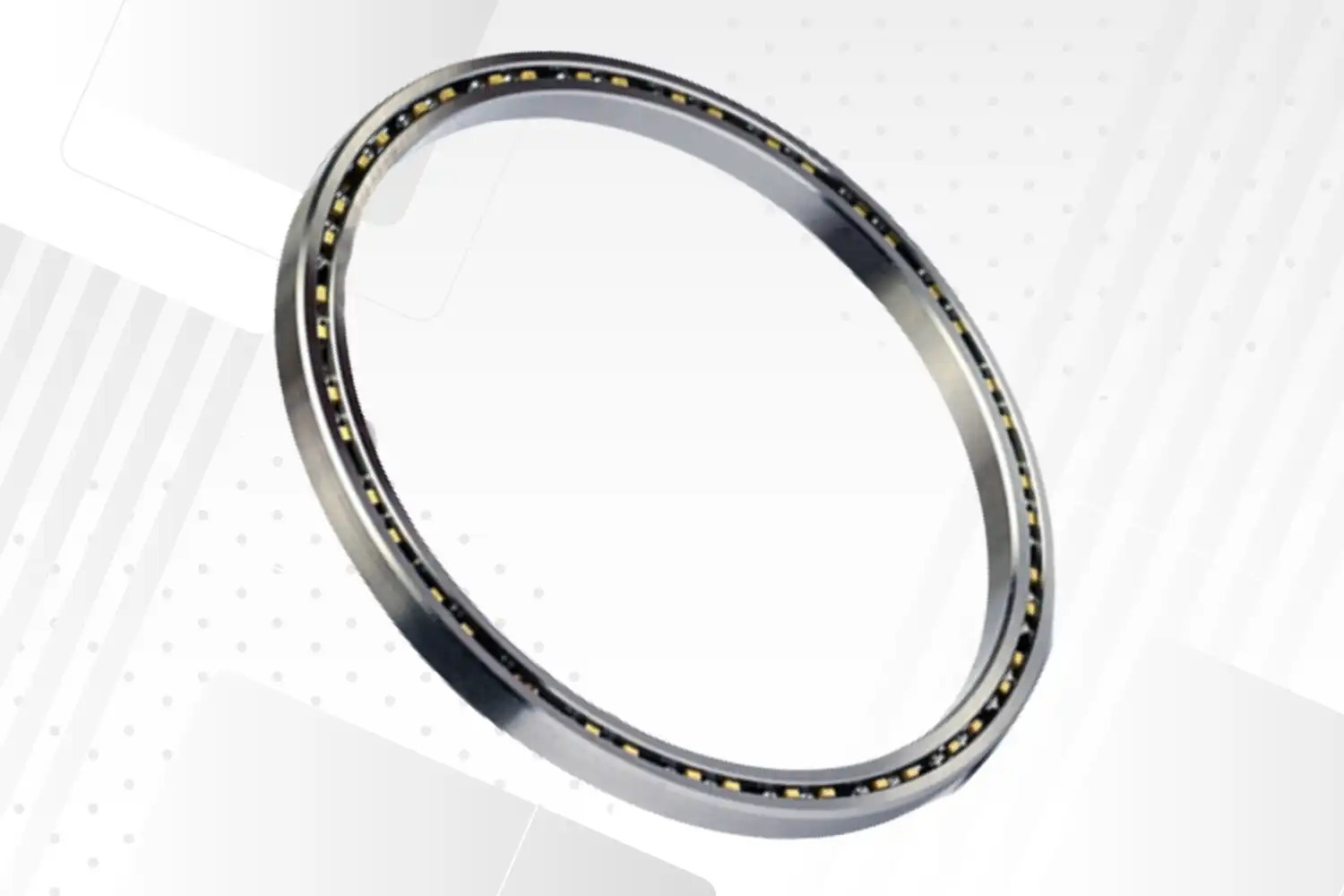
Thin section angular contact bearings are ideal for your design if you require space-efficient, high-precision components that handle combined radial and axial loads. These specialized bearings excel in applications demanding compact designs without sacrificing performance, making them perfect for aerospace, medical equipment, precision machinery, and industrial automation. Their constant cross-section design enables standardization across product lines while delivering exceptional load capacity and running accuracy in space-constrained environments.
Introduction
Engineers are under more and more pressure to make mechanical systems that are smaller, more efficient, and more effective in a world where industries are changing quickly. The task is to get better performance while working with space and weight limits that are getting tighter. This is where thin section angular contact bearings come in as game-changing parts for modern design. These special bearings are a breakthrough in precision engineering because they let engineers handle heavy loads in surprisingly small areas. Thin-section designs are different from other types of bearings because they can support both horizontal and axial forces at the same time while still being very accurate and long-lasting. Adding these bearings to your design can have a big effect on how reliable your equipment is, how efficiently it works, and how long the whole system lasts. To figure out if thin-section angular contact bearings meet your design needs, you need to carefully look at a number of factors, such as the load characteristics, space limitations, precision requirements, and operational environments. This thorough analysis will help procurement and engineering workers make the right choice when making a crucial decision, ensuring the best bearing choice that meets both technical requirements and business goals.
Understanding Thin Section Angular Contact Bearings
Thin-section angular contact bearings distinguish themselves through their innovative reduced cross-sectional profile design, which enables integration into applications where space represents a critical constraint. The fundamental engineering principle behind these bearings involves creating angular contact between the races and rolling elements, which enhances their ability to handle both axial and radial loads simultaneously with remarkable efficiency.
Working Principles and Load Handling Capabilities
The angular contact design makes a contact angle that is usually between 15 and 40 degrees. This lets the bearing handle thrust loads in one direction while still being able to handle rotational loads very well. This design spreads forces more evenly across the bearing surfaces, which improves load distribution and increases operational stability under changing stress conditions. Type A thin-section angular contact bearings are different from other bearing designs because their design principle is based on a constant cross-section. While the cross-sectional size of standard bearings grows as the bore size grows, the cross-sectional size of thin-section bearings stays the same throughout the series. Standardisation makes it possible for designers to use the same bearing profiles on a range of equipment sizes. This makes it easier to keep track of supplies and make sure that designs are always the same.
Material Composition and Manufacturing Excellence
Modern are made from high-grade stainless steel, which makes them very resistant to rust and long-lasting even in harsh working conditions. The precise manufacturing process uses advanced heat treatment methods and strict quality control measures to make sure that the dimensions are within the acceptable range for the toughest industrial uses. The bearing races go through special hardening processes that make the hardness levels uniform while keeping the material's toughness. Rolling parts are treated the same way, which makes sure that their performance stays the same over the life of the bearing. Modern cage designs, which often use polymer or metal materials, guide the ball perfectly while reducing friction and wear to a minimum.
Advantages and Applications in Modern Industrial Design
When you switch from traditional bearings to thin-section angular contact bearings, you get a lot of benefits that directly solve engineering problems today. As a result, these benefits of thin section angular contact bearings are even stronger in situations where standard design methods can't be used because of space, weight, or performance needs. The most noticeable benefit of thin-section bearing integration is that it saves space. Bearing sets can have their sizes cut down by a lot while keeping or even increasing their load capacity. This feature lets engineers make equipment that is smaller, cheaper, and better able to work with other systems. Getting rid of extra weight has benefits beyond just saving mass. It can also help improve the dynamic response and lower the energy use in rotating machines.
Critical Applications Across Industries
Thin-section angular contact bearings are used a lot in the aerospace business for things like satellite positioning systems and aircraft control mechanisms. These bearings meet strict weight and space standards while still providing the accuracy and dependability needed for mission-critical tasks. High running accuracy and smooth operation are especially helpful for radar equipment and antenna systems. Medical equipment makers are relying more and more on thin-section bearings for surgical robots, imaging equipment, and precise diagnostic tools. These bearings are perfect for clean rooms where dependability must not be compromised because they work smoothly, are very accurate, and don't rust. These bearings are used in rotating parts of CT scanners and MRI machines that need to be very accurate and have very little vibration. Thin-section angular contact bearings are also used in robotic joints, pick-and-place mechanisms, and precision positioning steps in industrial automation systems. Because the bearings can handle combined loads and keep their accuracy, they make it possible for more complex automation systems that are more productive and reliable. These bearings provide important performance advantages in a number of different uses, such as packaging machinery and equipment used to make semiconductors.
Performance Characteristics in Demanding Environments
Thin-section angular contact bearings make systems more stable and less likely to bend when they're loaded because they make them stiffer. This trait is especially useful for precise machining tasks where accurate measurements have a direct effect on the quality of the finished product. Machine tool wheels and rotary tables benefit from shorter travel distances and higher stiffness levels. These bearings can work at high speeds for tasks that need to rotate quickly while still being precise. The improved lubrication systems and optimised internal geometry allow for long-term high-speed operation without affecting the accuracy or life of the bearings. These features are used to boost output in textile machinery and high-speed packaging equipment.
Comparing Thin Section Angular Contact Bearings with Other Bearing Types
Selecting optimal bearing solutions requires a comprehensive evaluation of available technologies against specific application requirements. Thin-section angular contact bearings offer distinct advantages in particular scenarios, while other bearing types may prove more suitable for different operational conditions.
Performance Comparison with Deep Groove Ball Bearings
Deep groove ball bearings excel in pure radial load applications and offer excellent versatility across diverse operating conditions. However, their axial load capacity limitations become apparent in applications requiring combined loading scenarios. Thin-section angular contact bearings provide superior thrust load handling while maintaining comparable radial capacity in significantly reduced cross-sectional dimensions. The precision characteristics of thin-section designs typically exceed those achievable with standard deep-groove bearings. Running accuracy, radial runout, and axial displacement parameters demonstrate measurable improvements that translate into enhanced system performance. Applications requiring precise positioning or minimal vibration particularly benefit from these enhanced precision characteristics.
Advantages Over Cylindrical Roller and Thrust Bearings
Cylindrical roller bearings offer exceptional radial load capacity but cannot accommodate axial loads, requiring additional thrust bearing components in combined loading applications. This configuration increases system complexity, space requirements, and potential points of failure. Thin-section angular contact bearings eliminate these complications by handling both load types within a single bearing assembly. Pure thrust bearings provide excellent axial load capacity but require separate radial support systems. The resulting bearing arrangements often consume more space and require more complex mounting arrangements compared to thin-section angular contact solutions. The integrated load handling capability of angular contact designs simplifies system architecture while reducing component count and potential maintenance requirements.
High-Speed Performance Considerations
Specialized high-speed bearings often incorporate advanced features such as ceramic rolling elements or specialized lubrication systems. While these solutions excel in extreme speed applications, they typically require larger cross-sections and higher costs compared to thin-section alternatives. The speed capabilities of modern thin-section angular contact bearings often meet application requirements while providing additional benefits in terms of space efficiency, thin section angular contact bearings, and cost effectiveness.
How to Select and Procure Thin Section Angular Contact Bearings
Successful bearing selection requires systematic evaluation of operational parameters, environmental conditions, and performance requirements. The procurement process extends beyond technical specifications to encompass supply chain considerations, quality assurance, and long-term support requirements.
Critical Selection Parameters
Load analysis represents the foundation of proper bearing selection. Engineers must evaluate both static and dynamic loading conditions, including peak loads, cyclic loading patterns, and load direction variations. The combined radial and axial load capacity of thin-section angular contact bearings must align with application requirements while providing adequate safety margins for reliable operation. Speed requirements demand careful consideration of bearing design limitations and lubrication systems. The maximum rotational speed capabilities of thin-section bearings vary based on size, precision class, and lubrication methods. Applications approaching speed limits may require specialized lubrication systems or alternative bearing configurations to ensure reliable performance.
Size Range and Standardization Benefits
Type A thin section angular contact bearings accommodate bore diameters ranging from 1 inch to 40 inches, with cross-sectional dimensions spanning from 0.1875 × 0.1875 inches to 1.000 × 1.000 inches. This extensive size range enables application across diverse equipment scales while maintaining design consistency through standardized cross-sections. The constant cross-section design philosophy enables significant inventory and design standardization benefits. Engineers can utilize identical bearing cross-sections across different equipment sizes, reducing spare parts inventory requirements and simplifying maintenance procedures. This standardization approach often generates substantial cost savings in high-volume production environments.
Precision Grades and Quality Considerations
Precision requirements vary significantly across applications, necessitating careful selection of appropriate tolerance classes. ABEC precision grades ranging from ABEC-1 to ABEC-7 accommodate different accuracy requirements, with higher precision grades delivering enhanced performance at increased costs. Critical applications such as medical equipment or aerospace systems typically require ABEC-5 or higher precision levels. Quality certification and traceability become increasingly important in regulated industries. ISO 9001 and ISO 14001 certifications assure consistent manufacturing processes and environmental management systems. Applications in medical, aerospace, or food processing industries often require additional certifications and documentation to ensure regulatory compliance.
Maintenance Tips and Best Practices for Longevity
Maximizing bearing service life requires the implementation of comprehensive maintenance protocols that address lubrication, monitoring, and preventive care procedures for Thin Section Angular Contact Bearings. Proactive maintenance approaches significantly reduce unexpected failures while extending operational life and maintaining performance characteristics.
Lubrication Management Systems
Proper lubrication is the most important thing that affects how well bearings work and how long they last. When using a thin section angular contact bearing, it is important to be careful about the oil you choose, how you apply it, and how often you do it. Because thin-section designs have less internal volume, lubrication management is even more important for long-term performance. When choosing a lubricant, you need to think about the working temperature ranges, speed needs, and environmental conditions. Traditional mineral-based lubricants may work fine in normal working conditions, but synthetic lubricants often work better in high-speed or high-temperature situations. When choosing a lube, it's important to look at how well it works with seal materials and possible sources of contamination.
Monitoring and Inspection Protocols
Vibration research shows early changes in the condition of bearings that could mean problems are starting to happen. Using accelerometers or other specialised tools to check for vibrations on a regular basis lets you find wear patterns, contamination, or poor lubrication before they cause a catastrophic failure. Trending analysis helps make maintenance plans based on the actual state of the bearings instead of random time intervals. Temperature monitoring goes along with vibration analysis by giving more information about how the bearings are working. High temperatures are often a sign of lubrication issues, too much load, thin section angular contact bearings, or wear conditions starting to form. Infrared thermography lets you measure temperatures without touching them, which makes regular monitoring easier without having to shut down equipment.
Installation and Handling Procedures
How the bearings are installed has a big effect on how well they work and how long they last. Handling thin-section bearings carefully is important to keep the fine surfaces from getting damaged and the dimensions correct. Specialised installation tools and methods might be needed to make sure the bearings are properly seated and aligned without damaging them. During installation, contamination control stops particles from getting in that could cause the bearings to wear out or fail too soon. Having a clean room, air filters, and the right way to store things all help keep the bearings clean during the fitting process. Writing down the steps and parameters for installation makes troubleshooting and future upkeep easier.

Conclusion
With their small size, precise performance, and ability to reliably handle loads, thin section angular contact bearings are the best choice for modern design uses. Their design with a constant cross-section makes them easy to standardise and gives them great performance in tough environments like aerospace, medicine, industrial automation, and precision machinery. Choosing to use these bearings depends on carefully analysing the load needs, space limitations, precision requirements, and operational conditions. If you choose and take care of thin section angular contact bearings the right way, they work better than other types of bearings and let you make equipment that is smaller and more efficient.
FAQ
1. What distinguishes thin section angular contact bearings from standard bearings?
Thin-section angular contact bearings feature reduced cross-sectional dimensions that remain constant across different bore sizes within a series, unlike standard bearings, where cross-sections increase with bore diameter. This constant-section design enables standardization across product lines while providing superior space efficiency and weight reduction benefits.
2. Which industries benefit most from thin section angular contact bearing applications?
Aerospace, medical equipment, robotics, precision machinery, and industrial automation industries derive the greatest benefits from these bearings. Applications requiring high precision, space efficiency, and reliable performance under combined loading conditions particularly benefit from thin section angular contact bearing implementations.
3. How do size limitations affect thin section angular contact bearing selection?
Type A thin section angular contact bearings accommodate bore diameters from 1 inch to 40 inches with cross-sections ranging from 0.1875 × 0.1875 inches to 1.000 × 1.000 inches. These size ranges cover most industrial applications while maintaining the space-saving advantages that define thin-section bearing technology.
Partner with Huigong for Premium Thin Section Angular Contact Bearings
Huigong stands as your trusted thin section angular contact bearings manufacturer, delivering precision-engineered solutions backed by over 25 years of manufacturing excellence. Our ISO 9001 and ISO 14001 certified facility produces bearings that meet the most demanding industrial specifications while providing exceptional value for your procurement investments.
Our engineering team collaborates directly thin section angular contact bearings with clients to develop customized bearing solutions that address specific operational requirements. From standard catalog items to specialized designs like our HSC250AP5 super-large thin-section bearing, Huigong delivers reliable performance across diverse applications. Contact our technical specialists at sale@chg-bearing.com to discuss your thin-section angular contact bearing requirements and discover how our expertise can enhance your equipment performance and reliability.
References
1. Harris, T.A. & Kotzalas, M.N. "Essential Concepts of Bearing Technology: Rolling Bearing Analysis, Fifth Edition." CRC Press, 2019.
2. Hamrock, B.J., Schmid, S.R. & Jacobson, B.O. "Fundamentals of Fluid Film Lubrication: Second Edition." Marcel Dekker, 2018.
3. American Bearing Manufacturers Association. "Load Rating and Fatigue Life for Ball and Roller Bearings: ABMA Standard 9 & 11." ABMA Technical Standards, 2020.
4. Eschmann, P., Hasbargen, L. & Weigand, K. "Ball and Roller Bearings: Theory, Design and Application." John Wiley & Sons, 2017.
5. International Organization for Standardization. "Rolling Bearings - Dynamic Load Ratings and Rating Life: ISO 281:2021." ISO Standards Catalogue, 2021.
6. Palmgren, A. "Ball and Roller Bearing Engineering: Third Edition." SKF Industries Technical Manual, 2019.