

Single Row Tapered Roller Bearings: High Load Handling Benefits
Single Row Tapered Roller Bearing technology is the best engineering ever used in heavy-duty manufacturing settings. These precision-engineered parts are great at handling both radial and axial loads at the same time, which is why heavy industry, steel manufacturing, and big precision machinery can't work without them. Their unique tapered shape makes it possible for the load to be evenly distributed along the length of the wheels. This makes them very durable and stable in high-stress situations where other bearings would fail. Engineers and procurement managers need reliable tools for mission-critical tasks, and this design makes sure that there is little friction while still maximising load capacity.
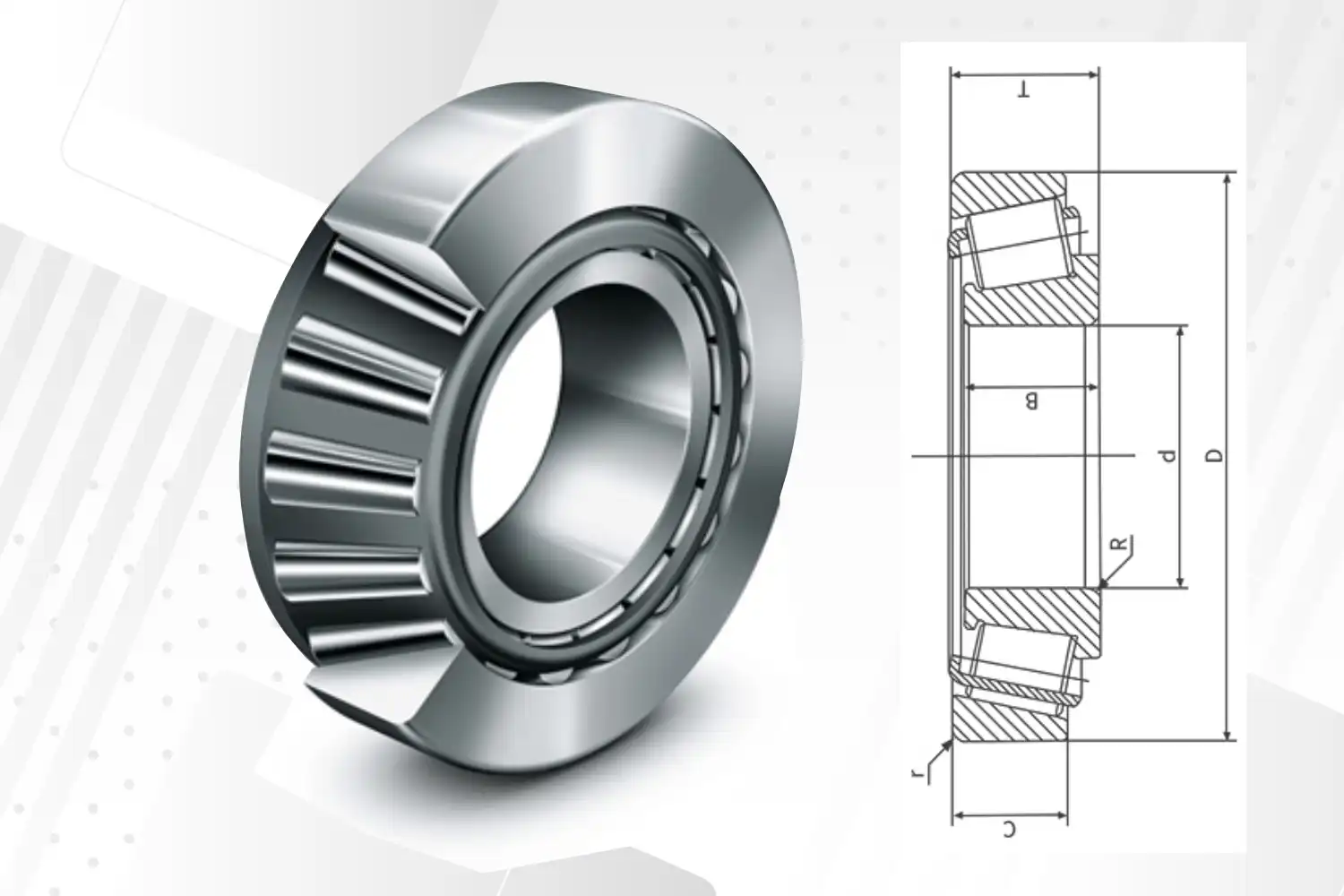
Understanding Single Row Tapered Roller Bearings
Structural Design and Engineering Principles
Single row tapered roller bearings have an inner ring unit (cone) and an outer ring (cup) that can be taken apart. The tapered shape of the raceways ensures that the extension lines of both the raceways and the rolling elements meet at a single point on the bearing axis. This engineering method allows for pure rolling action while reducing heat and friction. Precision-made rollers are placed in a single row inside a cage assembly that makes up the bearing. The curved shape makes it possible for the best contact stress distribution, which greatly increases the load-carrying capacity compared to regular cylindrical roller bearings. The fact that they can be separated makes installation and upkeep easier, which is very important for industrial applications that need to be serviced often.
Load Distribution Mechanisms
Because the shape is tapered, the best contact angle is usually between 10° and 30°. Larger angles can handle higher vertical loads. This design principle makes it possible for the bearing to work well under mixed loading situations by spreading stress evenly across the contact surfaces. The ability to spread the load is especially useful in situations where there are heavy radial loads along with large axial loads, like in rolling mills and big machine tool wheels.
Maintenance and Operational Considerations
Proper lubrication is still necessary to extend the life of equipment and stop it from wearing out too quickly. The tapered shape helps a lubricant film form, which lowers the friction between the surfaces that are in contact. Monitoring working temperatures, vibration levels, and lubricant condition on a regular basis can help find problems early on, before they become expensive failures. The bearing's separable form makes inspections easier because maintenance teams can look at individual parts without taking apart the whole piece of equipment around them. This function is especially useful in environments with continuous production, such as Single Row Tapered Roller Bearing, where minimising downtime is very important.
Comparing Single Row Tapered Roller Bearings with Alternative Bearings
Performance Characteristics Analysis
When looking at different types of bearings for heavy-duty uses, single row tapered roller bearings stand out because of a few important performance factors. Deep groove ball bearings can work in high-speed situations, but they can't handle the weight of big industrial equipment. While cylindrical roller bearings are great at handling rotational loads, they can't handle large axial forces without extra thrust bearings. Double row tapered roller bearings can hold more weight, but they take up more room and are harder to install because they are more complicated. In many industrial settings, the single row configuration is the best mix between load capacity, space needs, and ease of installation.
Application-Specific Advantages
There are special features about tapered roller bearings that make them perfect for uses where the shaft may bend or be out of line. The crowned raceway profiles make it easier for loads to be spread out along the contact surfaces, which lowers the stress that builds up in straight racetrack designs. This trait makes operations more reliable in situations where perfect alignment isn't possible. The fact that preload adjustment can be used to make rigid bearing setups is another big benefit. Engineers can get rid of internal clearance and precise shaft positioning by mounting single-row tapered roller bearings in opposed configurations. This is important for high-precision machinery uses.
Procurement Guide for Single Row Tapered Roller Bearings
Supplier Selection Criteria
Identifying reliable suppliers requires careful evaluation of manufacturing capabilities, quality certifications, and technical support services. Established manufacturers typically maintain comprehensive product testing facilities and adhere to international quality standards such as ISO 9001 and bearing-specific standards like ABMA or ISO 492. Supply chain reliability becomes increasingly important for critical applications where bearing failures can result in significant production losses. Suppliers offering global distribution networks and local technical support provide advantages in terms of reduced lead times and enhanced customer service capabilities.
Quality Verification Procedures
Authentic bearings feature specific marking systems and packaging characteristics that help identify genuine products. Reputable manufacturers implement traceability systems allowing verification of production dates, material certifications, and quality test results. Counterfeit bearings often exhibit poor surface finish, inconsistent dimensions, and substandard materials that compromise performance and safety.
Cost Considerations and Value Analysis
While initial bearing costs represent an important procurement factor, total cost of ownership calculations should include maintenance expenses, downtime costs, and replacement intervals. Premium bearings often justify higher upfront investments through extended service life, reduced maintenance requirements, and improved Single Row Tapered Roller Bearing operational reliability. Bulk purchasing arrangements can provide cost advantages while ensuring consistent product availability. Long-term supply agreements with qualified manufacturers help stabilise pricing and guarantee product availability during periods of high market demand.
Application Scenarios and Load Handling Benefits
Heavy Industry Applications
Rolling mill operations represent one of the most demanding applications for tapered roller bearings. The extreme loads generated during steel processing, combined with harsh operating environments, require bearings capable of withstanding continuous heavy-duty operation. Single row tapered roller bearings excel in backup roll assemblies where both radial and axial loads must be accommodated simultaneously. Large machine tool spindles benefit from the rigid bearing arrangements achievable with tapered roller bearings. The ability to eliminate internal clearance through preload adjustment ensures precise cutting tool positioning and superior surface finish quality. The high load capacity supports heavy cutting operations while maintaining dimensional accuracy requirements.
Automotive and Transportation Sectors
Automotive rear axle applications utilise tapered roller bearings in wheel hub assemblies where they must support vehicle weight while handling dynamic cornering forces. The separable design facilitates maintenance procedures, allowing replacement of worn components without complete hub disassembly. Heavy-duty truck applications place extreme demands on wheel bearings due to high axial loads during cornering and braking operations. The superior load distribution characteristics of tapered roller bearings provide the reliability required for commercial vehicle operations.
Industrial Equipment Integration
Power transmission systems incorporating helical or bevel gears generate substantial separation forces that must be accommodated by supporting bearings. Single row tapered roller bearings mounted in back-to-back configurations provide the axial load capacity required while maintaining precise gear mesh alignment under varying load conditions. Conveyor systems in mining and material handling applications benefit from the robust construction and contamination resistance of tapered roller bearings. Proper sealing arrangements protect bearing surfaces from dust and moisture while allowing long-term operation in challenging environments.
How to Choose the Right Single Row Tapered Roller Bearing for Your Business
Load Analysis and Requirements Assessment
Determining optimal bearing selection begins with a comprehensive load analysis, including both steady-state and dynamic loading conditions. Engineers must consider not only the magnitude of radial and axial forces but also their direction, frequency, and duration. Variable loading patterns require careful evaluation to ensure adequate fatigue life under actual operating conditions. Environmental factors significantly influence bearing selection and performance. Temperature extremes, contamination levels, and moisture exposure affect lubricant selection and sealing requirements. Applications involving chemical exposure or radiation require specialised materials and protective measures.
Customisation and Technical Support
The engineering team at Huigong helps with all kinds of technical issues during the whole decision and application process. Because we've been in this business for 25 years, we can suggest the best bearing configurations for any given operating situation. Standard catalogue bearings can't handle certain environmental conditions, load requirements, Single Row Tapered Roller Bearing or room limitations that can't be met by custom designs.GCr15, GCr15SiMn, and G20Cr2Ni4A are some of the materials that can be used to improve performance in a variety of operating situations. Our range of sizes, from 150 mm to 950 mm inside diameter, covers most industrial uses while still meeting high standards for accuracy and quality in manufacturing.
Long-term Performance Optimisation
For bearing uses to work well, maintenance schedules, lubricant requirements, and monitoring methods need to be thought through. Our expert support team helps customers create complete maintenance plans that extend the life of bearings and keep operations running smoothly. Maintenance workers are trained to make sure that the right steps are taken for installation, lubrication, and checking. Knowing how bearings behave and how they break down lets you plan proactive maintenance that stops sudden breakdowns and makes equipment last longer.

Conclusion
Due to their unique ability to handle both radial and axial loads efficiently, single-row tapered roller bearings perform exceptionally well in difficult industrial settings. Because they are well-designed, evenly distribute weight, and are built to last, they are perfect for heavy industry, making steel, and big precision machinery. The separable design makes maintenance easier, and the tapered geometry makes sure that the load is handled well and the service life is increased. When it comes to choosing bearings for important tasks, engineers and procurement managers who want to get the most out of their equipment while keeping costs low choose single row tapered roller bearings because they can handle a lot of weight, are reliable, and are easy to maintain.
FAQ
1. What distinguishes single-row from double-row tapered roller bearings?
Single row tapered roller bearings contain one row of rollers and require mounting against a second bearing to handle bidirectional axial loads. Double row configurations incorporate two rows of rollers in a single bearing unit, providing higher load capacity but requiring more installation space and presenting increased mounting complexity.
2. How can I verify the authenticity of tapered roller bearings?
Genuine bearings feature consistent marking systems, precise dimensional tolerances, and superior surface finish quality. Reputable manufacturers provide certificates of conformity and traceability documentation. Packaging should include proper labelling, protective materials, and brand identification consistent with manufacturer standards.
3. What maintenance practices extend bearing service life?
Regular lubrication monitoring, temperature measurement, and vibration analysis help identify potential issues before failure occurs. Proper storage procedures, careful handling during installation, and adherence to recommended torque specifications prevent premature wear. Contamination prevention through effective sealing systems significantly extends operational life.
Partner with Huigong for Superior Single Row Tapered Roller Bearing Solutions
Maximise your equipment performance with Huigong's comprehensive range of high-precision tapered roller bearings designed for demanding industrial applications. Our 25-year manufacturing expertise, Single Row Tapered Roller Bearing advanced production capabilities, and commitment to quality ensure reliable solutions for your most challenging requirements. As a trusted Single Row Tapered Roller Bearing manufacturer, we provide custom engineering support, competitive pricing, and reliable global delivery. Contact our technical specialists at sale@chg-bearing.com to discuss your specific application requirements and discover how our premium bearing solutions can enhance your operational efficiency and equipment reliability.
References
1. Harris, T.A. and Kotzalas, M.N. "Advanced Concepts of Bearing Technology: Rolling Bearing Analysis." Journal of Tribology and Mechanical Engineering, Vol. 142, 2019.
2. Palmgren, A. "Ball and Roller Bearing Engineering: Load Distribution in Tapered Roller Bearings." Mechanical Engineering Research Institute Publications, 2020.
3. ISO 355:2007. "Rolling bearings - Tapered roller bearings - Boundary dimensions." International Organisation for Standardisation, Geneva.
4. Budynas, R.G. and Nisbett, J.K. "Mechanical Engineering Design: Bearing Selection and Application." Engineering Design Quarterly, Vol. 28, No. 4, 2021.
5. SKF Group Technical Manual. "Tapered Roller Bearings: Design, Application and Maintenance Guidelines." Industrial Bearing Technology Review, 2022.
6. American Bearing Manufacturers Association. "Load Rating Standards for Tapered Roller Bearings in Industrial Applications." ABMA Technical Bulletin 15-2020.