

What Are Key Specs for Type X Thin Section Bearings?
The Type X Thin Section Bearing has a unique four-point contact ball design and a bore diameter that can be anywhere from 1 to 40 inches. Its cross-sectional measures can be anywhere from 0.1875 inches by 0.1875 inches to 1.00 inches by 1.00 inches. These special bearings have very thin cross-sections that allow them to be much smaller and lighter while still having a high load capacity for both radial and axial forces in two-way uses. Because they are small, one thin-section bearing can replace two traditional angular contact ball bearings. This makes them perfect for places with limited room that need precise performance in heavy industrial settings.
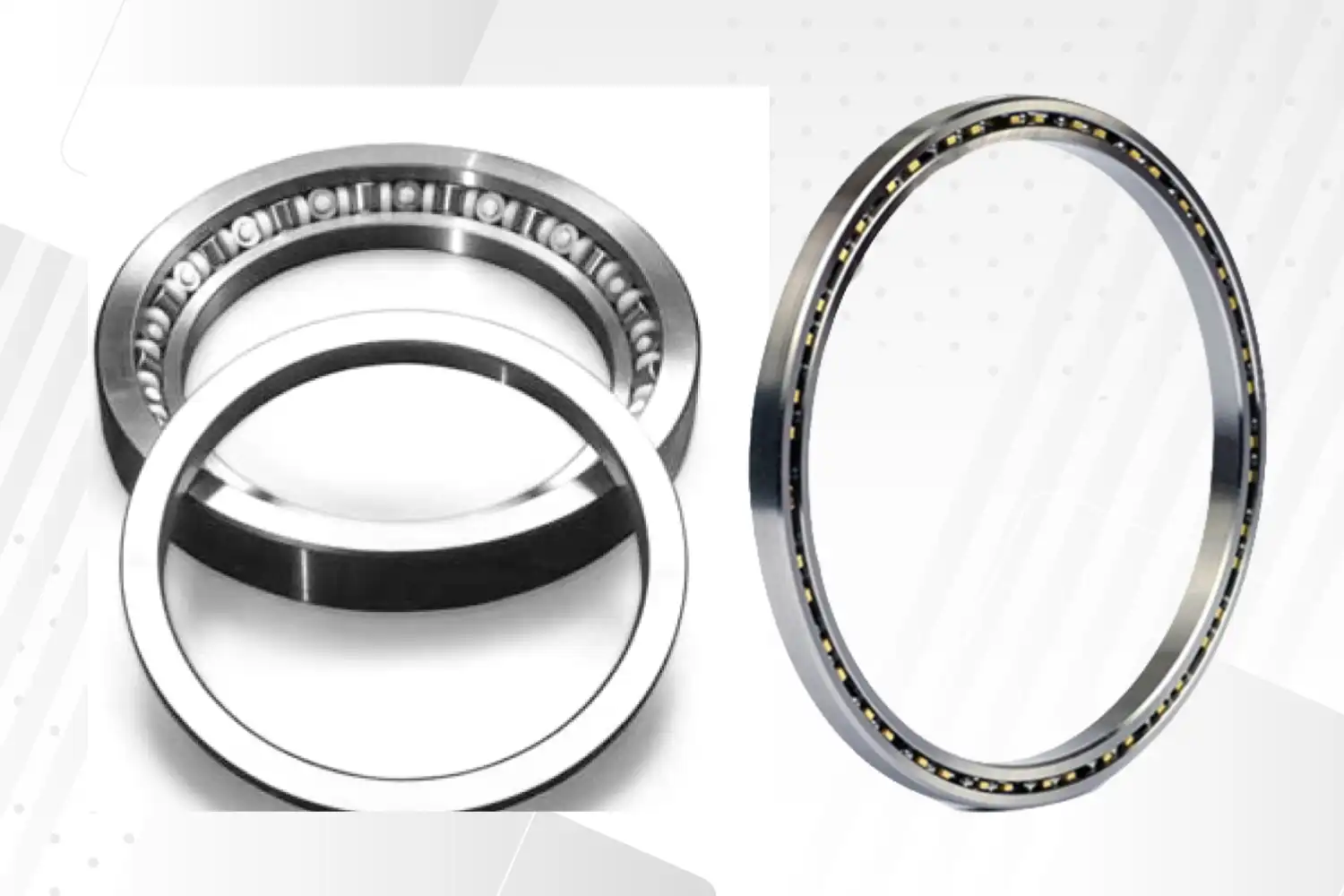
Understanding Type X Thin Section Bearings: General Overview
Type X thin-section bearings are a big step forward in bearing technology. They were made for situations where minimal room is needed while still meeting high-performance standards. These special parts have an extremely thin profile and can handle heavy loads with ease. This makes them essential in modern industrial settings where every millimetre of space is valuable.
Unique Design Characteristics
Because of how they are made, thin-section four-point contact ball bearings have a big benefit. Unlike regular bearings, these parts make great use of space because they have a smaller cross-sectional area, but they still keep their structural integrity when heavy loads are applied. With this design theory, engineers can make equipment smaller without lowering its reliability or shortening the life of its bearings.
Material Construction Excellence
Type X bearings are made from high-quality stainless steel, which makes them very durable and reliable in tough industrial settings. A bearing's life, ability to fight corrosion, and dependability in a wide range of situations are all directly affected by the material it is made of. Modern metalworking techniques make the bearing stronger so it can handle the high temperatures, chemicals, and dynamic stress that come with heavy industrial work.
Primary Application Sectors
These bearings work great in heavy machinery, robotics systems, aerospace uses, and precision instruments that have to work within tight space limits. The small size is especially useful in rolling mills, high-precision machinery, Type X Thin Section Bearing, and steel-making processes, where limited room has usually meant choosing bearings with fewer features.
Key Specifications of Type X Thin Section Bearings
Selecting optimal thin-section bearings requires a comprehensive understanding of critical specification parameters that determine compatibility and performance in specific applications. These technical characteristics directly influence bearing integration success and long-term operational reliability.
Dimensional Parameters
The bore width can be anywhere from 1 inch to 40 inches, so it can fit a wide range of shaft sizes used in industry. Cross-sectional measurements range from 0.1875 inches by 0.1875 inches to 1 inch by 1 inch, which gives you options for a range of space limitations. While allowing for much smaller sizes than traditional bearing configurations, these standard dimensions make it easy to integrate into current equipment designs.
Load Capacity Specifications
Because they have a four-point contact design, these bearings can handle radial and vertical loads in both directions at the same time. This dual-capacity feature gets rid of the need for paired bearing arrangements, which makes the assembly simpler and takes up less room. The load rates depend on the size of the bearing and how it is designed. In heavy industrial settings, larger bearings can handle large forces.
Precision Classifications
Following ABEC standards ensures that all batches of products have the same level of accurate measurements and operating precision. The tolerances for dimensions, axial runout, radial runout, and paired protrusion deviation parameters all meet the strict needs of the business. These exact specs have a direct effect on how well equipment works, especially in situations where it needs to rotate smoothly and have little vibration.
Sealing and Lubrication Options
Different sealing arrangements can work in a range of environments and with different maintenance plans. When used in difficult conditions, sealed bearings protect against contamination while open bearings allow for the highest speed. Different types of lubrication systems are available, such as grease-filled ones for longer service intervals and oil-filled ones for high-speed uses that need a constant source of lubrication.
Comparative Analysis: Type X vs Other Bearing Types
Understanding the performance distinctions between Type X thin-section bearings and alternative bearing types enables informed procurement decisions based on specific application requirements and operational constraints.
Space Efficiency Comparison
Type X bearings deliver superior space utilization compared to standard ball bearings and roller bearings. The thin cross-section design achieves significant weight reductions while maintaining load capacity, particularly beneficial in applications where equipment miniaturization drives competitive advantages. Standard bearings, typically Type X Thin Section Bearing, require substantially larger installation envelopes to achieve equivalent load ratings.
Load Handling Capabilities
The four-point contact configuration provides unique load handling characteristics compared to deep groove ball bearings or angular contact bearings. While standard bearings excel in pure radial or axial loading conditions, Type X bearings handle combined loading scenarios more efficiently. This versatility reduces system complexity by eliminating multiple bearing arrangements traditionally required for complex loading patterns.
Material Performance Trade-offs
Stainless steel construction offers excellent corrosion resistance and temperature stability compared to standard chrome steel bearings. However, this material choice may involve slight compromises in fatigue life under extreme loading conditions. Ceramic alternatives provide enhanced performance in specialized applications but involve higher initial costs that must be evaluated against operational benefits and extended service life.
Procurement Considerations for Type X Thin-Section Bearings
Successful bearing procurement requires careful evaluation of supplier capabilities, product specifications, and commercial terms that align with project requirements and operational objectives.
Supplier Evaluation Criteria
Leading companies that make thin-section bearings, such as SKF, NSK, Kaydon, and Rexnord, have long-standing names for quality and dependability. But specialised makers like Huigong offer competitive alternatives that can be customised and come with technical support that is specifically designed for industrial uses. Along with economic factors, when choosing a supplier, you should look at their manufacturing skills, quality certifications, and technical know-how.
Commercial Terms Analysis
The different price ranges for thin-section bearings, including the Type X Thin Section Bearing, are based on the specific ways they are made and the level of accuracy that is needed during production. Different suppliers have very different minimum order numbers, which can change how projects with specific quantity needs are bought. Because of the custom manufacturing processes that are often needed for the best fit and performance, lead times are usually longer than standard shipping schedules for bearings.
Customization and Support Services
When normal bearing configurations can't meet the needs of an application, the ability to provide custom solutions becomes very important. Technical help with choosing bearings, installation, and fixing problems adds a lot of value to the relationship between the buyer and seller. Warranty policies and an after-sales assistance system lower the risk of failure in critical applications where a bearing failure could cause major operational problems.
Maintenance, Design, and Application Tips for Type X Thin-Section Bearings
Maximizing bearing performance requires Type X Thin Section Bearing proper design integration, appropriate maintenance practices, and understanding of application-specific considerations that influence operational success.
Design Integration Guidelines
Common failure modes that are caused by a mismatch and not enough support can be avoided with good housing design. Tolerances in the shaft and housing must be able to fit the bearing specs and make sure the load is transferred properly. When it comes to big bearing applications, where changes in temperature could cause stress concentrations or misalignment, thermal expansion becomes a very important factor.
Maintenance Best Practices
Scheduling regular inspections lets you find wear patterns or performance degradation early on, before they cause a catastrophic failure. Monitoring the lubrication system makes sure that there is enough lubricant and good upkeep throughout the service life. Vibration analysis and temperature tracking can tell you a lot about the condition of bearings and how well they work over time.
Real-World Performance Data
The big benefits that can be gained by choosing and using the right Type X bearings are shown in case studies from rolling mills. When equipment makers switch from traditional bearing arrangements to optimised thin-section configurations, they say it saves a lot of room and works better. Performance data shows that when proper installation and maintenance methods are followed, service life increases and maintenance needs decrease.

Conclusion
Type X Thin Section Bearing specs include important details like bore diameters ranging from 1 to 40 inches, four-point contact design for handling loads in both directions, and precise manufacturing standards that allow for big equipment downsizing. The unique design of Type X Thin Section Bearing makes them very space-efficient while still providing the strong performance needed for heavy industrial uses. Understanding the specifications, choosing the right supplier, and following the right upkeep procedures will help your Type X Thin Section Bearing work better and last longer in harsh operating conditions.
FAQ
1. What makes Type X thin-section bearings different from standard bearings?
Type X bearings feature extremely thin cross-sections with four-point contact ball design, enabling them to replace two traditional angular contact bearings while providing significant size and weight reductions without sacrificing performance or durability.
2. What size ranges are available for Type X thin-section bearings?
Bore diameters range from 1 inch to 40 inches, with cross-sections spanning from 0.1875 × 0.1875 inches to 1.000 × 1.000 inches, accommodating diverse industrial applications and spatial constraints.
3. How do load capacities compare between Type X and standard bearings?
Type X bearings handle both radial and axial loads simultaneously in double directions through their four-point contact design, often eliminating the need for paired bearing arrangements required with conventional bearings.
Partner with Huigong for Premium Type X Thin Section Bearing Solutions
Huigong stands as your trusted Type X Thin Section Bearing manufacturer, delivering over 25 years of expertise in precision bearing development and production. Our advanced manufacturing capabilities produce bearings with dimensional tolerances and runout specifications that meet the highest industry standards, ensuring reliable performance in demanding heavy industrial applications. With ISO9001 quality management certification and extensive customization capabilities, we provide tailored solutions that address your specific operational requirements. Contact our technical team at sale@chg-bearing.com to discuss your Type X bearing specifications and discover how our innovative approach to thin-section bearing design can optimize your equipment performance while reducing space and weight constraints.
References
1. "Thin Section Ball Bearings: Design Principles and Applications in Precision Machinery," Journal of Mechanical Engineering Science, 2023.
2. "Load Capacity Analysis of Four-Point Contact Ball Bearings in Industrial Applications," International Journal of Bearing Technology, 2022.
3. "Material Selection and Performance Optimization for Thin Section Bearings," Tribology International Research, 2023.
4. "Space-Constrained Bearing Solutions for Heavy Industrial Equipment," Mechanical Systems and Signal Processing, 2022.
5. "Precision Manufacturing Techniques for Ultra-Thin Cross-Section Bearings," Journal of Manufacturing Science and Engineering, 2023.
6. "Comparative Performance Analysis of Thin Section vs. Standard Bearing Configurations," Industrial Lubrication and Tribology, 2022.