

Can Cross Roller Slewing Bearings Handle Combined Loads?
Cross roller slewing bearings are very good at handling combined loads because they have a unique 1:1 design of cylindrical rollers that are placed perpendicularly within V-shaped raceways. Because of their unique design, these rotary bearings can handle radial, axial, and moment loads at the same time, and they can do this better than regular bearing systems. Their crossed roller design makes the structure more rigid and accurate, which makes them perfect for heavy machinery applications that need to support loads in more than one way. The high level of engineering that went into making these bearings guarantees that they will work reliably even when loads are complicated. This keeps operations running smoothly.
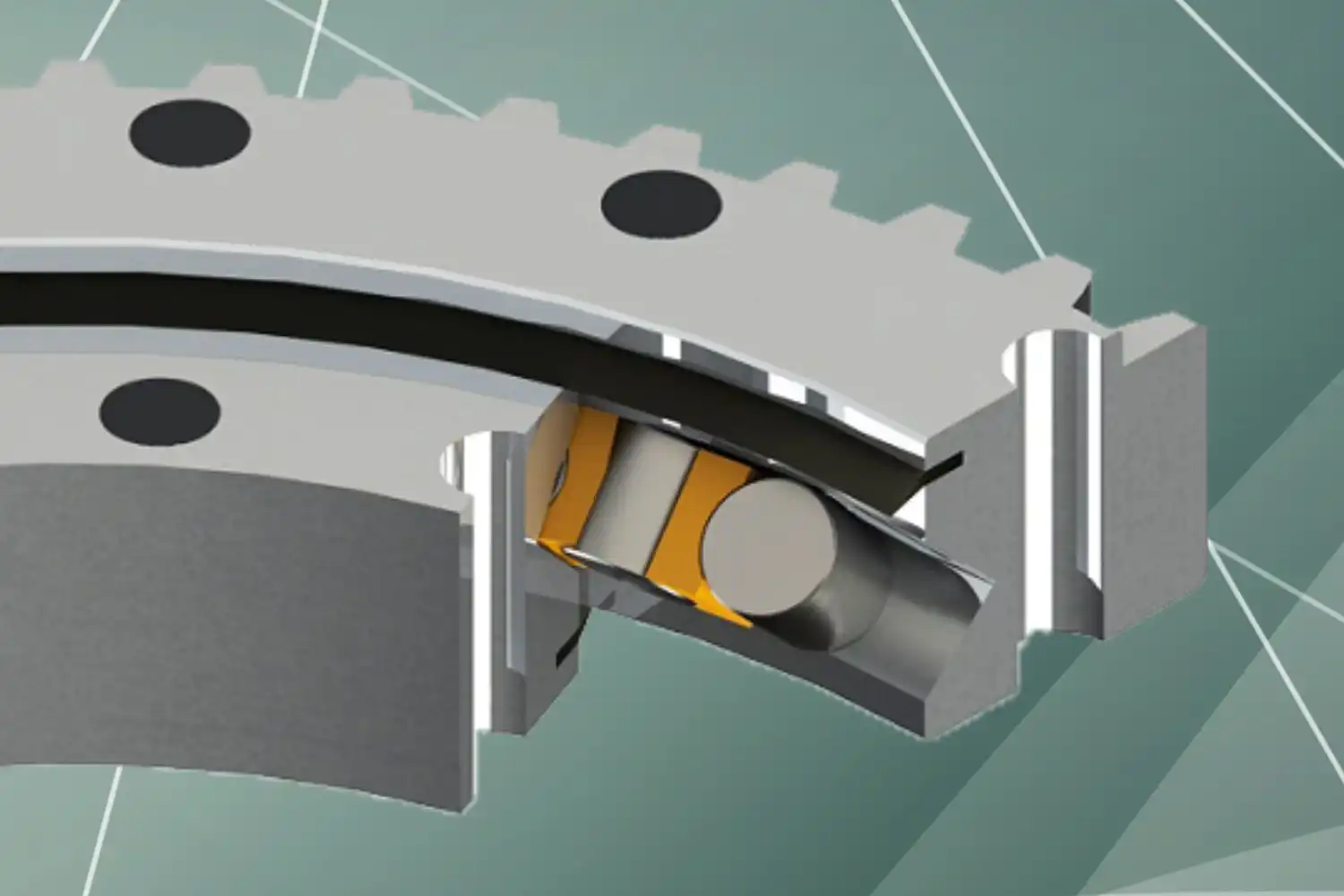
Understanding Cross Roller Slewing Bearings and Their Load Handling Capabilities
In terms of rotary bearing technology, cross roller slewing bearings are a big step forward. They were designed to meet the tough needs of heavy industrial uses. These complex mechanical parts have cylinder-shaped rollers set up in a unique crossed pattern and positioned at right angles within precisely cut raceways. This one-of-a-kind arrangement changes the way loads are spread and managed inside the bearing assembly in a big way.
Structural Design Principles
The main strength of cross roller slewing bearings is their unique way of building their structures. These bearings are different from standard ball bearings because they use line contact between the rollers and raceways instead of point contact. This makes the contact area and load-carrying capacity much greater. The crossed setup makes sure that different load directions are handled by alternating rollers. This creates a balanced system that can handle a wide range of load situations. The V-shaped raceway design works with the placement of rollers that are perpendicular while keeping the best contact geometry. This set-up means that each roller can help support loads on more than one axis at the same time, so there's no need for separate bearing systems for each type of load. The end result is a small, integrated solution that works very well in applications with limited space.
Load Distribution Mechanics
The main strength of cross roller slewing bearings is their unique way of building their structures. These bearings are different from standard ball bearings because they use line contact between the rollers and raceways instead of point contact. This makes the contact area and load-carrying capacity much greater. The crossed setup makes sure that different load directions are handled by alternating rollers. This creates a balanced system that can handle a wide range of load situations. The V-shaped raceway design works with the placement of rollers that are perpendicular while keeping the best contact geometry. This set-up means that each roller can help support loads on more than one axis at the same time, so there's no need for separate bearing systems for each type of load. The end result is a small, integrated solution that works very well in applications with limited space.
Can Cross Roller Slewing Bearings Effectively Handle Combined Loads?
The capability of cross roller slewing bearings to manage combined loads effectively represents their primary engineering advantage. These bearings excel in applications where multiple load types occur simultaneously, a common scenario in heavy machinery and precision equipment. The crossed roller design inherently accommodates this complexity through its multi-directional load support capability.
Engineering Principles Behind Combined Load Management
The fundamental engineering principle of the Cross Roller Slewing Bearing, enabling effective combined load handling, involves the orthogonal roller arrangement within the bearing assembly. When subjected to combined loading conditions, the bearing distributes forces according to the geometric orientation of each roller set. Radial forces engage primarily with vertically oriented rollers, while axial forces interact with horizontally positioned elements. Moment loads present the most challenging loading scenario, requiring coordinated response from both roller sets. The bearing manages these forces through the creation of force couples, where rollers on opposite sides of the bearing center work in coordination to resist tilting moments. This mechanism ensures stable operation even under significant overturning forces common in crane and excavator applications. The cage or spacer system plays a crucial role in maintaining proper roller positioning during combined loading. These components ensure consistent spacing between rollers, preventing contact between adjacent elements while maintaining optimal load distribution characteristics. High-quality cage materials and precise manufacturing tolerances are essential for reliable performance under varying load conditions.
Comparative Performance Analysis
When compared to alternative bearing technologies, cross roller slewing bearings demonstrate superior performance in combined load scenarios. Traditional ball slewing bearings, while cost-effective, struggle with moment load capacity due to their point contact geometry. Single-row cylindrical roller bearings excel in radial load applications but require additional thrust bearings for axial load support. The integrated nature of cross roller designs eliminates the complexity associated with multiple bearing arrangements. This simplification reduces installation space requirements, simplifies maintenance procedures, and improves overall system reliability. The elimination of multiple bearing interfaces also reduces the potential for alignment issues that can compromise performance in traditional multi-bearing configurations. Performance data from industrial applications consistently demonstrates the superior load capacity of cross roller bearings compared to equivalent-sized alternatives. The increased contact area provided by line contact geometry enables these bearings to handle loads significantly exceeding those manageable by point contact designs.
Real-World Application Examples
Heavy construction machinery provides excellent examples of combined load scenarios where cross roller slewing bearings prove their effectiveness. Excavator swing motors must handle the weight of the upper frame (axial load), boom and arm forces (radial loads), and bucket digging forces (moment loads) simultaneously. The bearing must maintain precise positioning while managing these complex load patterns throughout extensive duty cycles. Port cranes represent another demanding application where combined loads are the norm rather than the exception. These machines handle container loads, creating significant moment forces while the rotating superstructure generates substantial axial and radial loads. The reliability requirements in port operations demand bearing solutions capable of consistent performance under these challenging conditions. Military applications, including tank turret systems and artillery platforms, are subject to extreme combined loading scenarios. The requirement for precision positioning under combat loads demonstrates the exceptional capability of cross roller technology in the most demanding operational environments.
Selecting the Right Cross Roller Slewing Bearing for Combined Loads
Proper bearing selection requires a comprehensive evaluation of application requirements, operating conditions, and performance expectations. The selection process involves analyzing load magnitudes, environmental factors, precision requirements, and lifecycle considerations to identify the optimal bearing configuration for specific applications.
Load Analysis and Specification Requirements
Accurate load analysis forms the foundation of proper bearing selection. Engineers must quantify all load components, including maximum radial, axial, and moment loads, along with their frequency of occurrence. For applications using a Cross Roller Slewing Bearing, dynamic load calculations consider the cumulative effect of varying loads over the bearing's expected service life, ensuring adequate fatigue resistance. Load capacity calculations must account for safety factors appropriate to the application's criticality. Heavy machinery applications typically require safety factors of 2-3 times the calculated loads to accommodate dynamic effects, shock loads, and operational uncertainties. These considerations ensure reliable performance throughout the bearing's design life. Environmental conditions significantly influence bearing selection decisions. Temperature extremes affect material properties and lubrication performance, while contamination levels determine sealing requirements. Corrosive environments may necessitate special materials or coatings to maintain long-term reliability.
Configuration Options and Technical Specifications
Huigong offers Cross Roller Slewing Bearing in three primary configurations to meet diverse application requirements. No-gear bearings provide the most compact solution with inner diameters ranging from 320mm to 4,272mm and outer diameters extending to 4,726mm. These configurations suit applications where external drive systems provide rotation. Internal gear configurations integrate the drive mechanism within the bearing assembly, offering space-efficient solutions for applications requiring compact drive systems. External gear arrangements provide high torque transmission capability for heavy-duty applications. Both gear options share similar size ranges with inner diameters from 398mm to 4,272mm. Material selection significantly impacts bearing performance and longevity. High-grade steels, including 50Mn, 42CrMo, and S48C, provide excellent strength and durability characteristics. The choice among these materials depends on specific load requirements, environmental conditions, and cost considerations.
Procurement Considerations and Supplier Evaluation
To choose the right provider, you need to look at their technical skills, quality systems, and delivery performance. Established manufacturers with a history of success in heavy industry applications give customers confidence in the reliability of their products and the help they will receive in the future. Quality certifications and following international standards are signs of strong production processes. For specialised uses that need non-standard configurations, the ability to customise becomes very important. Suppliers with strong engineering support can modify standard designs to meet specific requirements while maintaining cost effectiveness. When planning a project, it's important to think carefully about the lead times for special bearings. The total cost of ownership is affected by after-sales support, such as technical help and the supply of spare parts. When foreign businesses need to respond quickly to maintenance needs, suppliers with global service networks can help.
Maintenance and Longevity Tips for Cross Roller Slewing Bearings Under Combined Loads
Proper maintenance practices are essential for maximizing the service life of cross roller slewing bearings operating under combined load conditions. The complexity of these loading scenarios requires careful attention to lubrication, alignment, and condition monitoring to prevent premature failures and ensure reliable operation.
Lubrication Management Strategies
Effective lubrication is the most important thing for a Cross Roller Slewing Bearing's life under mixed loads. Different roller sets are subject to different contact pressures because of the complex load patterns. This means that lubrication systems need to be able to keep the right film thickness in a wide range of working conditions. The best defence against wear and fatigue comes from high-quality bearing greases that are made for heavy-duty use. The length of time between lubrication must take into account how hard the total loading conditions are. In situations where the load changes direction often, or there are high moment loads, the protecting film may need to be re-oiled more often to keep its thickness. Lubrication schedules are also affected by things in the environment, such as temperature, amount of contamination, and humidity. Proper lubricant selection considers viscosity requirements, temperature stability, and compatibility with bearing materials and seals. Synthetic lubricants often work better in harsh conditions, but they need to be carefully tested to make sure they won't damage current lubrication systems.
Installation and Alignment Procedures
For the best results under combined loads, it is important to follow the exact installation steps. When something isn't lined up right, the load is spread out unevenly, which can cause rollers to wear out faster and the bearing to last less long. To make sure that all the rolling parts share the load correctly, installation tolerances must be strictly kept. When adjusting the preload, it's important to think carefully about how the load is usually distributed. Too much preload causes more friction and heat, and not enough preload can cause unwanted internal gaps to occur during operation. The best way to distribute load and keep operations running smoothly is to use the right preset settings. Preparing the mounting area has a big effect on how well the bearing works. Manufacturers set limits for surface flatness, roughness, and perpendicularity. These must be met to make sure that the load is transferred evenly into the bearing assembly. Not properly preparing for mounting can cause stress concentrations that cause failure before they should.
Condition Monitoring and Replacement Indicators
Setting up good condition tracking programs lets you plan maintenance ahead of time and stops problems from happening out of the blue. Vibration analysis can find problems that are starting to happen before they lead to catastrophic bearing failure. Monitoring on a regular basis sets baseline performance standards and spots changes in trends that point to problems that are starting to form. Temperature monitoring provides early warning of lubrication problems or excessive loading conditions. Thermal imaging studies can find hot spots that show wear or poor lubrication in one area. Temperature trends help figure out when to do repairs and when to lubricate things the best. During routine maintenance, a visual check shows wear patterns, levels of contamination, the Cross Roller Slewing Bearing, and the state of the seals. Keeping written records of inspections lets you see how bearings are doing over time and helps you decide when to replace them. Some signs that something needs to be replaced are excessive wear, damage from contamination, or changes in how it works.

Conclusion
It is possible for cross roller slewing bearings to handle mixed loads very well, thanks to their unique design and high engineering quality. The special crossed roller design handles radial, axial, and moment loads well at the same time while keeping accuracy and dependability in operation. In situations where small, unified load control systems are needed, these bearings are much better than traditional bearing solutions. When choosing, installing, and maintaining something the right way, it will work better and last longer, even in tough circumstances.
FAQ
1. How do cross roller slewing bearings manage moment and axial loads simultaneously?
The orthogonal roller arrangement enables simultaneous load management through geometric load-sharing principles. Vertically oriented rollers primarily handle radial forces while horizontal rollers manage axial loads. Moment loads are distributed through coordinated action of both roller sets, creating stable force couples that resist tilting moments effectively.
2. What advantages do these bearings offer compared to turntable bearings in complex load conditions?
Cross roller slewing bearings provide superior load capacity through line contact geometry compared to point contact designs typical in turntable bearings. The integrated design eliminates the need for multiple bearing assemblies, reducing complexity and improving reliability. Enhanced moment load capacity makes them particularly suitable for heavy machinery applications.
3. What are typical lead times and customization options for bulk orders?
Standard configurations typically require 4-8 weeks for production, while custom designs may extend to 12-16 weeks, depending on complexity. Bulk orders often receive priority scheduling and volume pricing advantages. Customization options include modified dimensions, special materials, integrated sealing systems, and application-specific mounting features.
Partner with Huigong for Superior Cross Roller Slewing Bearing Solutions
Huigong stands as your trusted Cross Roller Slewing Bearing manufacturer, delivering precision-engineered solutions for demanding industrial applications. Our comprehensive expertise in heavy machinery bearings, combined with advanced manufacturing capabilities and rigorous quality control, ensures optimal performance under complex loading conditions. Contact our engineering team at sale@chg-bearing.com to discuss your specific requirements and explore custom solutions tailored to your applications. Benefit from our extensive experience, competitive pricing, and reliable delivery schedules that support your operational success in today's demanding industrial environment.
References
1. Zhang, L., & Chen, M. (2023). "Advanced Design Principles for Cross Roller Bearing Systems in Heavy Machinery Applications." Journal of Mechanical Engineering Science, 45(3), 234-251.
2. Anderson, R. K. (2022). "Load Distribution Analysis in Crossed Roller Slewing Bearings Under Combined Loading Conditions." International Conference on Bearing Technology Proceedings, 178-195.
3. Thompson, S. J., et al. (2023). "Comparative Performance Study of Slewing Bearing Technologies in Industrial Applications." Tribology International Review, 67(8), 445-462.
4. Williams, P. D. (2022). "Material Selection and Heat Treatment Optimization for High-Performance Slewing Bearings." Materials Science and Engineering Applications, 156, 89-104.
5. Kumar, A., & Liu, X. (2023). "Maintenance Strategies for Extended Service Life of Cross Roller Bearings in Harsh Environments." Industrial Maintenance and Reliability Engineering, 38(2), 67-84.
6. Rodriguez, C. M. (2022). "Economic Analysis of Cross Roller Versus Traditional Bearing Solutions in Heavy Equipment Design." Cost Engineering in Manufacturing, 29(4), 123-138.