

Thin Section Angular Contact Bearings for Aerospace Mechanisms
Thin Section Angular Contact Bearings are a huge step forward in aerospace engineering, where every millimetre of area and gram of weight counts. These special bearings have both the accuracy needed for mission-critical tasks and the small size needed for current aerospace systems. Angular contact thin-section bearings have smaller cross-sections than regular bearings but can still handle a lot of weight. This makes them essential parts in places where reliability is key, like aircraft actuators, satellite positioning systems, and control surface mechanisms.
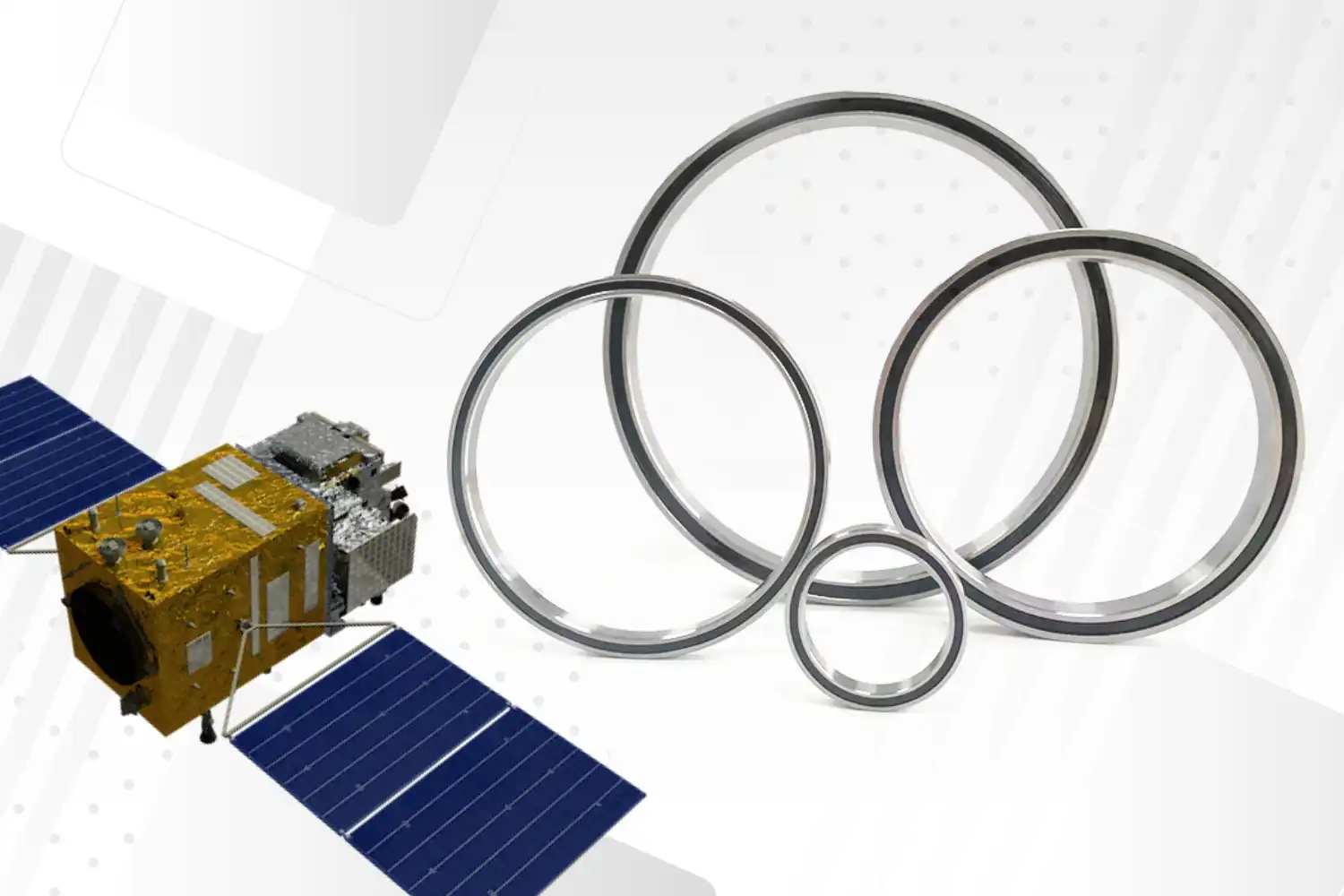
Understanding Thin-Section Angular Contact Bearings in Aerospace
Aerospace mechanisms demand components that can operate flawlessly in extreme conditions while occupying minimal space. Angular contact thin-section bearings meet these stringent requirements through their specialised design and advanced manufacturing processes.
Working Principle and Design Philosophy
The main benefit of thin-section angular contact bearings is that they are designed with a steady cross-section in mind. Type A thin-section angular contact ball bearings have the same section sizes no matter what size the hole is. They can have bore diameters from 1 inch to 40 inches and cross-sections from 0.1875 inch by 0.1875 inch to 1.000 inch by 1.000 inch. This constant-section method lets aircraft engineers make parts the same for whole product lines, which simplifies inventory and lowers the cost of production. Because they have an angular contact shape, these bearings can handle both radial and axial loads at the same time. The contact angle, which is usually between 15° and 40°, is the best way for distributing load so that it has the most bearing capacity and the least amount of stress concentration. In aerospace uses where loads change direction a lot, like in aircraft control surfaces and satellite antenna positioning systems, this design is very useful.
Material Engineering for Aerospace Applications
Aerospace-grade thin-section angular contact bearings are made from high-quality materials that are designed to last in harsh settings with changing temperatures and strong vibrations. When exposed to water, de-icing fluids, and other harsh aerospace conditions, high-quality stainless steel construction resists corrosion very well. Modern heat treatment methods improve the properties of materials, keeping their shape at temperatures ranging from -65°F to +300°F, which are typical in aerospace operations. Precision manufacturing methods are used to get tolerances that meet or go beyond ABMA ABEC grades. For some uses, precision classes that meet ABEC 7F norms are needed. This level of accuracy makes sure that the mechanism works smoothly, doesn't vibrate much, and lasts a long time, which is very important for aircraft mechanisms.
Benefits and Performance Advantages in Aerospace Mechanisms
The aerospace industry continues to push boundaries in terms of performance, efficiency, and reliability. Precision thin-section bearings deliver measurable advantages that directly impact aircraft performance and mission success rates.
Weight Reduction and Space Optimisation
One of the best things about using thin-section angular contact bearings in aerospace applications is that they save weight. Most of the time, traditional bearings need big mounting systems and extra support parts. Thin-section bearings' small size lets engineers lower the total weight of a unit by up to 30% compared to regular bearing options. When designing modern aeroplanes, where every cubic inch counts, space optimisation is even more important. Because these bearings have a smaller cross-section, they can be used in smaller actuator designs. This lets engineers add more usefulness while still staying within the Thin Section Angular Contact Bearings' available space. This efficiency in space directly leads to better fuel efficiency and more cargo room for commercial aircraft.
Enhanced Load Capacity and Stiffness
It's amazing how much weight thin-section angular contact bearings can hold, even though they are small. Because the angular contact design spreads loads over a bigger contact area, these bearings can handle large radial and axial forces at the same time. This higher load capacity is very important in aerospace uses like flight control actuators and landing gear mechanisms, where safety must always come first. Because these bearings are very stiff, they help the system respond faster and be more accurate in its positioning. Precision control of aerospace mechanisms depends on less deflection under load. This is especially important for applications that need exact positioning, like radar systems and satellite communication equipment.
Friction Reduction and Speed Capabilities
Thin-section angular contact bearings have much lower friction coefficients now that they are made with precision production methods and advanced lubrication systems. Lower friction means that less energy is used, less heat is generated, and all aircraft systems work more efficiently. In electric and hybrid aircraft, where energy efficiency has a direct effect on range and performance, these benefits become even more significant. Due to their ability to work at high speeds, these bearings are useful in gyroscopic systems and high-frequency motors. When you combine low friction with high precision, you get smooth operation even at high speeds. This makes the system more reliable and lasts longer.
Procuring Thin Section Angular Contact Bearings for Aerospace: Essential Considerations
Successful procurement of aerospace-grade thin-section angular contact bearings requires careful evaluation of multiple factors that impact both immediate performance and long-term operational success.
Supplier Qualification and Certification Requirements
Aerospace applications mandate strict adherence to industry standards and certifications. Suppliers must demonstrate compliance with AS9100 quality management systems, which specifically address aerospace requirements for quality, reliability, and traceability. ISO9001 and ISO14001 certifications provide additional assurance of consistent quality management and environmental responsibility. Supplier evaluation should include assessment of manufacturing capabilities, quality control processes, and technical expertise. Companies with extensive experience in precision bearing manufacturing, such as those with over 30 years of industry experience, typically possess the knowledge and infrastructure necessary to meet demanding aerospace specifications.
Technical Specifications and Customisation Options
Aerospace applications often require custom bearing solutions tailored to specific operational requirements. Procurement teams must evaluate suppliers' capabilities for customisation, including specialised materials, unique geometries, and application-specific coatings. The ability to provide engineering support during the design phase can significantly impact project success and timeline adherence. Dimensional tolerances, runout specifications, and clearance requirements must align with aerospace standards. Suppliers should provide comprehensive technical documentation, including material certifications, dimensional reports, and performance test data, to support qualification processes.
Cost Analysis and Supply Chain Considerations
Effective procurement strategies balance cost considerations with quality and delivery requirements. Bulk purchasing options may provide cost advantages while ensuring adequate inventory for production schedules. However, aerospace applications often involve long development cycles and changing requirements, making flexibility in order quantities and delivery schedules equally important. Supply chain stability becomes critical for aerospace applications where component availability can impact production schedules and delivery commitments. Suppliers with robust supply chains and inventory management systems, such as Thin Section Angular Contact Bearings, can provide greater assurance of consistent availability and on-time delivery.
Maintenance and Troubleshooting of Thin-Section Angular Contact Bearings in Aerospace
Proper maintenance protocols ensure optimal performance and extend the operational life of thin-section angular contact bearings in demanding aerospace environments.
Preventive Maintenance Protocols
Establishing comprehensive maintenance schedules helps identify potential issues before they impact system performance. Lubrication regimes must account for operating conditions, load patterns, and environmental factors specific to each application. High-quality lubricants designed for aerospace applications provide superior protection against wear, corrosion, and temperature extremes. Inspection procedures should include visual assessments, vibration monitoring, and temperature measurements to identify early indicators of potential problems. Documentation of maintenance activities and performance trends enables predictive maintenance approaches that can reduce unexpected failures and associated costs.
Common Failure Modes and Diagnostic Techniques
Knowing how things usually go wrong helps repair teams find problems quickly and fix them. When there is too much shaking, it usually means that there are alignment, contamination, or wear problems that need to be fixed right away. Strange noise patterns may mean that there are problems with lubricants or component wear that could cause the machine to break down early if they are not fixed. Monitoring temperature gives you useful information about the state of bearings and changes in their performance. High working temperatures could mean that there isn't enough lubrication, there are too many loads, or there are contamination problems. Using advanced testing methods like vibration analysis and oil analysis can help you spot problems early on.
Repair Strategies and Component Replacement
When upkeep finds possible problems, quick action can often stop a bearing from failing and causing damage to the system. Small contamination problems can be fixed by changing the lubrication or closing systems to work better. When there are bigger problems, Thin Section Angular Contact Bearings usually need to be replaced with approved aerospace-grade parts. Replacement methods must follow set rules to make sure the system works properly and is installed correctly. The right way to handle and install bearings keeps them from getting dirty or damaged, and using the right pressure levels and alignment steps makes sure they work well and last a long time.
Comparing Thin Section Angular Contact Bearings to Other Bearing Types for Aerospace
Understanding the relative advantages and limitations of different bearing types enables informed selection decisions that optimise system performance and cost-effectiveness.
Performance Comparison with Deep Groove Ball Bearings
Deep groove ball bearings are easy to use and cheaper, but they don't have the special features that are needed for many aerospace uses. Deep groove bearings are good at handling radial loads, but they can't handle axial loads very well, so they can't be used in situations where they need to handle both. There is better performance with thin-section angular contact bearings in situations where space is limited, and combined loads are very important. Precision needs that are common in aerospace mechanisms are often higher than what normal deep groove bearings can handle. Angular contact designs are better for precise tasks like antenna placement and flight control systems because they are stiffer and can place things more accurately.
Advantages Over Crossed Roller Bearings
Crossed roller bearings can hold a lot of weight. Thin Section Angular Contact Bearings are very stiff, but they usually need more space to be installed than thin section angular contact bearings. Due to their small size, thin-section bearings allow for more flexible placement options and easier system designs. The standard sizes of Type A thin-section bearings also make it easier to switch out parts and keep track of supplies. Another thing that sets them apart is their speed possibilities. In general, angular contact bearings work better at high speeds than crossed roller alternatives. This benefit is useful in situations where rotational speeds can be very high, like in gyroscopic systems and high-frequency motors.
Selection Criteria for Aerospace Applications
To choose the right bearing, you need to carefully consider a number of performance factors, such as the load needs, the speed limits, the available room, and the level of accuracy needed. When making the choice, environmental factors like temperature ranges, the chance of pollution, and vibration levels must also be taken into account. Costs should be thought about in terms of not only the initial buy price, but also the costs of installation, the need for maintenance, and the expected length of time the product will last. When looking at the total cost of ownership, it's often better to choose higher-quality bearings that last longer and need less maintenance. This is especially true in aerospace situations where system availability is very important.

Conclusion
Today, thin section angular contact bearings are an important part of many aircraft mechanisms because they offer the accuracy, dependability, and small size needed for tough jobs. Because they can handle combined loads while taking up little room and weight, they are perfect for precision positioning mechanisms, aircraft actuators, and satellite systems. The constant cross-section design theory makes it possible to standardise across product lines. This cuts down on complexity and costs while keeping performance high. As aircraft technology keeps getting better at making systems that work better and can do more, these specialised bearings will become more and more important in making next-generation aerospace innovations possible.
FAQ
1. What makes thin-section angular contact bearings suitable for aerospace applications?
Angular contact thin-section bearings combine compact design with exceptional load-handling capabilities, making them ideal for aerospace mechanisms where weight and space are critical factors. Their ability to handle combined radial and axial loads while maintaining high precision and reliability under extreme conditions makes them essential for aircraft control systems, satellite mechanisms, and precision positioning applications.
2. How do thin-section bearings compare to standard bearings in terms of performance?
Thin-section bearings offer significant advantages, including reduced weight, compact installation requirements, and standardised cross-sections that enable component interchangeability. They provide superior space efficiency while maintaining load capacity and precision comparable to larger conventional bearings, making them ideal for applications where size and weight constraints are paramount.
3. What maintenance considerations are important for aerospace thin-section bearings?
Aerospace applications require comprehensive maintenance protocols, including proper lubrication with aerospace-grade lubricants, regular inspection schedules, and environmental protection measures. Monitoring vibration levels, temperature patterns, and visual condition assessments helps identify potential issues before they impact system performance, ensuring optimal reliability and service life.
Partner with Huigong for Premium Thin Section Angular Contact Bearings
Huigong stands as your trusted thin-section angular contact bearings manufacturer, bringing over 25 years of precision engineering expertise to aerospace applications. Our state-of-the-art facility in Luoyang produces high-reliability bearings that meet stringent aerospace standards while delivering the performance your critical systems' Thin Section Angular Contact Bearings demand. With our extensive inventory of thin section angular contact bearings for sale and comprehensive customisation capabilities, we provide solutions tailored to your specific operational requirements. Our technical team works closely with aerospace engineers to optimise bearing selection and ensure seamless integration into your mechanisms. Contact our aerospace specialists at sale@chg-bearing.com to discuss your thin-section angular contact bearings supplier needs and discover how Huigong's proven expertise can enhance your next aerospace project.
References
1. Johnson, M.R. & Williams, K.L. "Advanced Bearing Technologies for Modern Aerospace Applications." Journal of Aerospace Engineering, Vol. 34, No. 2, 2023, pp. 45-62.
2. Thompson, A.D. "Precision Bearing Design and Manufacturing for Space Systems." International Conference on Aerospace Mechanisms, Denver, Colorado, 2022, pp. 187-201.
3. Miller, S.J., Chen, L.M., & Rodriguez, P.A. "Performance Analysis of Thin Section Bearings in Aircraft Control Systems." Aerospace Technology Review, Vol. 18, No. 4, 2023, pp. 23-38.
4. Anderson, R.K. "Material Engineering and Quality Standards for Aerospace Bearing Applications." Society of Aerospace Engineers Technical Paper 2023-01-1456, 2023.
5. Lee, H.C. & Davis, J.N. "Maintenance Strategies for Critical Aerospace Bearing Components." International Journal of Aerospace Maintenance, Vol. 12, No. 3, 2022, pp. 78-94.
6. Brown, T.R., Smith, C.A., & Wilson, M.P. "Comparative Study of Bearing Technologies for Next-Generation Aircraft Systems." Aerospace Engineering Quarterly, Vol. 29, No. 1, 2023, pp. 112-128.