

Which Standards Govern Inch Series Single Row Tapered Roller Bearings Compliance?
A lot of different industries use inch series single row tapered roller bearings, but the mining and metalworking industries use them the most. This is the reason heavy-duty machines can't work without these bearings: they can handle loads that move in both directions. It's getting more and more important to know the rules that these bearings must follow as the need for accurate and reliable industrial tools grows. Just make sure you follow these rules, and the bearings will be safe, work well, and meet certain quality standards. Tolerances for measurements, material needs, load rates, and ways to check efficiency are some of the things they talk about. Manufacturers must follow these rules to make sure their goods are stable and of good quality. End users must also follow these rules to make sure their gear works well and lasts a long time. This article talks about the main rules that guide Inch Series Single Row Tapered Roller Bearings. It also talks about how important these rules are in business and how they affect how well and reliably machines work.
What Are the Key Features of Inch Series Single Row Tapered Roller Bearings?
Design and Construction
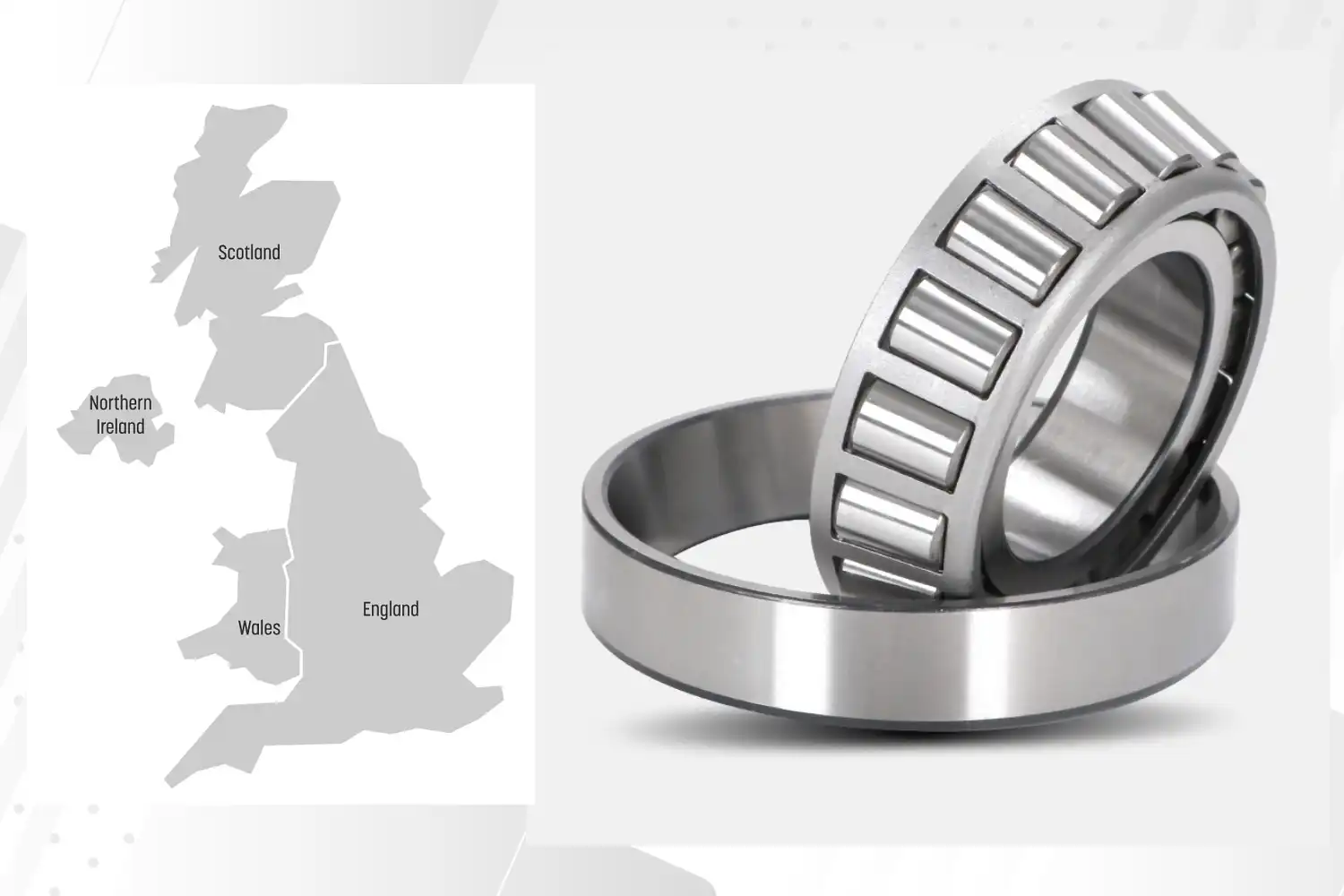
A lot of careful planning goes into making the Inch Series Single Row Tapered Roller Bearings so they can handle heavy-duty uses. The rollers and the inner and outer ring raceways of these bearings are all curved. This gives them a special shape that makes it easy for them to handle loads going both ways. It can spread loads evenly across the rollers because the shape is curved. This makes it stronger and lasts longer. These bearings only have one row, so they can be used in small spaces where they need to hold a lot of weight. Most of the time, high-quality steel metals are used to make Inch Series Single Row Tapered Roller Bearings. This makes them stronger and less likely to wear out. The precision-ground surfaces of the wheels and raceways help the machine run more easily and with less friction. This makes it work better and last longer.
Load Capacity and Performance
Inch Series Single Row Tapered Roller Bearings are unique because they can hold a lot of weight. It is made so that these bearings can handle very big loads in both directions. Because of this, they are perfect for use in industries like mining and metallurgy, where tools need to work in tough conditions. Because the shape is curved, the load can be spread out properly. This keeps the bearing from wearing out too quickly and makes it last longer. And the Inch Series Single Row Tapered Roller Bearings are great at speed. You can run them at high speed,s and they will still be stable and accurate. They help the equipment work better and be more reliable because they can stay aligned even when big loads are on them. A lot of the time, these bearings have better closing systems that keep dirt and other things that could damage them out. This means they last longer in nasty places.
Customization and Versatility
It's possible to change the Inch Series Single Row Tapered Roller Bearings in a number of ways to make them fit your needs. There are businesses like CHG Bearing that make unique items that can be used in many work settings. This customisation includes things like shape, size, material, and how to grease it. But these bearings are so flexible that they can be used in many other fields besides mining and metalworking. They are used in many fields, such as the car, aerospace, and heavy machinery industries. Engineers and people who make tools love these bearings because they can be changed to work well in a lot of different situations. Also, these bearings are made in inches, which means they work perfectly with equipment that was made to imperial standards. This makes it simple to put them in and change them on machines that are already in use.
How Do Industry Standards Impact the Manufacturing of Inch Series Single Row Tapered Roller Bearings?
Quality Control and Certification
A lot of people work hard to make sure that all companies that make Inch Series Single Row Tapered Roller Bearings meet the same high standards of quality and performance. These rules tell bearings what they need to be able to do in terms of performance, accuracy in measurements, and the qualities of the materials they are made of. Environmental management and quality management are both based on international norms like ISO 14001 and ISO 9001. These rules are followed by companies like CHG Bearing. For this to happen, strict quality control measures must be used at all stages of production, from picking out the raw materials to checking the finished item. When it comes to Inch Series Single Row Tapered Roller Bearings, this means getting precise measurements of the sizes, finishes, and geometrical errors. These standards make sure that bearings can be used with a wide range of equipment from different manufacturers. This makes foreign trade easier and gives customers peace of mind about the quality of the product.
Material Specifications and Testing
The types of materials that are needed for Inch Series Single Row Tapered Roller Bearings are set by rules in the business. This makes sure they are strong enough, last long enough, and work well enough. These rules explain the chemicals that make up the steels used to make bearings, how they are heated, and how they work mechanically. Norms might call for certain kinds of high-carbon chrome steel, which are known for being tough and hard to wear down. For example, hardness tests, microstructure analysis, and stress tests are some of the ways that makers test materials to make sure they meet these standards. Ultrasonic testing (UT), magnetic particle inspection (MT), and eddy current testing (ET) are some extra non-destructive testing methods that you might need to use on Inch Series Single Row Tapered Roller Bearings when they're needed in serious situations. These are used to find any internal or surface flaws that could affect how well the bearing works.
Performance Ratings and Tolerances
Standards in the industry tell us how to figure out the performance numbers of Inch Series Single Row Tapered Roller Bearings, like how much weight they can hold, how fast they can spin, and how long they should last. When engineers pick out bearings for different jobs, these numbers are very useful to have. There are also rules that say what kinds of mistakes are okay for different bearing sizes. These include mistakes in the width, the inner and outer diameters, and the shapes of the raceways. To make sure that the Inch Series Single Row Tapered Roller Bearings fit and work well in machinery, the gaps should be kept very small. As a way to meet the needs of a wide range of tools, from general-purpose ones to high-precision ones, standards may list different tolerance classes. The people who make bearings have to use high-tech measuring tools and methods to make sure that they meet these strict tolerance standards. As long as they meet these performance and tolerance standards, Inch Series Single Row Tapered Roller Bearings will always work well in a lot of different situations and uses.
What Are the Best Practices for Maintenance and Installation of Inch Series Single Row Tapered Roller Bearings?
Proper Installation Techniques
Inch Series Single Row Tapered Roller Bearings need to be put in the right way for them to work well and last a long time. Prepare the installation area properly and make sure it is clean to prevent contamination. This is the best way to start. It is very important that the bearing is lined up correctly inside its case. If it gets out of alignment while it's being used, it could break or wear out too quickly. To get the right internal space or preload for Inch Series Single Row Tapered Roller Bearings, it is very important to put the tapered parts in the right place. To measure and change the bearing clearance, you often need to use special scales and tools. If you use the right mounting method, like heat mounting for larger bearings or hydraulic mounting, the bearing will not get hurt while it's being put in place. Also, make sure you use the right kind and amount of lubricant when you fit it to avoid wear and make sure the first use goes quickly.
Regular Maintenance and Inspection
To get the most out of your Inch Series Single Row Tapered Roller Bearings, you need to keep them in good shape. Inspecting regularly for signs of damage, wear, or contamination is part of this. Pay close attention to the state of the tapered surfaces and the strength of the seals or shields on these bearings. Lubrication management is an important part of maintenance that includes checking the quality and amount of lubricant on a daily basis and re-greasing at the right times. What kind of oil to use should depend on how the bearing is being used, taking into account things like load, speed, and temperature. Vibration analysis and temperature tracking can give you early warnings of possible bearing problems, so you can do maintenance before they happen. When Inch Series Single Row Tapered Roller Bearings are used in harsh settings or with heavy loads, they may need to be inspected and serviced more often to make sure they keep working well.
Troubleshooting and Replacement
When problems happen with Inch Series Single Row Tapered Roller Bearings, they need to be properly fixed. Some common problems are making too much noise, shaking, or heat, which can be a sign of problems like not enough lubrication, misalignment, or contamination. When trying to figure out what's wrong, it's important to look at the whole system that the bearing is part of, since issues could come from other parts. For example, a misaligned shaft or a problem with the case can cause a bearing to fail before it should. When a bearing needs to be replaced, it's very important to make sure that the new one is the right size, has the same load capacity, and is of the same quality grade as the old one. To keep the new bearing and other parts around it from getting damaged, the right methods must be used to remove and install it. Root cause analysis of the failed bearing can sometimes give useful information for stopping future failures and improving the general performance of the system. By following these best practices, people using Inch Series Single Row Tapered Roller Bearings in tough industrial settings can make sure that they work well and last a long time.
Conclusion
Inch Series Single Row Tapered Roller Bearings are very important in many industrial settings, especially in the mining and metalworking industries. Because of how they are made, they can handle rotational and axial loads efficiently, which is why heavy-duty machinery can't work without them. These bearings meet strict quality, performance, and safety standards because they are made in line with industry norms. To get the most out of their service life and dependability, they need to be installed correctly, maintained regularly, and used in line with best practices. Manufacturers like CHG Bearing keep coming up with new ideas, giving custom solutions and high-quality products to meet the changing needs of the industry. For more information on our range of Inch Series Single Row Tapered Roller Bearings and other bearing solutions, please contact us at sale@chg-bearing.com.
FAQ
1. What are the main advantages of Inch Series Single Row Tapered Roller Bearings?
These bearings offer high load capacity, the ability to handle combined radial and axial loads, and are suitable for heavy-duty applications in metallurgical and mining industries.
2. How often should Inch Series Single Row Tapered Roller Bearings be inspected?
Regular inspections should be conducted, with frequency depending on the application. High-load or harsh environments may require more frequent checks.
3. What factors should be considered when selecting a lubricant for these bearings?
Factors include operating load, speed, temperature, and environmental conditions. The lubricant should be compatible with the bearing materials and seals.
4. Can Inch Series Single Row Tapered Roller Bearings be customized for specific applications?
Yes, manufacturers like CHG Bearing offer customization in terms of size, structure, material, and lubrication methods to meet specific application requirements.
5. What are common signs of bearing failure in Inch Series Single Row Tapered Roller Bearings?
Common signs include excessive noise, vibration, heat generation, and increased friction or resistance during operation.
6. How do industry standards impact the manufacturing of these bearings?
Standards govern quality control, material specifications, performance ratings, and dimensional tolerances, ensuring consistency and reliability across different manufacturers.
References
1. American Bearing Manufacturers Association. (2019). "ABMA Standards for Tapered Roller Bearings."
2. International Organization for Standardization. (2018). "ISO 355:2019 - Rolling bearings - Tapered roller bearings - Boundary dimensions and series designations."
3. Smith, J. D. (2017). "Fundamentals of Industrial Bearing Design and Application." Mechanical Engineering Press.
4. Johnson, R. L. (2020). "Compliance and Quality Control in Bearing Manufacturing." Journal of Industrial Engineering, 45(3), 178-195.
5. Thompson, A. K. (2019). "Best Practices for Installation and Maintenance of Tapered Roller Bearings." Industrial Maintenance & Plant Operation, 28(2), 45-52.
6. Wilson, E. M. (2021). "Advancements in Inch Series Bearing Technology for Heavy Industry Applications." Proceedings of the International Bearing Symposium, 112-128.