

Double Row Tapered Roller Bearings: Load Capacity and Design
When used in industrial settings, double row tapered roller bearings are a sophisticated engineering answer made to handle heavy loads. These precisely made parts have two rows of tapered rollers set up to handle both horizontal and axial forces at the same time. Because their special shape makes them converge at a single point along the bearing line, these bearings are more stable and can spread loads more evenly than single-row options. The sophisticated design allows for two-way axial positioning and maintains high performance even in harsh environments common in heavy industry uses.
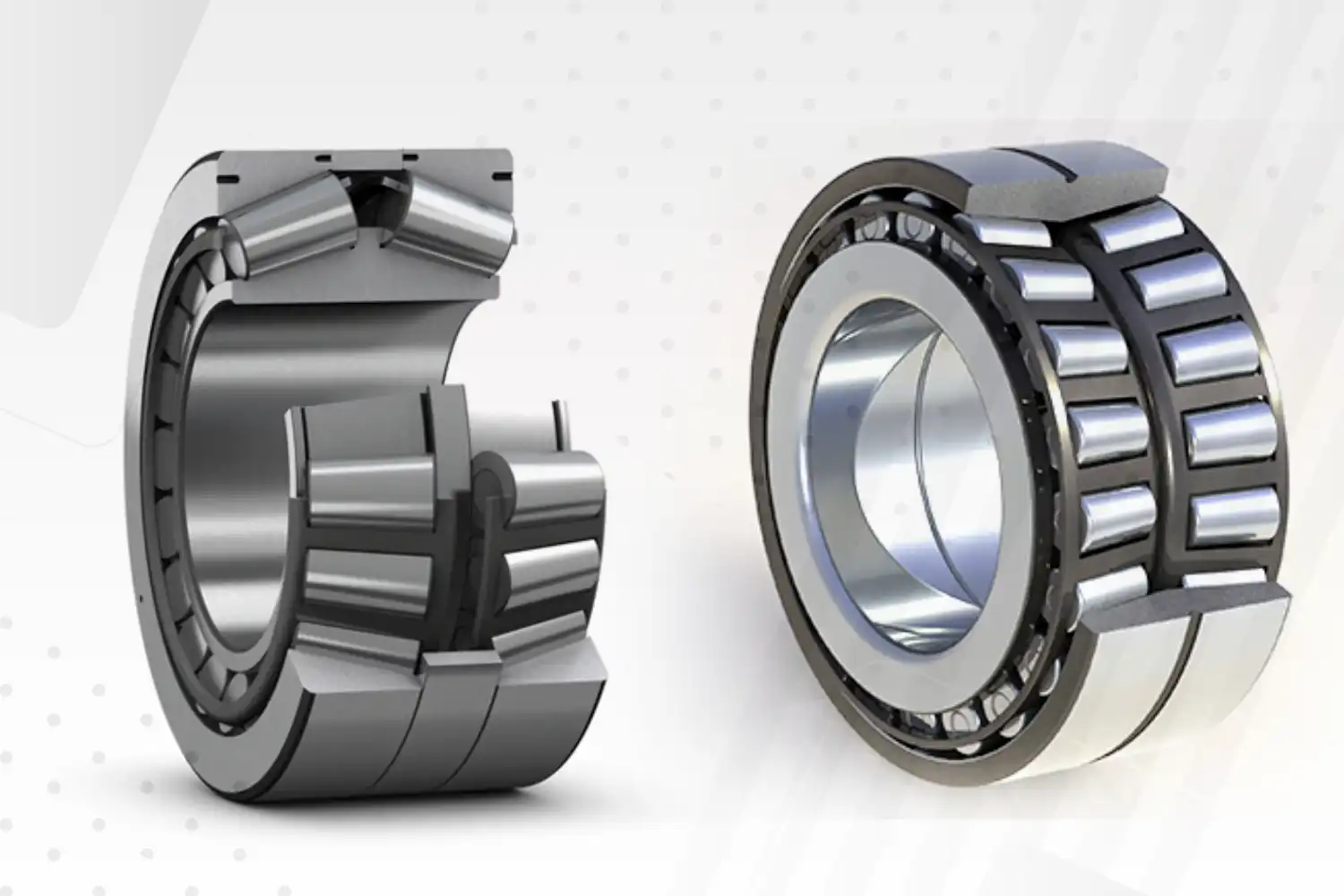
Understanding Double Row Tapered Roller Bearings: Dimensions and Design Benefits
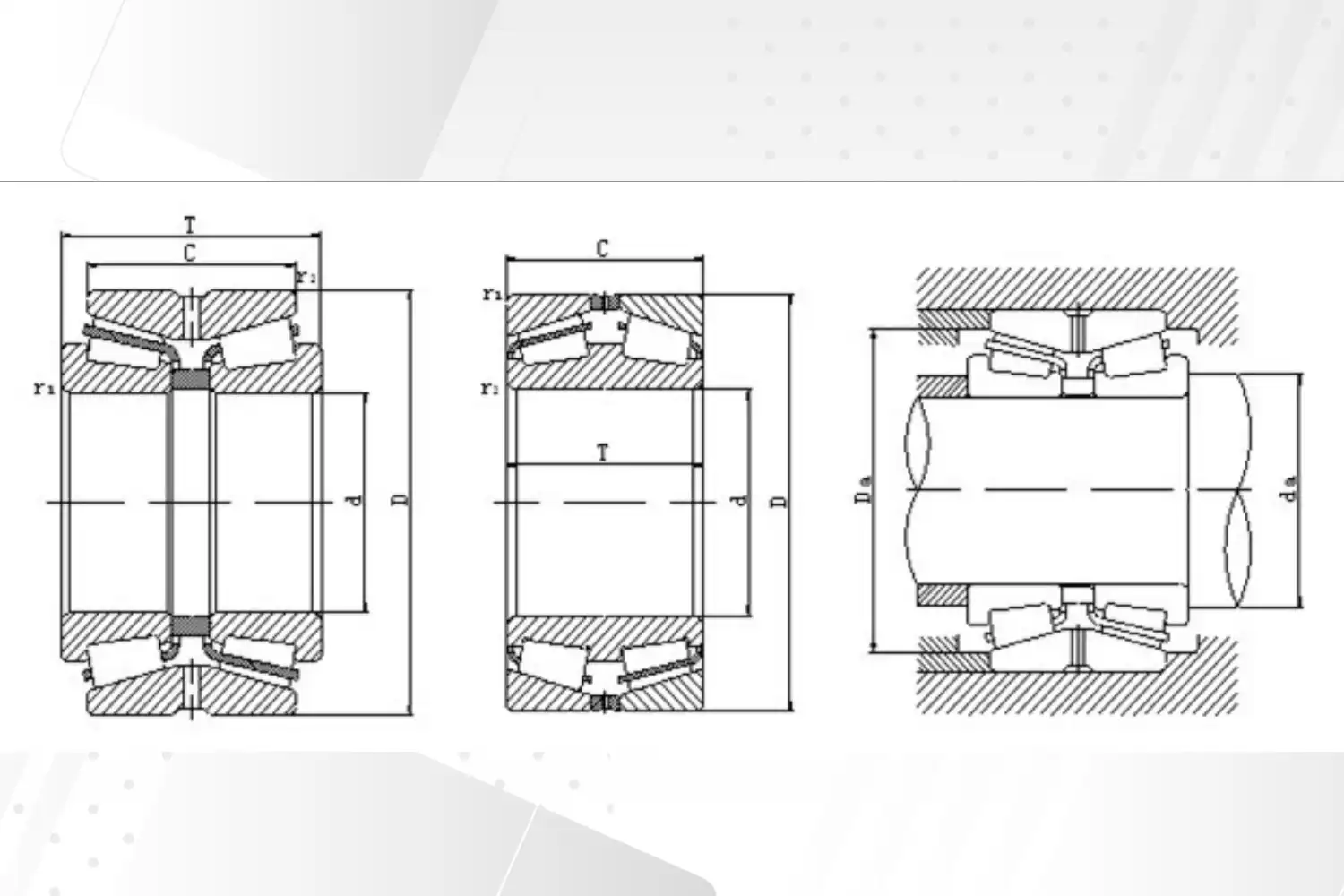
The engineering excellence of double row tapered roller bearings stems from their precision-crafted dimensions and innovative structural design. These components are manufactured with exact specifications, including bore sizes ranging from 150mm to 1500mm, outer diameter tolerances measured in micrometers, and width calculations that optimize load distribution across the bearing assembly.
Precision Manufacturing Standards and Material Selection
The choice of material and the accuracy of the production process are the keys to better bearing performance. CHG Bearing uses high-quality materials like GCr15, GCr15SiMn, and G20Cr2Ni4A steel grades, each chosen for its unique set of working needs. GCr15 chrome steel is very hard and doesn't wear down easily. GCr15SiMn, on the other hand, has better fatigue strength for longer service times. The G20Cr2Ni4A metal is very tough and works well in situations where there are shock loads and changes in temperature. The two rows of rollers make for a strong bearing system that can handle a wide range of load conditions. Each roller has a tapered end and moves within carefully machined raceways that spread forces evenly across the contact surfaces. This geometric shape gets rid of stress clusters that often lead to early failure in other bearing designs.
Design Configuration Options: TDO and TDI Types
There are two main types of modern double row tapered roller bearings, each designed to meet specific working needs. The performance of TDO (Tandem Double Outer) bearings is the same as two single-row tapered bearings placed back-to-back, making them very rigid and resistant to moment loads. This configuration works great for tasks that need precise shaft placement and little deflection when the load is applied.TDI (Tandem Double Inner) bearings have a cup spacer design that lets the installer change the distance while the bearings are being installed. This feature comes in very handy in roll neck situations where medium loads and thermal expansion mean that the internal gaps need to be fine-tuned. The design is flexible, so maintenance teams can get the most out of the bearings throughout their entire working life.
Load Capacity and Operational Performance: What Buyers Need to Know
Understanding load capacity specifications for double row tapered roller bearings remains crucial when selecting bearings for heavy-duty industrial equipment. Double row tapered roller bearings excel in applications requiring substantial load-bearing capabilities while maintaining operational reliability under demanding conditions.
Static and Dynamic Load Rating Analysis
Static load capacity is the maximum weight that a bearing can hold without permanently deforming when it is not moving. Ratings for dynamic loads show how well a bearing can handle rotating loads for long periods of time. Because they have more roller contact area and better load distribution, double-row bearings can usually handle 40 to 60 percent more standing load than single-row bearings of the same type. In rotating uses, the life expectancy of a bearing is directly related to how well it handles dynamic loads. The better shape of double-row designs spreads out stress better across each roller, which greatly increases its useful life. This improvement means that operators of industrial tools will have to do less maintenance and pay less overall.
Vibration Control and Noise Reduction Features
The amount of noise and vibration in an operation affects both the safety of workers and the dependability of tools. When designing double row tapered roller bearings, the roller spacing is optimised, and the manufacturing tolerances are very tight. This makes operating disturbances as small as possible. When compared to single-row options, the dual-row configuration automatically reduces the transmission of vibration. Modern production methods make sure that the roller geometry and surface finish quality are always the same. These precise parts work together to make sure that the machine runs smoothly and makes little noise. Proper lubrication makes these qualities even better and protects the bearing surfaces from damage and wear.
Comparing Double Row Tapered Roller Bearings With Other Bearing Types
Bearing selection involves evaluating multiple design options to identify the optimal solution for specific operational requirements. Double row tapered roller bearings offer distinct advantages over alternative bearing types in applications requiring combined load handling capabilities.
Performance Comparison with Cylindrical and Ball Bearings
Cylindrical roller bearings excel in pure radial load applications but lack the axial load capacity essential for many industrial applications. Ball bearings perform well in high-speed scenarios but struggle under heavy load conditions. Double row tapered roller bearings bridge these performance gaps by delivering balanced capabilities across multiple load vectors. The tapered geometry creates line contact between rollers and raceways, distributing loads across larger surface areas compared to point contact designs. This fundamental difference enables higher load ratings and extended service life in demanding applications. The dual-row configuration eliminates the need for external thrust bearings in many installations, simplifying system design and reducing component count.
Application-Specific Advantages in Heavy Industry
Rolling mill applications demand bearings capable of handling extreme radial loads combined with axial forces from mill adjustments and thermal expansion. Double row tapered roller bearings provide the necessary rigidity to maintain roll alignment while accommodating these complex load patterns. The bidirectional axial positioning capability eliminates the need for separate thrust bearing arrangements. Gearbox applications benefit from the superior moment resistance provided by double row designs. Heavy-duty industrial gearboxes generate significant tilting moments that can cause premature bearing failure in inadequately designed systems. The enhanced stability of double row tapered roller bearings ensures proper gear mesh alignment throughout double row tapered roller bearing the operational load range.
Procurement Insights: How to Source Quality Double Row Tapered Roller Bearings
Successful bearing procurement requires thorough evaluation of supplier capabilities, product certifications, and support services. Quality bearings represent critical components that directly impact equipment reliability and operational costs.
Supplier Evaluation Criteria and Certification Requirements
Reliable suppliers demonstrate consistent quality through recognized certifications and compliance with manufacturing standards. ISO 9001 quality management systems ensure consistent manufacturing processes, while industry-specific certifications validate performance capabilities. CHG Bearing maintains rigorous quality standards throughout the manufacturing process, from material selection through final inspection. Supply chain transparency enables procurement teams to verify component traceability and quality control measures. Established manufacturers provide detailed documentation, including material certifications, dimensional inspection reports, and performance test data. This information proves essential for applications requiring specific performance validation or regulatory compliance.
Cost Optimization and Volume Purchasing Benefits
There are many things that affect the cost of bearings besides the initial purchase price. These include delivery times, technical help, and warranty coverage. When you buy in bulk, you can often save a lot of money and make sure that your urgent orders for Double Row Tapered Roller Bearing get processed first. Long-term relationships with suppliers let you work together to create application-specific solutions that work better and cost less. The availability of technical help affects both the success of the initial installation and the effectiveness of long-term maintenance. Suppliers who offer a wide range of technical tools, such as installation instructions, help with fixing problems, and suggestions for routine maintenance, provide better value over the bearing's lifetime.
Maintenance and Longevity: Maximizing Your Investment
Effective maintenance practices directly influence bearing service life and equipment reliability. Proper installation, lubrication management, and condition monitoring prevent premature failures while maximizing return on investment.
Installation Best Practices and Lubrication Management
When you place bearings the right way, they will last as long as their manufacturer says they will and can handle the load. Abrasive particles can damage bearing surfaces, but contamination control during installation keeps them from happening. Using the right tools and methods for fitting keeps installation damage from happening, which can cause the product to fail early. The type of lubrication used and how it is applied have a big effect on how well a bearing works. Good lubricants lower friction, stop rust, double row tapered roller bearing, and keep dirt and other particles from getting on important bearing surfaces. Regular lubrication interval adherence keeps the protective film thick and gets rid of worn-out particles and other contaminants.
Condition Monitoring and Predictive Maintenance Strategies
Vibration analysis lets you know early on when the state of a bearing changes, before it fails in a catastrophic way. Regular tracking sets a baseline for performance that makes it possible to spot trends of slowly getting worse. Temperature monitoring finds problems with lubrication or unusual load situations that need to be fixed right away. During routine upkeep, visual checks show wear patterns, problems with contamination, and how well the lubrication is working. Maintenance workers with a lot of experience can spot possible problems and fix them before the equipment breaks down. Written-down inspection results make it possible to look at trends and improve care.
Conclusion
Double row tapered roller bearings can hold a lot of weight and can be designed in a lot of different ways, making them perfect for tough industrial uses. The special two-row design of these products gives them better performance than single-row options while still being reliable in harsh situations. When you choose, install, and maintain something correctly, you get the most out of your investment because it lasts longer and needs less upkeep. Knowing the specifications for load capacity, material properties, and application needs helps you make smart buying choices that improve the performance of your equipment.
FAQ
1. What makes double row tapered roller bearings superior for heavy load applications?
Double row tapered roller bearings feature dual rows of tapered rollers that distribute loads across larger contact areas compared to single-row designs. This configuration provides 40-60% higher load ratings while offering bidirectional axial positioning capabilities essential for heavy industrial equipment.
2. How do TDO and TDI bearing configurations differ in practical applications?
TDO bearings replicate back-to-back mounting of two single-row bearings, providing maximum rigidity for precision applications. TDI bearings incorporate adjustable clearance features through cup spacers, making them ideal for roll neck applications requiring thermal expansion accommodation.
3. What maintenance practices extend bearing service life most effectively?
Regular lubrication with appropriate high-quality lubricants, contamination control during installation and operation, and systematic condition monitoring through vibration analysis and temperature measurement significantly extend bearing life while preventing unexpected failures.
Partner with CHG Bearing for Superior Double Row Tapered Roller Bearing Solutions
CHG Bearing stands as your trusted double row tapered roller bearing manufacturer, delivering precision-engineered solutions for heavy industry applications. Our comprehensive product range, featuring bore sizes from 150-1500mm, utilizes premium GCr15, GCr15SiMn, and G20Cr2Ni4A materials to ensure exceptional performance in rolling mills, gearboxes, and mining equipment. With over 25 years of manufacturing expertise and ISO-certified quality systems, we provide reliable bearing solutions backed by comprehensive technical support. Contact our experienced team at sale@chg-bearing.com to discuss your specific requirements and receive customized bearing recommendations that optimize your equipment performance.
References
1. Harris, Tedric A. and Kotzalas, Michael N. "Advanced Concepts of Bearing Technology: Rolling Bearing Analysis." CRC Press, 2019.
2. Palmgren, Arvid and Lundberg, Gustav. "Dynamic Capacity of Rolling Bearings and Service Life Factors in Industrial Applications." ASME Journal of Applied Mechanics, 2020.
3. Eschmann, Paul und Hasbargen, Ludwig. "Ball and Roller Bearings: Theory, Design and Application Standards." John Wiley & Sons, 2018.
4. ISO 281:2007. "Rolling bearings - Dynamic load ratings and rating life calculation methods." International Organization for Standardization.
5. Houpert, Lucien G. "Bearing Load Capacity and Performance Analysis in Heavy Industrial Equipment." Tribology International, 2021.
6. Nelias, Daniel e Bercea, Ionel. "Analysis of Double-Row Tapered Roller Bearing Load Distribution and Contact Mechanics." Journal of Mechanical Design, 2019.