

Tapered Roller Thrust Bearing Benefits You Need to Know
Understanding the benefits of tapered roller thrust bearings is very important for operational success when procurement managers and engineers have to make important tapered roller thrust equipment decisions regarding high-axial-load applications. These special bearings work better than any others at handling huge push forces and keeping precise positioning control in harsh industrial settings. Our in-depth study shows why tapered roller thrust bearings have become the best choice for places where failure is not an option, like steel mills, building equipment, and cars. These bearings are important for more than just managing loads; they also make equipment more reliable, lower upkeep costs, and extend its useful life. Knowing what makes them special helps you make smart purchasing choices that have a direct effect on your bottom line and your ability to compete in tough industrial markets.
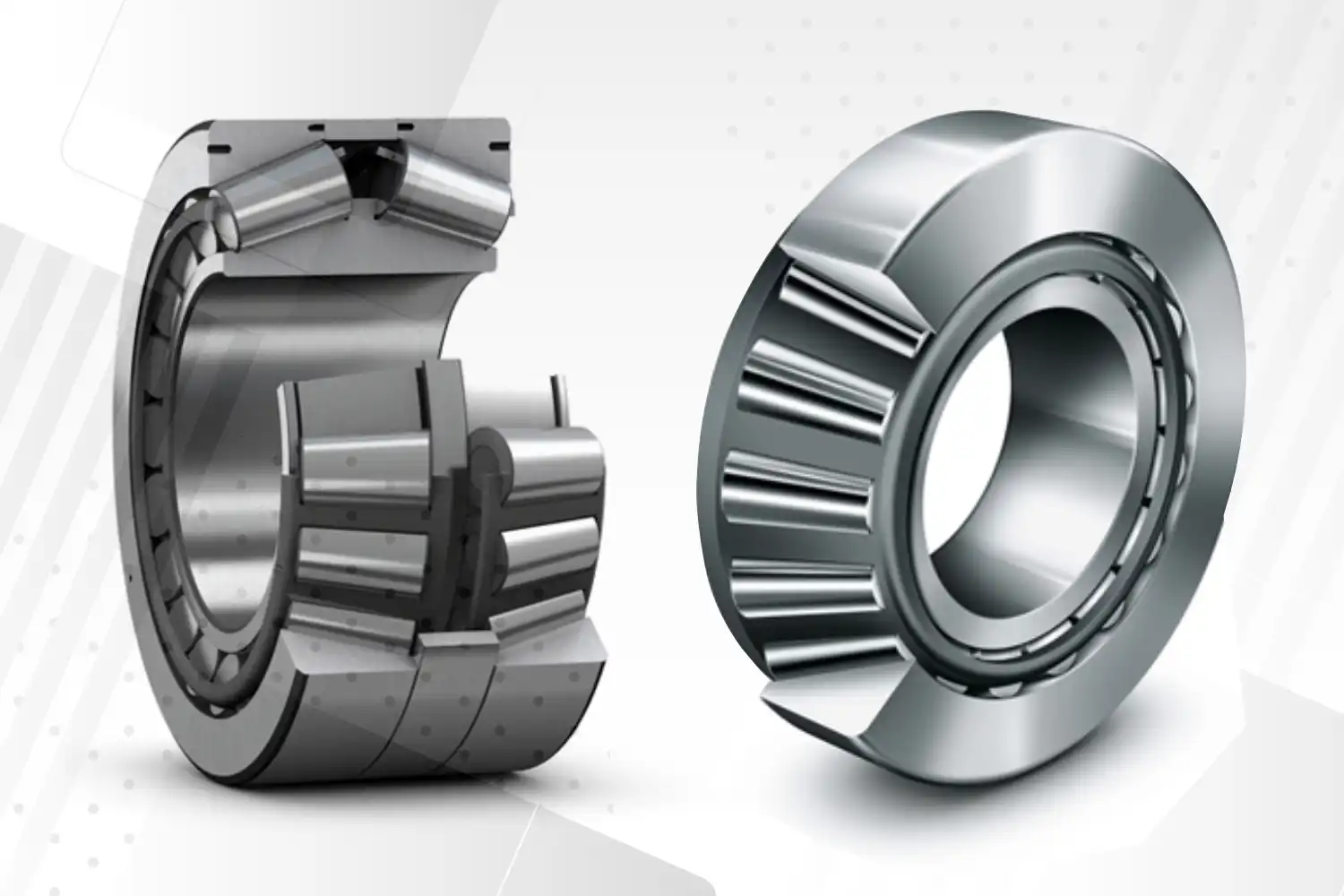
What Is a Tapered Roller Thrust Bearing and How Does It Work?
Construction and Design Principles
Engineers have come up with very smart ways to make tapered roller thrust bearings work with high axial loads in a single direction. Unlike regular ball bearings, these parts have conical rollers that are placed at exact angles. This makes the best load distribution patterns that reduce stress concentrations. The bearing system is made up of raceways, tapered rolling elements, and solid steel or brass cages that keep the rollers spaced correctly while the machine is running. The geometric design makes sure that all contact points meet at a single theoretical place along the centerline of the bearing. This stops the bearing from skidding and lowers the amount of heat it makes. This design concept, called "true rolling motion," makes bearings last a lot longer while keeping their performance stable under different loads.
Operational Mechanics and Load Distribution
These bearings work very well because they can change axial forces into stress patterns that are easy to handle across the wheel contact surfaces. When thrust loads are applied, the tapered geometry spreads the forces out widely, which stops the kind of localised wear that happens a lot with cylindrical roller thrust bearings. The exact angle of the wheels makes a wedge effect that increases the load capacity while keeping the dimensions stable. When compared to cylindrical roller thrust bearings, tapered designs can hold more weight, have less relative slippage, and have slower stopping speeds. Because of this, they are perfect for uses that need precise axial positioning while still being able to handle large thrust forces, like in heavy building equipment and rolling mill screw-down mechanisms.
Key Benefits and Advantages of Tapered Roller Thrust Bearings
Superior Load Capacity and Durability
Another great thing about tapered roller thrust bearings is that they can handle huge axial loads without losing their integrity. In industrial settings, these bearings can handle forces greater than 1,000 kN, which is a lot more than ball thrust bearings and normal cylindrical designs can do. The tapered shape makes the useful contact area bigger, a tapered roller thrust that spreads loads more evenly and lowers stress levels that cause early failure.
Here are the core load management advantages these bearings provide:
- Enhanced stress distribution through optimized contact geometry, reducing peak stress by up to 40% compared to cylindrical alternatives
- Superior shock load resistance enabling survival of sudden impact forces common in heavy machinery applications
- Increased static load ratings allow safe operation under extreme loading conditions without permanent deformation
These load management capabilities translate directly into reduced equipment downtime and lower total cost of ownership for heavy industrial operations.
Noise and Vibration Reduction
The design of tapered roller thrust bearings naturally lowers noise and vibration levels, which makes equipment function much more smoothly. The exact roller geometry and controlled contact patterns keep the force changes that cause rotating machinery to vibrate too much to a minimum. In places like precision rolling mills and car transmissions, where operating smoothness has a direct effect on product quality, this trait is especially useful. Besides making the user more comfortable, reducing vibrations also helps parts last longer throughout the whole mechanical system. Less vibration means less fatigue stress on nearby parts, which makes the whole system more reliable and lowers the need for upkeep over the life of the equipment.
Temperature and Environmental Resistance
In a wide range of situations, including high temperatures and dirty environments, modern tapered roller thrust bearings show amazing performance. The strong design and choice of materials allow continual use in temperatures above 200°C while keeping the structure's shape and load capacity. This temperature protection is very important in making steel and generating electricity, where thermal cycling happens all the time. The design of the bearing also allows for mild misalignment without a big drop in performance. This gives you more options for how to use the bearing in real-world settings where perfect alignment may be hard to get or keep up over time.
Comparing Tapered Roller Thrust Bearings with Other Bearing Types
Performance Comparison with Ball and Cylindrical Thrust Bearings
When evaluating bearing options for high-load applications, tapered roller thrust bearings consistently outperform both ball and cylindrical thrust bearings across multiple performance metrics. Ball thrust bearings, while suitable for moderate loads, cannot match the load capacity of tapered roller designs due to their limited contact area. The point contact of ball bearings creates stress concentrations that lead to premature failure under heavy loading conditions. Cylindrical roller thrust bearings offer improved load capacity over ball designs but fall short of tapered roller performance due to edge stress concentrations and sliding friction at the roller ends. The tapered geometry eliminates these problematic edge stresses while providing superior load distribution characteristics.
Single Row Versus Double Row Configurations
The choice between single and double row configurations depends on specific application requirements and available installation space. Single row tapered roller thrust bearings excel in applications requiring precise axial positioning in one direction, offering compact design and cost-effective solutions for most industrial applications. These bearings require careful installation to ensure proper load distribution and may need pairing with radial bearings to handle combined loads. Double row configurations provide bidirectional thrust capability and enhanced rigidity, making them suitable for applications with reversing loads or requiring maximum system stiffness. The increased complexity and cost of double row designs must be weighed against their performance and tapered roller thrust benefits in specific applications.
Brand Considerations and Supplier Selection
Reputable manufacturers like SKF, Timken, and NSK have established strong market positions through consistent quality and comprehensive technical support. SKF focuses on advanced materials and precision manufacturing, while Timken emphasizes application-specific engineering solutions. NSK provides competitive pricing with reliable performance for standard applications. Supplier selection should consider not only initial product quality but also after-sales support, technical consultation capabilities, and supply chain reliability. Long-term partnerships with established manufacturers often provide better value through consistent quality, predictable delivery schedules, and ongoing technical support.
Purchasing Guide and Procurement Tips for B2B Clients
Sizing and Specification Requirements
Effective procurement begins with accurate load analysis and dimensional requirements for your specific application. Standard tapered roller thrust bearings range from 200-380mm inner diameter to 400-670mm outer diameter, with weights spanning 75-274kg for heavy-duty applications. These specifications accommodate most industrial requirements while providing the robust performance necessary for demanding environments. Custom manufacturing capabilities become essential when standard sizes cannot meet unique application requirements. Leading manufacturers offer engineering consultation services to optimize bearing specifications for specific operating conditions, load profiles, and environmental factors.
Supplier Evaluation Criteria
Identifying reliable suppliers requires evaluation of multiple factors beyond initial pricing considerations. Quality certifications such as ISO9001 demonstrate commitment to consistent manufacturing standards, while ISO14001 certification indicates environmental responsibility. Technical support capabilities, including application engineering and field service, significantly impact long-term operational success. The supplier's manufacturing capacity and supply chain reliability directly affect delivery schedules and availability for emergency replacements. Established suppliers with global distribution networks provide better support for international operations and multi-site installations.
Procurement Strategy and Cost Optimization
Buying in bulk can cut unit costs by a lot while still making sure there is a steady supply for ongoing activities. When there aren't enough supplies, volume agreements can often open up better pricing levels and priority allocation. For specialized components like tapered roller thrust, securing bulk orders ensures both availability and consistency in quality. But the cost of keeping goods and the space needed for storage must be weighed against the money saved on purchases. Instead of just focusing on the purchase price, negotiation tactics should look at the total cost of ownership. Most of the time, performance guarantees, extended warranties, and technical support services are more valuable than small price cuts on standard goods.
Maintenance Best Practices to Maximize Performance
Lubrication Requirements and Practices
Proper greasing is the single most important thing that can be done to improve the performance and service life of a tapered roller thrust bearing. Because of the rolling friction that can happen where the roller ribs touch, these bearings need lubricants with Extreme Pressure (EP) additives to keep them from wearing out and scoring. For most industrial uses, high-viscosity mineral oils or lithium-complex greases are the best way to protect things. When to lubricate depends on how the machine is being used, how much load it is carrying, and the surroundings. Heavy-load uses usually need to be oiled more often, and dirty environments might need sealed bearing designs or better filtration systems. Setting up the right lubrication schedules based on what the maker says and what you've learned from using the equipment stops it from breaking down too soon and saves money on maintenance.
Inspection and Monitoring Protocols
Regular inspection methods help find problems early, before they become so bad that they can't be fixed. A visual check should focus on the integrity of the seal, the state of the lubricant, and any signs of contamination or overheating. Tracking vibrations can help find problems early on, while tracking temperatures can help find problems with lubrication or conditions where the machine is under too much load. Keeping organised records of inspection results, working conditions, and maintenance activities is a good way to find performance trends and improve maintenance intervals. This proactive method cuts down on unplanned downtime by a large amount and increases the service life of bearings.
Performance Optimization Case Study
A big steel company that put in place thorough maintenance plans for bearings saw huge changes in the reliability of their rolling mills. They increased the life of the bearings by 60% and cut down on unplanned maintenance by 75% by using systematic lubrication management, vibration tracking, and predictive maintenance. The training and tools for monitoring paid for themselves in six months because there was less downtime and less money spent on parts. This success shows how important it is to treat bearings as important system parts instead of disposable things when doing routine maintenance. When you do the right installation, lubrication, and proactive monitoring, you get big operational benefits that are worth much more than the extra money you spend on upkeep.

Conclusion
Tapered roller thrust bearings offer unmatched performance benefits for heavy industrial applications that need to handle axial loads reliably and precisely control positioning. Because they can handle more weight, last longer, and work better, they are the best choice for steel mills, construction equipment, and automotive uses where failure is not an option. When procurement workers and engineers know about these benefits, they can make decisions that improve equipment performance while lowering the total cost of ownership. Quality tapered roller thrust bearings are an investment that pays off in the long run through longer service life, less maintenance, and better operating reliability in harsh industrial settings.
FAQ
1. What industries benefit most from tapered roller thrust bearings?
Heavy industries, including steel manufacturing, mining equipment, construction machinery, and automotive applications, benefit most from these bearings. Their exceptional axial load capacity makes them ideal for rolling mills, crane hooks, transmissions, and other equipment subjected to massive thrust forces.
2. How do tapered roller thrust bearings compare to angular contact bearings under heavy loads?
Tapered roller thrust bearings significantly outperform angular contact bearings in heavy-load applications due to their larger contact area and superior load distribution. While angular contact bearings handle combined loads well, tapered thrust designs provide much higher pure axial load capacity.
3. What are the primary cost drivers affecting tapered roller thrust bearing pricing?
Material selection, precision requirements, size specifications, and volume quantities represent the primary cost drivers. Custom manufacturing, special materials like stainless steel, and enhanced precision grades command premium pricing. However, these investments often provide superior returns through extended service life and reduced maintenance costs.
Partner with Huigong for Premium Tapered Roller Thrust Solutions
Huigong Bearing Technology delivers exceptional tapered roller thrust bearing solutions engineered specifically for heavy industrial applications demanding uncompromising reliability. Our three decades of manufacturing expertise, combined with over 50 invention patents and ISO9001 quality certifications, ensure superior tapered roller thrust performance in the most challenging operational environments. As a trusted tapered roller thrust manufacturer, we provide comprehensive custom engineering services, competitive bulk pricing, and responsive technical support to optimize your equipment performance while minimizing total ownership costs. Contact our engineering team at sale@chg-bearing.com to discuss your specific requirements and discover how our advanced bearing solutions can enhance your operational efficiency and reliability.
References
1. Harris, T.A., and Kotzalas, M.N. "Advanced Concepts of Bearing Technology: Rolling Bearing Analysis." CRC Press, 2019.
2. Hamrock, B.J., Schmid, S.R., and Jacobson, B.O. "Fundamentals of Fluid Film Lubrication in Bearing Applications." McGraw-Hill Education, 2018.
3. International Organization for Standardization. "Rolling Bearings - Thrust Roller Bearings - Boundary Dimensions, General Plan." ISO 104:2015.
4. American Society of Mechanical Engineers. "Load Ratings and Fatigue Life for Ball and Roller Bearings in Industrial Applications." ASME Standards, 2020.
5. Bearing Industry Research Association. "Industrial Bearing Performance Analysis: Heavy Load Applications in Steel Manufacturing." Technical Report BR-2021-045, 2021.
6. Johnson, R.M., and Williams, P.K. "Tribological Performance of Thrust Bearings in Heavy Machinery: Comparative Analysis and Optimization Strategies." Journal of Industrial Engineering, Vol. 42, No. 3, 2022.