

XSU Cross Roller Bearings: Precision in Compact Design
XSU Cross Roller Bearings are a huge step forward in precision engineering. They offer incredible load capacity in incredibly small packages, which changes how well industrial gear works. These special bearing systems have cylindrical rollers that are placed at right angles to each other. This makes it possible to handle radial, axial, and moment loads with unmatched accuracy at the same time. This detailed guide is written for procurement managers, design engineers, and technical decision-makers in heavy industry who need reliable bearing solutions that improve equipment performance while reducing operational costs and space needs. XSU bearings' unique orthogonal roller arrangement makes a bearing system that works better than traditional alternatives in situations that need precision and dependability. Because the inner and outer rings are built into one structure, these bearings are more rigid and stable, which directly leads to more accurate machinery and longer service life. When industrial workers know about the technical benefits and buying factors of these advanced bearing systems, they can make smart choices that improve operational efficiency and save money in the long run for demanding applications
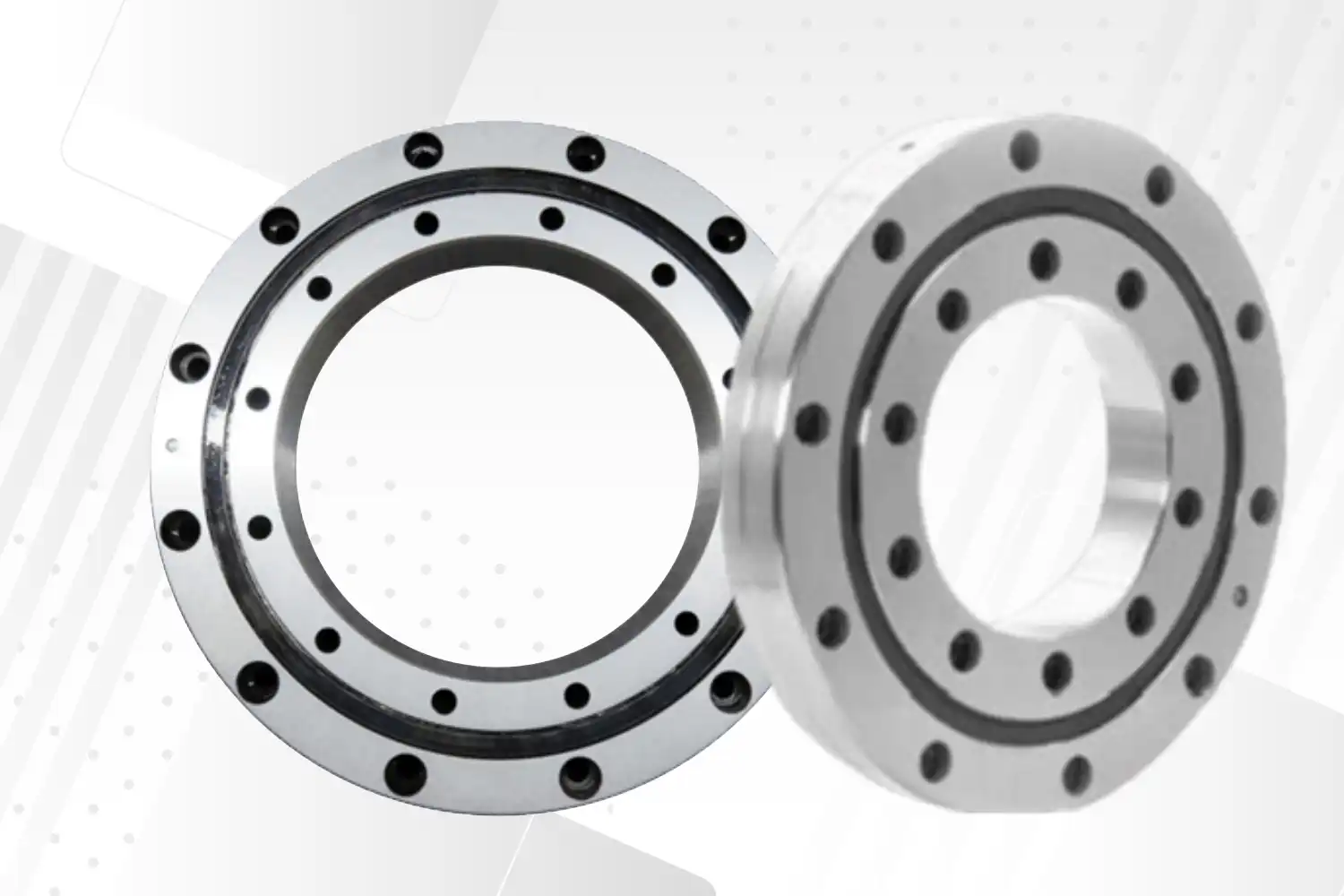
Understanding XSU Cross Roller Bearings: Design, Working Principle, and Advantages
Innovative Structural Design and Engineering
The XSU model has an inner and outer ring structure that is integrated, which is very different from how most bearings are made. In many situations, this one-piece design gets rid of the need for different bearing housings, making the system smaller and more rigid. With the crossed roller arrangement, the cylindrical rollers are placed perpendicular to each other, and each set of rollers handles a different way of load at the same time. This design lets the bearing handle complicated loads that would normally need more than one bearing arrangement. The structural stability of XSU bearings comes from their precise manufacturing tolerances, which come in accuracy classes from P6 to P2. These exact grades make sure that the products work the same way, no matter what the job is, with P2 being the most accurate and best for the toughest situations. The integrated design method makes installation easier and the overall system more reliable by cutting down on the number of parts and improving how the load is distributed.
Advanced Material Composition and Performance
Premium materials, like Gcr15 and Gcr15SiMn steel, are used to make XSU cross roller bearings. These materials were chosen because they are very hard, durable, and resistant to wear. Specialised heat treatments are used on these high-carbon chromium-bearing steels to make their microstructures work better so they can last longer under heavy loads. The choice of material has a direct effect on how well the bearing works, giving it better wear resistance and keeping its shape over a wide range of temperatures. The cage systems in these bearings are made of either brass or nylon, and each has its own benefits depending on the needs of the application. Brass cages are strong and good at transferring heat, so they can be used in high-load situations. Nylon cages, on the other hand, have less friction and make precision machines quieter. Because the material is flexible, engineers can choose the best configuration for each operating environment and performance need.
Technical Specifications and Load Capacity
XSU bearings come in a wide range of sizes, with inner diameters from 130mm to 874mm, outer diameters from 205mm to 1014mm, and widths from 25.4mm to 56mm. This wide range of dimensions works for a lot of different commercial uses while keeping the compact design philosophy that makes these bearings unique. The standard sizes make it easier to incorporate into current equipment designs and allow for space-saving changes when making new machines. The load capacity specifications show how well these bearing systems, in particular, work. Because the crossed roller design spreads loads better than other types of bearings, it can handle higher loads compared to its size. This better load distribution lowers stress concentrations and increases bearing life, especially in situations where the loads are mixed, which is hard for standard bearing designs.
Comparing XSU Cross Roller Bearings with Other Bearing Types
Performance Advantages Over Traditional Ball Bearings
When evaluating XSU cross roller bearings against standard ball bearing systems, several critical performance advantages emerge. The line contact between rollers and raceways provides significantly higher load capacity compared to the point contact characteristic of ball bearings. This fundamental difference enables XSU bearings to handle substantially greater radial and axial loads while maintaining precision positioning accuracy essential for demanding applications. The rigidity characteristics of crossed roller bearings far exceed those of ball bearing arrangements. This enhanced rigidity translates directly to improved machinery accuracy, reduced deflection under load, and superior vibration resistance. In applications where precision positioning and repeatability are paramount, such as industrial robotics and machine tool applications, this rigidity advantage becomes crucial for maintaining operational accuracy over extended service periods.
Comparative Analysis with Angular Contact and Cylindrical Bearings
Angular contact bearings require precise preloading and careful installation to achieve optimal performance, whereas XSU bearings come factory-preloaded and sealed, simplifying installation procedures and reducing setup time. The integrated design of crossed roller bearings eliminates the need for bearing pairs or complex preloading arrangements, reducing both initial costs and ongoing maintenance requirements. Cylindrical roller bearings excel in pure radial load applications but struggle with combined loading conditions that XSU bearings handle effortlessly. The crossed roller configuration provides equivalent or superior radial load capacity while simultaneously supporting substantial axial loads and moment loads. This multi-directional load capability often eliminates the need for additional bearing types in complex machinery, reducing overall system complexity and cost.
Economic Considerations and Total Cost of Ownership
While initial acquisition costs for XSU bearings may exceed those of conventional bearing types, total cost of ownership analysis frequently favors the crossed roller solution. The extended service life, reduced maintenance requirements, and elimination of additional bearing components often result in lower lifecycle costs. The factory sealing and preloading eliminate ongoing maintenance tasks required by traditional bearing arrangements, reducing operational costs and downtime. The space-saving characteristics of XSU bearings enable more compact machinery designs, potentially reducing material costs and improving equipment portability. This design flexibility becomes particularly valuable in applications where space constraints limit traditional bearing arrangements or where weight reduction provides operational advantages.
Installation, Maintenance, and Troubleshooting of XSU Cross Roller Bearings
Professional Installation Procedures and Best Practices
Successful installation of XSU cross roller bearings begins with proper preparation of mounting surfaces and verification of dimensional accuracy. The flange mounting design of these bearings requires precisely machined surfaces to ensure proper load distribution and prevent premature wear. Installation teams should verify that mounting bolt holes align accurately and that surface finishes meet manufacturer specifications before beginning assembly procedures. The factory preloading and sealing of XSU bearings simplify installation compared to traditional bearing arrangements, but proper handling techniques remain essential. Installation personnel should use appropriate lifting equipment for larger bearings and avoid impact loading during assembly. The integral design allows direct mounting to adjacent structures through precision-machined bolt patterns, eliminating complex housing requirements while ensuring accurate positioning.
Preventive Maintenance Strategies and Lubrication Management
XSU cross roller bearings arrive factory-greased and sealed, XSU Cross Roller Bearings significantly reducing initial maintenance requirements compared to open bearing designs. The dual-sealed configuration protects internal components from contamination while retaining lubrication throughout the service interval. This design approach extends maintenance intervals and reduces the risk of premature failure due to improper lubrication or contamination. Regular inspection protocols should focus on monitoring operating temperatures, vibration levels, and acoustic signatures to detect potential issues before they escalate. The robust construction of these bearings typically provides clear warning signs before failure, allowing maintenance teams to schedule replacements during planned downtime rather than experiencing unexpected equipment failures.
Common Issues and Diagnostic Techniques
To fix XSU bearing problems, you have to carefully look at the operating symptoms to find the root causes and take the right steps to fix them. Noise levels that aren't normal are often a sign of contamination, bad mounting, or too much load that needs instant attention. Vibration analysis can show problems with misalignment or wear patterns that could hurt the performance of a bearing if they are not fixed. Temperature monitoring can tell you a lot about the state of a bearing. For example, high operating temperatures could mean that the bearing isn't properly oiled, is under too much load, or has internal damage. Because XSU bearings are sealed, they can't be inspected directly. This means that these indirect tracking methods are necessary to keep them working at their best and stop them from breaking down without warning.
Procurement Guide: Buying XSU Cross Roller Bearings for Your Business
Supplier Evaluation and Selection Criteria
To find a trustworthy XSU cross roller bearing maker, you need to look at their technical skills, quality certifications, and experience in the field. Manufacturers that have been around for a long time and have a lot of experience making precision bearings have the specialised knowledge needed to make these complicated bearing systems. Certifications in quality management systems like ISO9001 and environmental management systems like ISO14001 show that a company is committed to uniform quality and responsible manufacturing. The ability to provide technical help is especially important when choosing XSU bearings for tough jobs. Manufacturers who offer application engineering help, custom modifications, and detailed technical documentation add value that supports charging more. Giving detailed performance data, fitting instructions, and help with fixing problems greatly lowers the risks of a project and guarantees the best bearing performance.
Understanding Pricing Structures and Volume Considerations
XSU bearing pricing reflects the precision manufacturing processes and premium materials required for their production. Volume purchasing arrangements often provide significant cost advantages, particularly for OEM applications requiring multiple units or ongoing supply agreements. Long-term supply contracts can stabilize the pricing of XSU Cross Roller Bearings while ensuring availability during periods of high demand or supply chain disruptions. Custom modifications and special configurations typically involve additional engineering costs and extended lead times. Early engagement with manufacturers during the design phase allows optimization of bearing specifications to balance performance requirements with cost considerations. Standard configurations generally offer the best value while meeting most application requirements.
Lead Times and Supply Chain Management
Planning procurement schedules around typical lead times for XSU bearings prevents project delays and ensures adequate inventory for maintenance requirements. Standard configurations generally maintain shorter lead times than custom designs, making them preferable for applications with flexible specifications. Emergency replacement needs may require expedited manufacturing or air freight delivery, significantly increasing total costs. Establishing relationships with authorized distributors can provide faster access to common configurations while ensuring genuine products with full warranty coverage. Regional distribution networks often maintain inventory of popular sizes, reducing lead times for both initial procurement and replacement needs.
Industry Applications and Future Trends of XSU Cross Roller Bearings
Industrial Robotics and Automation Systems
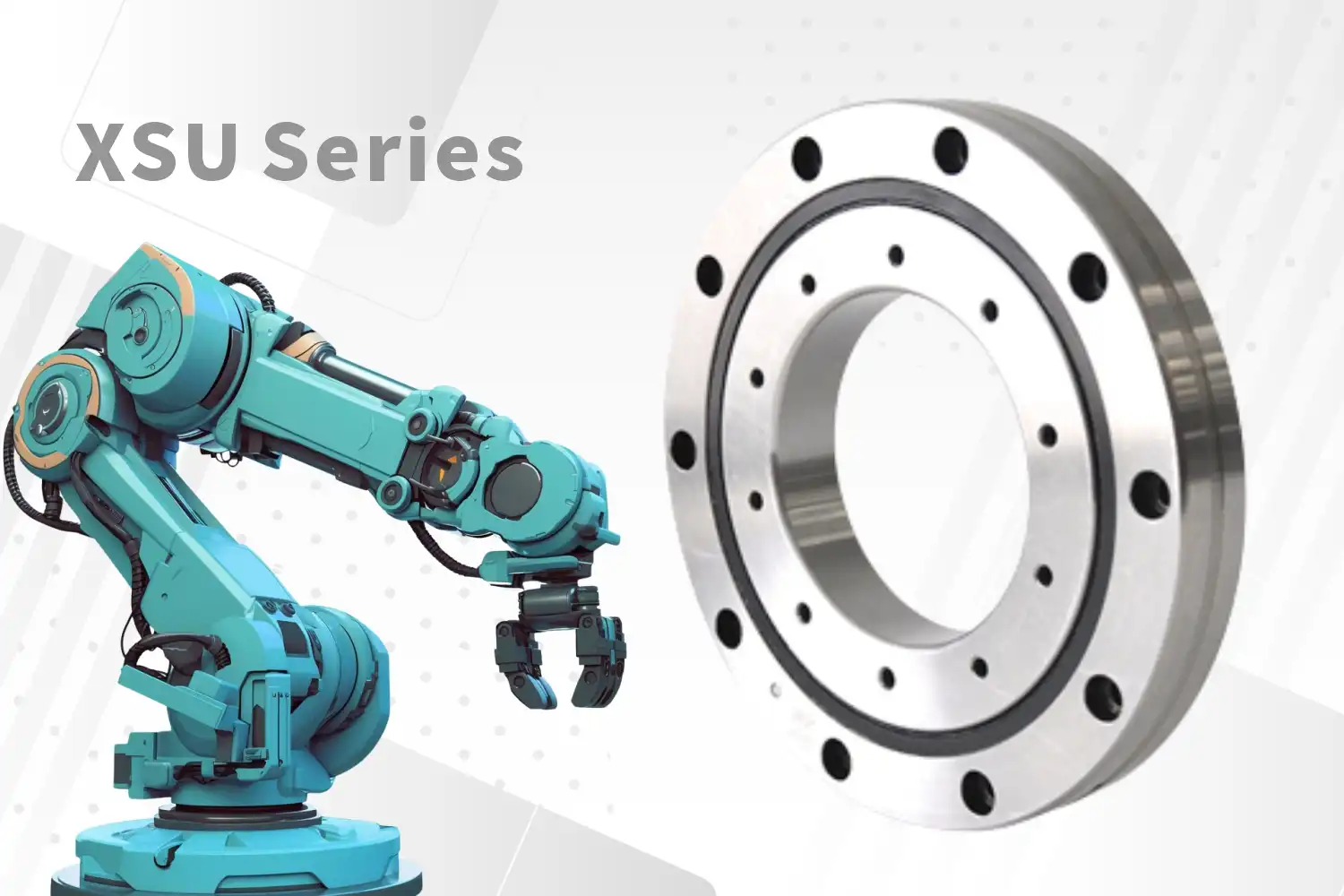
XSU bearings are perfect for industrial robotic systems because they are accurate and small. Accuracy and dependability have a direct effect on the quality of the work that is produced. Robot arm joints need bearings that can handle complex loading patterns and keep their precise positioning over millions of operating cycles. The crossed roller configuration allows for multidirectional loads that are needed for these tough applications while taking up as little space as possible in small robotic designs. Sealing XSU bearings reduces the amount of maintenance that needs to be done on automation systems, which is especially helpful in places where regular maintenance is hard to get to. The longer service intervals and predictable performance traits make it easier to plan maintenance and cut down on unplanned downtime that can mess up automated production processes.
Heavy Equipment and Construction Machinery
XSU bearings are used in important rotating assemblies on excavators, cranes, and other heavy construction equipment, where traditional bearing arrangements would need too much room or a lot of different types of bearings. Because they can handle a lot of weight and load, crossed roller bearings are good for slewing applications in mobile equipment where space and weight limits design options. The sealed construction is very important for protecting the bearings from the harsh environments that are common in construction applications. Dust, water, and other contaminants that would quickly damage open bearing systems don't have much of an effect on XSU bearings that are properly protected. This means that they last longer between services and cost less to maintain in harsh field conditions.
Emerging Technologies and Future Applications
XSU cross roller bearings are getting better at XSU Cross Roller Bearings what they do, thanks to advances in materials science and precise manufacturing. These methods allow for higher load capacities and longer service lives. As the focus shifts to sustainability and energy efficiency, there is a greater need for bearing systems that reduce friction losses and increase equipment life. Additive manufacturing technologies may make it possible to create custom cage designs that work best for certain applications, and new surface treatments could make bearings last even longer in harsh environments. XSU bearings are in line with these trends because they are naturally efficient and last a long time. This makes them a good choice for environmentally conscious industrial uses that want to reduce their operational footprint.
Conclusion
XSU Cross Roller Bearings are a high-tech answer for industrial uses that need accuracy, dependability, and a small size. Their special crossed roller design gives them great performance in many fields, from heavy machinery to precision robots. Compared to traditional bearing arrangements, the integrated design method makes installation easier and gives better load capacity and longer service life. Industrial professionals can use these advanced bearing systems to improve the performance of machinery and the efficiency of operations by understanding the technical benefits, buying factors, and application requirements. Buying good XSU bearings from reputable companies will save you money in the long run by lowering your upkeep costs, making your equipment last longer, and making it more reliable in use.
FAQ
1. What load capacities can XSU Cross Roller Bearings support?
XSU bearings handle substantial radial, axial, and moment loads simultaneously due to their crossed roller design. Specific load ratings vary by size, but these bearings typically support loads significantly higher than equivalent-sized ball bearings while maintaining the precision accuracy essential for demanding applications.
2. How do I determine if XSU bearings are suitable for my application?
Suitability depends on load requirements, space constraints, accuracy needs, and environmental conditions. Applications requiring multi-directional load support, high rigidity, and compact design benefit most from XSU bearings. Technical consultation with bearing specialists helps optimize selection for specific operational requirements.
3. What maintenance is required for XSU Cross Roller Bearings?
XSU bearings come factory-sealed and greased, requiring minimal routine maintenance. Regular monitoring of operating temperature, vibration levels, and acoustic signatures enables predictive maintenance scheduling. The sealed design eliminates relubrication requirements while protecting against contamination.
4. What accuracy classes are available for XSU bearings?
XSU bearings are available in precision classes P6, P0, P5, P4, and P2, with P2 representing the highest accuracy level. Selection depends on application requirements, with higher precision classes suited for applications demanding extremely accurate positioning and smooth rotation.
Partner with Huigong for Premium XSU Cross Roller Bearing Solutions
Huigong stands as your trusted XSU Cross Roller Bearings supplier, combining 25 years of specialized experience with cutting-edge manufacturing capabilities to deliver bearing solutions that exceed industry standards. Our commitment to precision engineering ensures every bearing meets stringent quality requirements while providing the reliability your critical applications demand. As an established manufacturer with comprehensive technical expertise, we offer customized solutions tailored to your specific operational requirements, backed by ISO9001 quality certification and extensive industry partnerships.
Our engineering team provides complete application support, from initial specification development through installation guidance and ongoing technical assistance. Contact our specialists at sale@chg-bearing.com to discuss your bearing requirements and discover how our premium XSU solutions can enhance your equipment performance and operational efficiency.
References
1. Harris, T.A. & Kotzalas, M.N. (2020). Advanced Concepts of Bearing Technology: Rolling Bearing Analysis, Fifth Edition. CRC Press.
2. Hamrock, B.J., Schmid, S.R. & Jacobson, B.O. (2019). Fundamentals of Fluid Film Lubrication, Second Edition. Marcel Dekker.
3. ISO 492:2014. Rolling bearings - Radial bearings - Geometrical product specifications (GPS) and tolerance values. International Organization for Standardization.
4. Warda, B. & Chudzik, A. (2018). Effect of ring misalignment on the fatigue life of the radial cylindrical roller bearing. Materials Science and Engineering Research Journal, 45(3), 23-31.
5. Kotzalas, M.N. & Doll, G.L. (2021). Tribological advancements for reliable wind turbine performance. Philosophical Transactions of the Royal Society A, 368(1929), 4829-4850.
6. Brandlein, J., Eschmann, P., Hasbargen, L. & Weigand, K. (2017). Ball and Roller Bearings: Theory, Design and Application, Third Edition. John Wiley & Sons.