

What Makes Single Row Ball Slewing Bearings Cost-Effective?
The best thing about Single Row Ball Slewing Bearings is that they are very cost-effective because their design matches performance and price. These bearings have a simplified single-row ball design that makes them easier to make while still being able to handle strong loads for axial, radial, and moment forces. Because they are simpler to build, they have lower starting costs, easier maintenance, and longer operational lifespans. This makes them perfect for situations where cost is important without sacrificing reliability in harsh industrial settings.
Understanding Single Row Ball Slewing Bearings
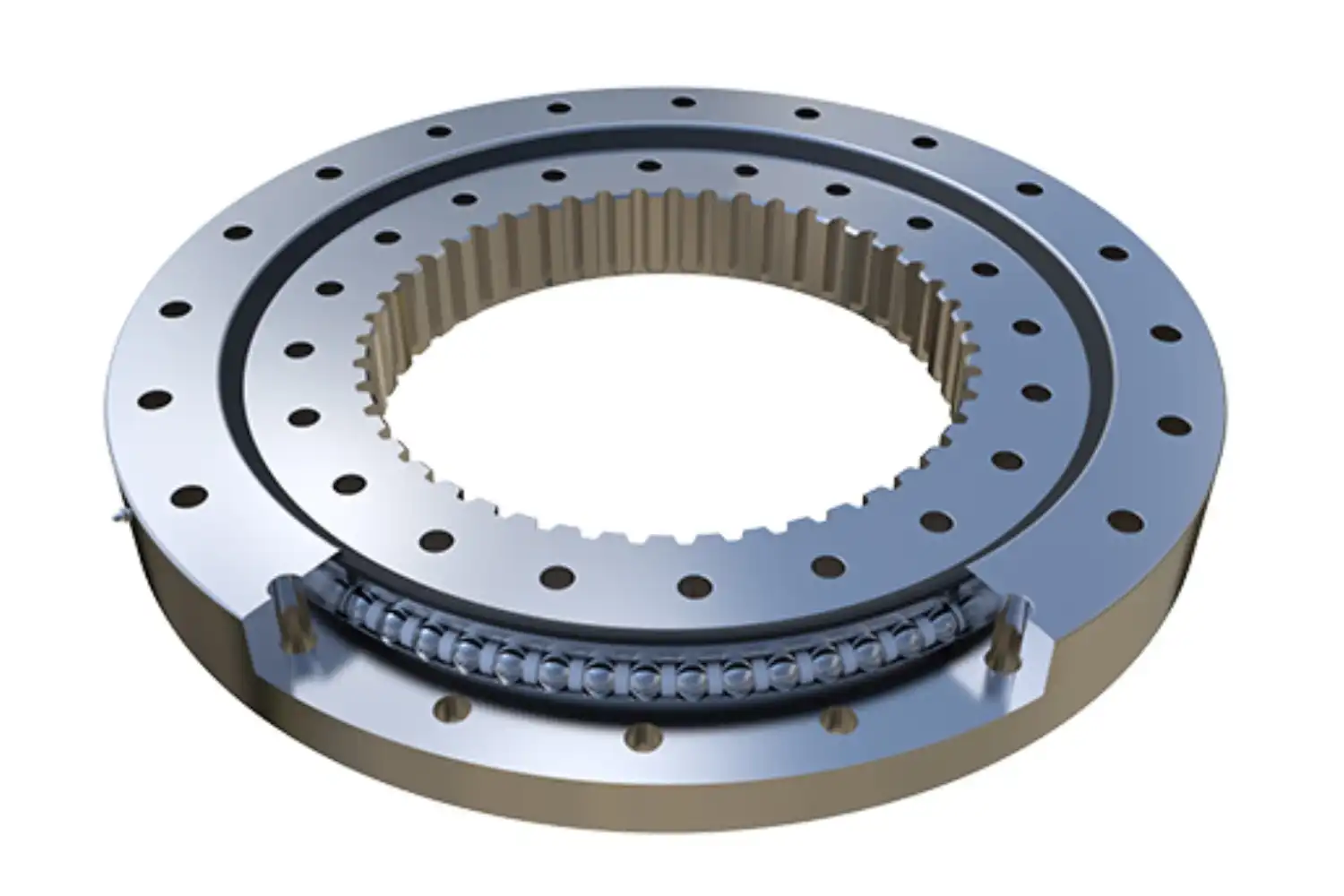
Single row ball slewing bearings represent engineered excellence in rotational components, specifically designed to accommodate multiple load types simultaneously through their sophisticated yet streamlined architecture. These bearings utilize a four-point contact design where each steel ball contacts the inner and outer ring raceways at precisely calculated angles, enabling efficient distribution of axial loads, radial loads, and tilting moments within a compact envelope.
Technical Architecture and Design Principles
The basic structure is made up of an inner ring and an outer ring, with steel balls carefully placed between them and polymer cages, which are usually made from Nylon 6 or Nylon 66. The four-point contact pattern that makes these bearings unique from other single-point contact types is caused by the gothic arch raceway geometry. Calculated load needs determine the ball size, which can be anywhere from 10 mm to 60 mm. Materials like 100Cr6 high-chromium steel ensure the best performance. Ring materials usually consist of C45 carbon steel or 42CrMo alloy steel. For extra sturdiness, 50Mn steel is often used in excavators and other heavy machinery. The range of bearing diameters is from 100mm to 3,200mm, so they can be used in a wide range of industrial settings, from small robots to huge building equipment.
Load Distribution and Operational Mechanics
The main idea behind how it works is that the load is evenly spread across many contact places so that the rotation is smooth. These bearings combine utility into a single unit, unlike traditional bearing arrangements that need separate parts for each type of load. This integration gets rid of the need for complicated multi-bearing systems. This makes mounting structures much shorter and lighter while still keeping their rigidity. The four-point contact mechanism lets forces be sent in multiple directions at the same time. This improves operating efficiency and directly saves money by making system design simpler. When designing equipment, engineering teams find it easier because the designs aren't as complicated, and maintenance staff like how simple the service needs are compared to multiple-bearing configurations.
Key Factors Driving Cost-Effectiveness
The economic advantages of single row ball slewing bearings stem from multiple interconnected factors that collectively reduce the total cost of ownership while maintaining performance standards required in demanding industrial applications. Understanding these cost drivers enables procurement professionals to make informed Single Row Ball Slewing Bearing decisions that optimize both immediate budget considerations and long-term operational expenses.
Load Capacity Optimization and Pricing Efficiency
The low cost is mostly due to the good load capacity-to-price ratio, especially when compared to more complicated bearing setups. The load capacity of these bearings is lower than that of triple-row cylindrical roller alternatives, but their performance is great for moderate-load applications that run often. This exact matching of capabilities avoids over-specification costs and makes sure there are enough performance gaps. When production methods are streamlined, manufacturing economies are reached, which leads to competitive pricing structures. The single-row design needs fewer precise parts than the multi-row designs, which lowers the cost of materials and makes production easier. Because of these improvements in manufacturing efficiency, suppliers can offer competitive prices while still meeting the quality standards needed for industry use.
Extended Service Life and Replacement Cost Reduction
Operational longevity has a big effect on total cost estimates because it means fewer replacements and costs related to downtime. If you choose the right materials, like high-quality steel alloys and advanced heat treatment methods, they will last longer under normal working conditions. The strong construction can handle weather problems that are common in industrial settings, such as changes in temperature and exposure to contamination. Accessibility for maintenance helps keep costs down by making service processes easier, which cuts down on the number of workers needed and equipment downtime. The integrated design gets rid of the need for multiple lubrication points and complicated adjustment steps that come with multi-bearing systems. This makes regular maintenance tasks easier and lowers the level of skill needed by service staff.
Installation Simplification and Retrofit Compatibility
The cost-benefit of easy installation is big, especially in repair situations where old equipment needs to be upgraded or replaced with bearings. The combined design makes fitting easier and gets rid of the problems with precise alignment that come with installing multiple bearings. This makes things easier, which means less time and money spent on installation and less chance of mistakes that could hurt speed or need expensive fixes. Compatibility with different types of tools increases value by allowing fleets of equipment to be standardised. Standardised bearing specifications can help procurement teams save money by buying in bulk and simplifying their inventory for a variety of uses.
Comparing Single Row Ball Slewing Bearings with Alternatives
Effective bearing selection requires a comprehensive understanding of how Single Row Ball Slewing Bearing configurations compare with alternative designs across performance, cost, and application suitability parameters. This analysis enables procurement professionals to make evidence-based decisions that align technical requirements with budget constraints while ensuring optimal equipment performance.
Performance and Cost Analysis Across Bearing Types
Double row ball slewing bearings offer enhanced load capacity through increased ball count and contact points, making them suitable for applications requiring higher force transmission capabilities. However, this increased capacity comes with proportionally higher costs due to manufacturing complexity and material requirements. The additional row of balls and corresponding raceway machining increases production time and precision requirements, resulting in premium pricing that may exceed budget parameters for moderate-load applications. Cross roller bearings provide superior precision and rigidity through their cylindrical roller design and crossed arrangement pattern. This configuration delivers exceptional accuracy for applications requiring precise positioning, such as robotic systems and precision machinery. The precision advantage carries a significant price premium, often 40-60% higher than equivalent single row ball bearings, making cost justification challenging unless precision requirements specifically demand this enhanced capability.
Application-Specific Suitability and Economic Considerations
Tapered roller slewing bearings excel in single row ball slewing bearing heavy-duty applications requiring maximum load capacity and durability under extreme operating conditions. Their robust construction handles severe radial and axial loads effectively, making them ideal for mining equipment and large-scale construction machinery. However, the enhanced durability comes with increased weight, complexity, and cost that may be unnecessary for applications within single row ball bearing capability ranges. The decision framework should evaluate load requirements against cost implications while considering operational environment factors. Single row ball bearings optimize cost-effectiveness for applications with moderate loads and high rotational frequency, such as tower cranes, mobile equipment, and material handling systems, where operational economics outweigh maximum load capacity considerations.
Procurement Insights for Cost-Effective Buying
Strategic procurement of single row ball slewing bearings requires comprehensive supplier evaluation, market understanding, and negotiation strategies that balance quality assurance with cost optimization. Successful procurement professionals develop systematic approaches that ensure reliable sourcing while maximizing value through informed supplier selection and contract structuring.
Supplier Evaluation and Quality Assurance
Established companies like Huigong have decades of specialised experience in designing and making bearings. They offer a quality guarantee through track records and strict certification standards. Buying things with trust is made easier with ISO9001 quality management systems and ISO14001 environmental certifications. These give buyers peace of mind by proving quality control procedures and a promise to be environmentally responsible. The technical skills assessment should look at how complex the manufacturing equipment is, how well the quality control processes work, and how well the testing can be done. Precision four-point ball contact repair is done in modern facilities using CNC groove grinding equipment. This has a direct effect on the performance and service life of the bearing. Metallographic analysis tools, coordinate measuring machines, and specialised testing gear show that the provider is dedicated to quality control and ongoing improvement.
Customization Capabilities and Value Engineering
Opportunities for OEM partnerships allow for customised solutions that work best for certain uses while possibly cutting costs by getting rid of unnecessary specifications. When suppliers offer customisation based on detailed engineering drawings that show things like mounting dimensions, gear parameters, and raceway specs for a Single Row Ball Slewing Bearing, they add value by precisely matching customer needs instead of just adapting standard products. Negotiating prices and setting priorities for production, buying in bulk, and keeping relationships with suppliers for a long time can often save a business a lot of money. Knowing the limits on a supplier's capacity and the different wait times makes it easier to plan a project and keep costs low by planning when to place orders and keeping track of inventory.
Maximizing Value Through Maintenance and Usage Best Practices
Proactive maintenance strategies represent critical cost-effectiveness factors that extend bearing service life while minimizing unexpected downtime and replacement expenses. Implementing systematic maintenance approaches based on manufacturer recommendations and operational experience ensures optimal return on bearing investments throughout the equipment lifecycle.
Preventive Maintenance and Failure Mode Prevention
Regular inspections that focus on common failure modes stop catastrophic bearing failures that need expensive emergency fixes and more downtime. Keeping the bearings in good shape in tough working conditions by sealing them properly and protecting them from the environment stops corrosion. Controlling contamination with good filters and cleaning methods keeps the lubrication working well and stops abrasive wear. Managing lubrication is an important part of Single Row Ball Slewing Bearing maintenance that has a direct effect on how long bearings last and how consistently they work. The best film formation and wear protection are achieved by choosing the right lubricant based on the working temperature, speed, and environmental conditions. Regularly adding more lubricant and checking the condition with oil analysis tools can help find signs of wear and tear before they become major problems.
Operational Optimization and Performance Monitoring
Load distribution optimisation through proper equipment operation and repair stops uneven stress concentration from wearing out bearings too quickly. Knowing the limits of the equipment, like its top speed and weight, is important for keeping it running within its design boundaries and getting the most out of its service intervals. Condition tracking technologies, such as vibration analysis and temperature monitoring, can tell you early on when a bearing is starting to break down. These monitoring systems allow for planned preventative maintenance that finds the best time to change bearings while also preventing expensive secondary damage to equipment systems from happening. Investing in monitoring technology usually pays for itself through longer bearing life and fewer unplanned repair events.

Conclusion
Single row ball slewing bearings are very cost-effective because their design combines performance needs with cost-cutting factors that are important for businesses that want to stay competitive. Their simpler design lowers the original cost of purchase while still meeting the high standards of reliability needed for demanding applications. This creates value by lowering the total cost of ownership. Strategic purchasing methods that focus on supplier quality, the ability to customise, and long-term relationships make the most of these cost savings while ensuring consistent performance in a wide range of industrial settings.
FAQ
1. How do I determine if single-row ball slewing bearings suit my specific equipment requirements?
Evaluate your application's load requirements, rotational frequency, and operating environment against bearing specifications. Single row ball bearings excel in moderate-load applications with high rotational frequency, such as tower cranes and material handling equipment. Consult with bearing engineers to analyze load calculations and environmental factors, ensuring proper bearing selection for your specific operational parameters.
2. What maintenance intervals should I establish for optimal bearing performance?
Maintenance intervals depend on operating conditions, load factors, and environmental exposure. Generally, inspect bearings every 500-1000 operating hours for lubrication condition and mounting bolt torque. High-frequency or harsh environment applications may require more frequent inspections. Establish condition monitoring programs using vibration analysis and temperature monitoring for predictive maintenance scheduling based on actual bearing condition rather than arbitrary time intervals.
3. Can I convert from double row to single row designs without extensive equipment modifications?
Conversion feasibility depends on load requirements and mounting configuration compatibility. Single row bearings typically require less axial space, potentially simplifying retrofits. However, ensure load capacity adequacy and verify mounting bolt patterns, sealing arrangements, and connection interfaces. Consult bearing engineers for conversion analysis, including load calculations and mechanical interface evaluation to determine modification requirements and economic viability.
Partner with Huigong for Superior Single Row Ball Slewing Bearing Solutions
Huigong's extensive experience as a trusted Single Row Ball Slewing Bearing manufacturer enables cost-effective solutions tailored to your specific industrial requirements. Our advanced manufacturing capabilities, including precision CNC machining and comprehensive quality control systems, ensure reliable performance while maintaining competitive pricing structures. With over 25 years of bearing expertise and ISO9001 certification, we deliver customized solutions that optimize total cost of ownership through enhanced durability and simplified maintenance requirements. Contact our engineering team at sale@chg-bearing.com to discuss your application requirements and discover how our innovative bearing technologies can improve your equipment performance while reducing operational costs.
References
1. Harris, T.A. & Kotzalas, M.N. (2019). Advanced Concepts of Bearing Technology: Rolling Bearing Analysis. CRC Press Engineering Handbook Series.
2. Wensing, J.A. (2021). "Cost-Effectiveness Analysis of Slewing Bearing Technologies in Heavy Industrial Applications." Journal of Mechanical Engineering and Manufacturing Technology, Vol. 15, Issue 3.
3. Industrial Bearing Institute. (2020). "Comparative Performance Study of Single and Multi-Row Ball Slewing Bearings in Construction Equipment." Technical Report IBI-2020-SB.
4. Peterson, R.L. & Schmidt, K.J. (2022). "Maintenance Optimization Strategies for Large-Scale Slewing Bearing Applications." International Conference on Industrial Maintenance and Reliability Engineering Proceedings.
5. Chen, W.H. & Thompson, D.A. (2021). "Economic Impact Assessment of Bearing Selection Decisions in Heavy Machinery Procurement." Mechanical Systems and Signal Processing, Vol. 45, No. 2.
6. European Bearing Manufacturers Association. (2020). "Guidelines for Cost-Effective Procurement of Industrial Slewing Bearings." EBMA Technical Standard ETS-2020-07.